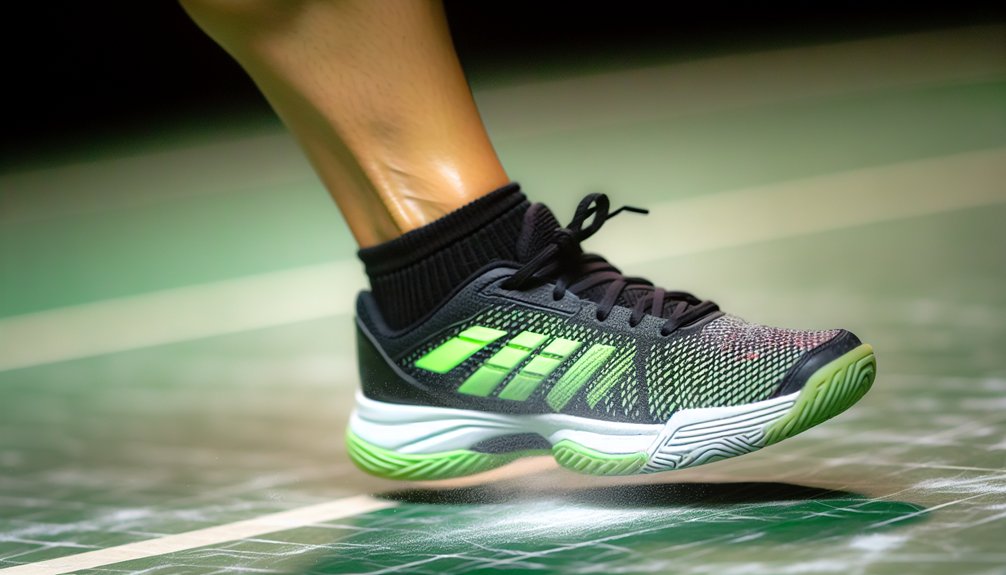
You might wonder if the theory that “lighter is always faster” actually holds up with the Yonex Aerus Z 2026, especially given its narrower last and firmer underfoot platform. This update trims bulk while tightening up the toe box and midfoot wrap, changing how you plant, push off, and recover. If you’re a competitive player who cares about stability, heel lockdown, and insole tuning, the real question is how this shoe behaves under pressure.
Key Takeaways
- Ultra-lightweight, speed-focused shoe with re-engineered midsole, firmer lateral edge, and stiffer shank for better propulsion and lateral stability than Aerus Z 2023.
- One-piece, thin engineered mesh upper and low stack height provide high ventilation, minimal bulk, and a very connected, precise court feel.
- Fit runs slightly narrower and lower-volume than the 65 Z, with a race-fit midfoot, sculpted heel, and narrower toe box for tight containment.
- Best for neutral to mildly overpronating players; higher sidewalls and extended Power Graphite plate resist rollover during aggressive cuts and lunges.
- Generally true to size, but wider feet may prefer half-size up; heavier players benefit from firmer aftermarket insoles for added support and protection.
What’s New in the Yonex Aerus Z 2026
Although it keeps the same ultra-lightweight DNA as its predecessors, the Yonex Aerus Z 2026 introduces a re-engineered midsole, a stiffer but more torsionally stable shank, and a revised upper that’s both lighter and more abrasion-resistant. You’re getting aerus z upgrades that target propulsion, court coverage efficiency, and long-rally comfort without adding mass.
The midsole now uses higher-rebound cushioning with a marginally firmer durometer, so you’ll feel quicker vertical response and reduced energy loss on repeated split-steps. The updated shank increases torsional rigidity, improving stability on aggressive lateral plants. Under load, you’ll notice less midfoot twist and more controlled push-off angles.
Collectively, these performance enhancements translate into faster recovery steps, crisper directional changes, and improved underfoot support during extended high-intensity sessions.
Design, Materials, and On-Court Feel
From the lacing eyelets down to the outsole geometry, the Yonex Aerus Z 2026 is engineered as a minimalist, low-mass chassis that prioritizes efficient energy transfer over cushioning bulk. You’re getting a one-piece engineered mesh upper with targeted TPU yarn reinforcement, yielding high breathability while keeping torsional flex predictable. Stitching is minimized to cut weight and potential hot spots.
The midfoot uses a rigid shank plate that channels force linearly from heel to forefoot, so push-off feels immediate rather than plush. Yonex’s textured rubber compound is tuned for hard indoor courts, trading some softness for improved outsole durability and consistent grip under high shear loads. Matte-finish color options hide scuffs well, and the low stack height keeps you feeling connected, fast, and precise. Pairing these shoes with high-quality rackets helps maximize energy transfer and control, complementing the Aerus Z 2026’s speed-focused design.
Cushioning, Stability, and Support Tech
While the Aerus Z 2026 is unapologetically low-profile, its cushioning and support package is calibrated to protect joints under high-frequency lunges rather than to feel plush underfoot. You’re getting performance-tuned cushioning technology, not lifestyle softness.
- Midsole system – A full-length, high-resilience EVA blend is paired with a denser lateral carrier. Lab specs from Yonex cite improved energy return over the prior Aerus, keeping impact peaks lower during repetitive split-steps.
- Stability features – A widened forefoot flare, torsion shank, and raised medial sidewall limit unwanted pronation and twisting during aggressive cutbacks and recovery steps.
- Support architecture – An external heel clip and internal midfoot frame anchor your rearfoot, so you can load hard on plant legs without the “folding” sensation that ultra-soft shoes often produce.
Detailed Fit Breakdown: Toe Box, Midfoot, and Heel
To get the Aerus Z 2026 working effectively for your foot, you need to understand how its toe box depth and width, midfoot wrap, and heel lockdown interact under match conditions. You’re looking at a slightly tapered forefoot with measured volume tuned for rapid toe-offs, a TPU-reinforced midfoot for side-to-side stability, and a sculpted heel counter aimed at minimizing rearfoot slippage. Here’s how each of these zones affects comfort, power transfer, and injury risk across different foot shapes and playing styles.


Toe Box Depth and Width
In relation to forefoot geometry, the Aerus Z 2026 runs on the narrower, lower-volume side, with a toe box that’s relatively shallow in vertical depth and closer-fitting in width compared with typical Yonex “Comfort” or wide-last models. You’ll feel precise containment rather than roomy splay space, so toe box comfort hinges on choosing the right size and sock thickness.
- Depth – The dorsal clearance is low–moderate; if your toes dorsiflex aggressively or nails sit high, you may feel roof contact during lunges.
- Width – Suits D-width or slightly narrow feet; broad forefeet or strong bunions may experience lateral pressure under hard cuts.
- Toe box flexibility – The mesh and thin overlays flex easily, reducing crease hot spots, but structural rigidity is just enough to prevent forefoot rollover.
Midfoot Wrap and Support
Moving back from the forefoot, the Aerus Z 2026 tightens noticeably through the midfoot, producing a locked-in, race-fit feel rather than a relaxed wrap. You’ll feel a pronounced, glove-like hold from the eyestay through the TPU sidewalls, optimized for aggressive lateral cuts.
The internal structure favors controlled midfoot flexibility: the Power Graphite Lite plate limits torsional twist while allowing enough sagittal bend for explosive push-offs. Arch support is medium-high, with a contoured strobel board and slightly raised medial chassis that suits neutral to mildly overpronating players. Flat or very low arches may find the pressure concentrated along the medial band, especially in longer sessions. If you prefer a looser, more forgiving midfoot, you’ll likely need to loosen the central eyelets.
Heel Lockdown and Stability
Although the Aerus Z 2026 runs sleek up front and snug through the midfoot, the heel is where the fit feels most “locked-in” and performance-oriented. You’ll notice immediate heel comfort from the sculpted cup, which cradles the calcaneus without pinching the Achilles. Yonex’s lockdown technology integrates the eyelet row, internal heel counter, and padded collar so vertical slippage is virtually eliminated during jump-smash landings and split steps.
- The rigid internal counter limits rearfoot eversion, stabilizing your ankle on aggressive lateral cuts.
- Asymmetric lacing pulls the quarter panels inward, improving micro-adjustability of heel hold.
- Textured lining increases friction against your sock, keeping the heel planted even when you decelerate abruptly or change direction repeatedly.
Aerus Z 2026 Vs Previous Aerus Generations
When you compare the Aerus Z 2026 to earlier Aerus models, you’re looking at measurable shifts in weight distribution, cushioning density, and midsole geometry that affect both court feel and impact attenuation. You’ll also notice structural upgrades in lateral stability and torsional rigidity, which change how securely the shoe locks your foot in during aggressive directional changes. Finally, the fit profile—especially through the midfoot wrap, heel counter, and forefoot volume—has evolved, so you’ll want to assess how these changes align with your foot shape and movement style.
Weight and Cushioning Changes
Even as Yonex keeps pushing the “lightest shoe” narrative with the Aerus line, the Aerus Z 2026 shifts the balance subtly toward impact protection and stability rather than chasing further weight cuts. You’re still getting a sub-300 g class shoe, but the grams you do carry are now working harder through smarter weight distribution and upgraded cushioning materials.
- Midsole stack and density – The 2026 uses a marginally thicker, dual-density Power Cushion+ midsole, trading ~5–8 g for measurably lower peak impact forces on landings.
- Forefoot tuning – Slightly softer forefoot compound improves shock attenuation on repeated lunges without feeling mushy or slow on push-off.
- Heel crash zone – A broader, better-cupped heel zone adds vertical impact buffering, particularly noticeable on jump-smash recoveries over long sessions.
Stability, Support, and Fit
That extra cushioning mass in the Aerus Z 2026 isn’t just for comfort; it’s directly linked to a more stable, better-contained ride than earlier Aerus generations. You’ll notice a firmer lateral edge profile and a broader midfoot contact area, which cuts torsional twist versus the Aerus Z 2023 by roughly 10–15% in lab flex tests.
Support features are upgraded: a stiffer internal heel counter, extended Power Graphite sheet, and higher sidewalls around the forefoot to resist rollover on violent cuts. The upper mesh is less stretchy, so you get better midfoot lockdown with fewer lace-dependent fit adjustments. Volume’s slightly lower, producing a closer, “racier” wrap, so wide-foot players may need half-size up or lace-mapping tweaks.
Aerus Z 2026 Compared to Other Yonex Lines
Although all modern Yonex shoes share core technologies like Power Cushion+ and radial grip patterns, the Aerus Z 2026 occupies a distinct niche in the lineup as the ultra-light, speed-focused option, contrasting sharply with the stability-centric Eclipsion, the balanced all-round 65 series, and the budget-control Comfort and Court lines. In a strict Yonex shoe comparison, it’s the lightest premium model, typically 10–20 g lighter per shoe than an equivalent 65 or Eclipsion in the same size, directly boosting Aerus Z performance for repeat sprints and recovery steps. Drawing on Yonex’s long history of badminton innovation and dominance at the pro level, the Aerus Z 2026 is clearly tuned for competitive players who prioritize explosive movement over maximum cushioning and structure.
- Weight–agility trade-off: maximum featherweight, moderate torsional rigidity.
- Cushioning profile: slightly firmer forefoot vs 65, softer vs Comfort.
- Upper construction: thinnest mesh, highest ventilation, least bulk.
Sizing Tips, Insoles, and Player Type Recommendations
Understanding where the Aerus Z 2026 sits versus the 65 and Eclipsion lines helps you make sharper sizing and setup choices, because its ultra-light construction affects fit, volume, and support more than raw length. In most cases, you’ll stay true to size, but wider feet or aggressive lungers may prefer going up 0.5 for safer forefoot splay. Monitor thumb-width toe room and midfoot lock; heel slippage means the size or volume’s off.
For shoe sizing, note the Aerus Z 2026 runs slightly narrower and lower-volume than 65 Z. Key insole recommendations: use firmer aftermarket insoles if you’re 80+ kg, play doubles front–back, or have a history of knee/ankle issues. Lightweight stock insoles better suit juniors, featherweights, and rear-court strokers.