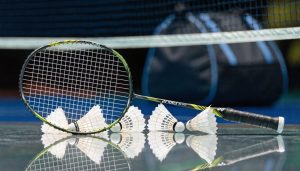
When you’re choosing between feather and synthetic shuttlecocks, you’re really deciding how you want your game to feel, perform, and cost out over time. Feather offers more accurate flight, sharper deceleration, and superior feedback on touch shots—but at up to 3–5 times the unit cost once durability’s factored in. Synthetic models trade some precision for consistency and lifespan. To make the right choice, you’ll need to match specific performance metrics to how you actually play…
Key Takeaways
- Feather shuttlecocks give superior control, sharper drop trajectories, and better net feel, making them preferred for advanced training and competition.
- Synthetic shuttlecocks are more durable, maintain performance longer, and offer better value for frequent practice or recreational play.
- Feathers are more sensitive to temperature, humidity, and air movement, while synthetics provide more consistent speed and flight in varying conditions.
- Over long-term use, synthetics generally cost less per rally despite similar tube prices, as they last 3–5 times longer than feathers.
- Choose feathers if precision and match realism matter most; choose synthetics if you prioritize durability, budget, and stable performance.
Understanding Feather Shuttlecocks
Feather shuttlecocks are precision-engineered projectiles, typically made from 16 goose or duck feathers fixed into a natural cork base, designed to deliver highly predictable flight and spin characteristics for competitive play. You’re choosing a product defined by tight tolerances: feather length, shaft stiffness, and tip angle directly affect trajectory stability and deceleration.
You’ll notice they deliver faster initial speed (≈300–350 km/h at elite levels) yet lose velocity quickly, enabling sharp drops and precise clears. The cork base provides consistent rebound, energy transfer, and feel on impact. Durability’s finite—expect 1–2 games per shuttle at high intensity—but flight quality stays superior as long as the feather structure’s intact. When you need accuracy for training or tournament play, feather models set the reference standard.
Understanding Synthetic Shuttlecocks
While they were initially developed as a cost-effective alternative to natural models, synthetic shuttlecocks are now engineered to approximate feather-like flight using polymer skirts (typically nylon) bonded to cork or composite bases. You’ll usually see injection-molded skirts with uniform rib geometry, designed to control drag and durability under repetitive impacts.
From a product-spec perspective, synthetics are standardized by weight class (commonly 4.7–5.5 g) and speed codes (slow/medium/fast), giving you predictable behavior across halls and climates. Manufacturers often use EVA, PU, or composite corks to stabilize deformation and maintain consistent rebound over thousands of rallies. You’ll also notice color-coding for speed and skirt stiffness. For training volume, synthetics reduce unit cost, offer longer life per piece, and keep performance variation between shuttles minimal.
Flight Characteristics and Trajectory
Once you understand how synthetics are built, the next question is how that construction actually shows up in the air. Feather shuttles generate higher drag coefficients, so they decelerate faster and follow a steeper, more parabolic trajectory. You’ll see a quick rise, pronounced peak, then a sharp drop, especially on clears and lifts.
Synthetic models, typically nylon with a uniform skirt, fly on a flatter, more energy‑efficient path. They retain speed longer, with 5–15% less velocity loss over equivalent distances in many lab tests. That produces deeper penetration under the same swing speed and slightly delayed drop timing. You’ll also notice greater trajectory stability in turbulent hall conditions, as synthetics resist wobble better due to their symmetric skirt geometry.
Control, Feel, and Touch at the Net
When you’re playing tight net shots, the shuttlecock’s construction directly affects precision in net control, especially regarding spin stability, stopping distance, and response to micro-adjustments in racket angle. You’ll notice that feather and synthetic models transmit very different tactile feedback through the string bed, which you can quantify by contact time, deformation behavior, and recovery rate on soft touches. Understanding these measurable differences in feel helps you choose a shuttle that matches your required control margins for tight net cords, net kills, and spinning tumblers.


Precision in Net Control
Because net play magnifies small differences in aerodynamics and feedback, feather shuttlecocks generally enable finer control, softer touch, and more precise tumbling than synthetics. You’ll notice this in how reliably a feather cork can “die” over the tape: the natural vane structure creates higher drag at low speeds, so the shuttle decelerates sharply and drops steeper.
Feathers also track more predictably on tight net shots. Their asymmetrical drag keeps the nose aligned, reducing lateral wobble, so you can brush closer to the tape with less risk of drift. In contrast, synthetics often carry 5–10 cm farther on equivalent net lifts and spins, forcing you to allow more margin and slightly adjust racket angle and stroke length.
Tactile Response and Feel
Touch at the net isn’t just about where the shuttle goes; it’s about what you feel in your fingers the instant the cork hits the string bed. With feathers, you get a sharper vibration profile and clearer feedback on slice, spin, and brush because the natural vane structure decelerates more predictably. You can modulate grip pressure in micro-steps, feeling exactly when the shuttle “bites” the strings.
| Aspect | Feather Shuttlecock | Synthetic Shuttlecock |
|---|---|---|
| Impact Feedback | Crisp, high-resolution tactile signal | Muted, dampened, lower information density |
| Net Spin Response | Finer spin gradients, tighter control window | Broader, less defined spin response |
| Touch Consistency | Excellent in clean hits, sensitive to mishits | More uniform, forgiving mishits |
You’ll notice the difference most in tight net shots, holds, and deceptive tumbles.
Durability and Consistency Over Time
When you compare feather and synthetic shuttlecocks, durability isn’t just about how long they last before breaking, but how their wear rate affects flight characteristics shot after shot. You’ll want to look at metrics like feather breakage per rally, skirt deformation, and speed-class drift to understand each shuttle’s performance consistency lifespan. By tracking these variables over multiple games, you can quantify at what point a shuttle’s trajectory, spin stability, and shuttle speed fall outside acceptable tolerances for your level of play.
Wear Rate Comparison
Although both options can deliver high performance initially, feather and synthetic shuttlecocks differ sharply in how they wear, how long they stay within spec, and how predictably they degrade over time. In typical club play, you’ll often see a feather shuttle lose structural integrity after 1–2 games, with individual feathers shearing or bending, causing rapid aerodynamic drift. Match logs frequently show 3–6 feathers retired per hour.
Synthetic shuttles exhibit a slower, more linear wear curve. The nylon skirt deforms gradually rather than fracturing, so speed and trajectory remain closer to rated values over many more rallies. You might use a single synthetic for 3–5 games before its skirt distortion or cork softening takes it outside acceptable performance tolerances for training-level play.
Performance Consistency Lifespan
Because feather and synthetic shuttlecocks age so differently, their performance consistency lifespans diverge in both duration and stability of flight characteristics. You’ll see feathers deliver elite flight for a short “golden window,” while synthetics trade peak precision for a longer, more predictable curve.
1. Feather plateau
A high‑grade feather often maintains tournament‑level aerodynamics for roughly 1–2 games, then degrades rapidly as broken vanes disrupt drag profile and spin symmetry.
2. Synthetic stability
Quality nylon models typically hold ≥90% of their initial speed and trajectory behavior for 15–30 games, with gradual deformation instead of sudden failure.
3. Match vs training ROI
For competition, you’re buying peak, short‑lived accuracy (feather). For clubs and drills, cost per consistent rally heavily favors synthetics, especially under high‑volume use.
Cost Comparison and Long-Term Value
While feather shuttlecocks have a higher upfront price per dozen than synthetics, the real cost comparison hinges on durability, breakage rate, and playing volume. If you’re paying $30–$40 per dozen for tournament-grade feathers versus $15–$20 for synthetics, the key metric becomes cost per rally, not cost per tube.
Feathers might last only 1–2 games each in hard, smash-heavy sessions, so you could consume 3–6 shuttles per hour. Synthetics often survive 5–10 games, dropping usage to 1–2 per hour. When you model this over 100 hours of play, total shuttle spend can converge, with synthetics typically 20–40% cheaper overall. However, feather users sometimes extend life by rotating shuttles in training, partially offsetting the higher unit price.
Matching Shuttlecocks to Playing Level
When you match shuttlecocks to playing level, you’re fundamentally balancing durability, speed consistency, and flight accuracy against your current skill demands. For beginner to intermediate use, synthetic models typically offer a lower cost per rally, higher impact tolerance, and more predictable performance in off‑center hits. For advanced and competitive play, feather shuttles provide tighter flight tolerances, faster recovery after impact, and trajectory characteristics that align with tournament standards and high‑precision shotmaking.
Beginner to Intermediate Use
As you move from beginner to intermediate play, choosing between feather and synthetic shuttlecocks should be driven by impact durability, flight consistency, and cost per game rather than brand hype or “pro-level” labels. At this stage, you’re grooving basic technique and starting to add controlled power, so you need shuttles that survive mishits and still fly predictably.
- Durability per session – Good synthetics often last 3–5 games; budget feathers may deform after 1–2. Track shuttles used per hour, not just unit price.
- Flight behavior – Feathers decelerate faster and drop more steeply; advanced synthetics now mimic this with skirt ribbing and weighted corks.
- Feedback and feel – Feathers give cleaner auditory and tactile feedback; mid-range synthetics with natural cork heads narrow that gap economically.
Advanced and Competitive Play
Once you’re playing advanced club, league, or tournament-level badminton, shuttlecock choice becomes a performance variable you can quantify: shuttle speed grades, cork hardness, skirt/feather profile, and batch consistency all affect rally tempo, control windows, and error rates. At this level, you’re optimizing for predictability under pressure.
Feather shuttles dominate serious play because they offer tighter speed tolerances (±0.5–1% flight variance), faster deceleration, and sharper bite on the strings for spinning net shots. You’ll feel more “hold” on slices and steeper drops.
High‑end synthetics can be viable for league nights or training blocks, but they’re typically 3–8% faster off the racket, with flatter trajectories and reduced spin response. Use them when you prioritize durability and cost over maximum shot precision.
Performance in Different Court Conditions
Because court environments directly alter shuttle flight behavior, you need to evaluate feather and synthetic models regarding temperature, humidity, and air movement. Lab tests and tournament data show feather shuttles retain more predictable aerodynamics but are highly sensitive to micro‑climate shifts, while synthetics offer more stable, repeatable trajectories across wider conditions.
1. Temperature
Feather corks harden in low temperatures, slightly increasing speed; synthetics show less than ±2% speed variance across 15–30°C, based on manufacturer test benches.
2. Humidity
Feathers slow 3–6% in high humidity as mass increases; synthetics’ polymer skirts absorb negligible moisture, keeping flight time consistent.
3. Airflow and drafts
Feathers stabilize faster after turbulence due to higher drag coefficients; synthetics can “sail” longer, noticeable in side‑draft‑prone courts.
Environmental and Maintenance Considerations
Selecting a shuttle that behaves predictably in different court conditions is only half the equation; its environmental footprint and maintenance demands also affect total cost of ownership and long‑term performance. Feather shuttles use natural cork and goose or duck feathers, making them largely biodegradable, but they’re resource‑intensive: each unit may last only 1–2 games at advanced levels, generating higher material turnover per playing hour.
Synthetic shuttles, typically nylon with a composite or pressed-cork base, can last 3–5 times longer in club play, reducing replacement frequency but increasing plastic waste and end‑of‑life impact, since recycling options are limited. Maintenance differs too: feather models require drying, rotation, and tube‑storage at 20–25°C, 50–70% RH; synthetics tolerate wider environmental swings with minimal care.
How to Decide Which Shuttlecock Is Right for You
Although feather and synthetic shuttles can both deliver enjoyable play, the right choice depends on how you prioritize performance metrics, budget, and usage context. Start by defining your primary use case: high-intensity competition, structured training, or casual play. Then map each scenario to measurable criteria such as durability per shuttle, consistency of flight, and cost per hour of play.
1. Match intensity & level
If you compete or train for tournaments, feather offers superior aerodynamics, tighter trajectories, and more predictable deceleration.
2. Budget & durability math
Calculate cost per session: feathers may last 1–2 games; synthetics often survive multiple sessions, lowering long‑term expense.
3. Environment & frequency
For humid halls, outdoor use, or high‑volume club nights, synthetics resist deformation better and maintain more stable performance.
Feather shuttles typically contain 16 feathers and a cork base, which affects consistency and flight specifications.