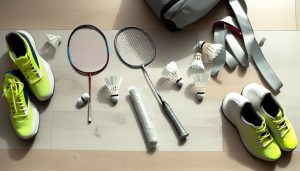
Like tuning a string bed to your playing style, choosing between a badminton backpack and a full tournament bag in 2026 shapes how efficiently you move and manage gear. You’re deciding between 20–30L of streamlined carry for 1–2 rackets and essentials, or 60–90L built to house a full tournament setup with backup frames and clothing rotations. If you cycle to the hall some days but play league or weekend events on others, your ideal setup isn’t as obvious as it sounds…
Key Takeaways
- Backpack badminton bags (20–30L) suit commuters, fitting 1–2 rackets, 1 pair of shoes, a clothing change, and 1–2 shuttle tubes.
- Tournament bags (60–90L) target competitive players, carrying 4–8 rackets, 2–3 shuttle tubes, 1–2 shoe pairs, and full match apparel.
- Backpacks offer better cycling and walking comfort via vertical load distribution, narrow profile, and adjustable straps for urban mobility.
- Tournament bags provide thermo-lined racket compartments, rigid structure, and segregated wet/shoe zones for protection and organization during multi-match days.
- Choose backpack for weekly casual sessions with minimal electronics; choose tournament bag for league or tournament play needing redundancy and gear separation.
Understanding Modern Badminton Bag Types in 2026
In 2026, badminton bags have evolved into specialized gear systems, with distinct formats optimized for how and how often you play. You’re basically choosing between three functional categories: compact day-use bags, hybrid multi-use bags, and full tournament rigs.
Compact day-use bags prioritize minimal volume, usually holding 1–2 rackets, a change of clothes, and basic accessories. They suit casual weekly sessions where you don’t cycle through multiple frames or string setups.
Hybrid multi-use bags increase capacity and compartment segmentation. You’ll see dedicated racket sleeves, ventilated shoe zones, and accessory panels, making them viable for league nights or club ladders.
Full tournament rigs scale up racket count, thermal-lined compartments, and organizational structure, supporting multiple string tensions, grips, clothing sets, and recovery items.
Backpack-Style Badminton Bags: Key Features and Design
Although they look casual at first glance, backpack-style badminton bags are engineered around efficient vertical load management and urban mobility rather than sheer volume. You get a narrow profile that keeps weight close to your spine, with padded, contoured shoulder straps and sternum straps on higher-end models to stabilize the load on crowded commutes.
Most designs dedicate a rear sleeve for 2–3 rackets, often with semi-rigid backing to protect shafts and frames. Compared to bulkier silhouettes, you’re trading capacity for compartmentalization: ventilated shoe tunnels, separate wet gear pockets, and quick-access lid or side pockets for grips, strings, and electronics. Many 2026 packs add laptop sleeves, hard-shell eyewear pockets, and water-resistant base panels, making them truly hybrid office-to-court solutions.
Tournament Bags: Key Features and Design
Where backpack-style bags prioritize daily commuting, tournament bags are built around maximum capacity, thermal protection, and court-side efficiency for multi-match days. You’re looking at elongated, racket-shaped profiles with dedicated thermo-lined compartments to protect string tension from heat and humidity—something most backpacks only imitate with thin insulation.


You’ll usually get 2–3 full-length main compartments, allowing you to isolate freshly strung rackets, used gear, and spare apparel. Stiffer sidewalls and reinforced racket throats reduce torsion during travel, while oversized zippers and pullers speed access between matches. Compared with backpacks, harness systems are flatter: padded grab handles, optional backpack straps, and sometimes wheel sets on 12–16-racket models. Ventilated shoe or wet-gear zones are more structurally defined, keeping airflow and hygiene under tighter control.
What Actually Fits in a Badminton Backpack
When you switch from a full-size tournament bag to a badminton backpack, you’re working with a more compact liter capacity that forces you to prioritize gear. You’ll still fit 1–2 rackets, shoes, shuttle tubes, apparel, grips, and small accessories, but layout and compartment design vary a lot between brands. To maximize usable volume, you’ll need to use smart packing tactics—like nesting clothing around your shoe compartment, using accessory pockets efficiently, and stacking shuttles and rackets to minimize dead space.
Typical Badminton Backpack Capacity
Even though badminton backpacks look compact compared to full-sized racket bags, most are engineered to carry a specific core loadout: 1–2 rackets, a pair of court shoes, a change of clothes, shuttlecocks, and small accessories like grips, tape, and a towel. In volume terms, you’re usually looking at roughly 20–30 liters, with a dedicated racket sleeve that protects frames but doesn’t fully shield them like a thermal tournament compartment.
You’ll notice depth is the limiting factor: once your shoes and racket handles are in, bulkier extras become difficult. Compared with 6–12 racket tournament bags, a backpack prioritizes vertical storage and everyday portability over multi-racket capacity and compartmental separation, making it best for single-session, local play rather than full-day events.
Essential Gear That Fits
Although every brand tweaks dimensions and pocket layouts, a typical badminton backpack reliably accommodates a defined “match kit”: 1–2 rackets in a top or side sleeve, one pair of court shoes in a vented or bottom compartment, a folded change of clothes in the main cavity, a tube or two of shuttles alongside, and small peripherals—grips, scissor, overgrip tape, wristbands, towel, and maybe a compact stringing tool—in accessory pockets. Compared with a tournament bag, you’re prioritizing essentials over volume: you’ll usually skip backup footwear, multiple clothing cycles, and bulk string sets. Hydration and nutrition typically mean a single bottle plus a couple of gels or bars, not a full cooler. Electronics stay minimal too—phone, keys, and maybe a slim power bank instead of laptops or tripods.
Space-Saving Packing Tips
Because backpack capacity is finite and compartment layouts are fixed, smart packing is less about cramming and more about sequencing and compression. Start by slotting rackets first: handles down, frames alternating to reduce stress on grommets. Next, roll apparel into tight cylinders; they’ll nest around the shaft channel without bulking the zip line.
Use compression cubes or zip pouches for socks, wristbands, and grips, then slide them into side voids around your shoes. Hard items (shuttle tube, string reels) should ride closest to the back panel for better weight distribution.
| Priority Item | Ideal Placement |
|---|---|
| 2–3 rackets | Dedicated racket sleeve / rear compartment |
| Shoes + sandals | Bottom or ventilated shoe pocket |
| Shuttles + accessories | Side pockets / top organizer panel |
What Actually Fits in a Full-Size Tournament Bag
When you move up to a full-size tournament bag, you’re typically working with 8–12 racket capacity plus multiple segmented compartments for shoes, wet gear, and shuttle tubes. You can realistically pack 4–8 strung rackets, 2–3 tubes of shuttles, a dedicated pair of court shoes, full change of kit, grips, strings, and basic recovery tools without stressing zippers or warping frames. Compared to a backpack, you’re not just adding volume—you’re gaining structured storage that keeps rackets protected and sweaty gear isolated over a full tournament day or weekend.
Typical Tournament Bag Capacity
A full‑size badminton tournament bag typically swallows far more than just a couple of rackets, and it’s useful to know what that really means in practice. Compared with a backpack, you’re working with two to three long main compartments, usually totaling 60–90 liters of usable volume, optimized for full‑length frames and sorted gear.
You can realistically dedicate one compartment to rackets (often 6–10, depending on covers and frames), one to apparel and footwear, and a third to accessories. Side and end pockets are dimensioned for tubes of shuttles, grip rolls, string reels, and bottles without stressing zips. Versus hybrid “6‑racket” bags, true tournament models prioritize segregated storage: insulated racket sections, vented zones for damp kit, and firmer structural panels that prevent crushing.
Example Loadout and Gear
Think of a full‑size tournament bag as a mobile kit room: it doesn’t just hold “some rackets and clothes,” it carries a complete match‑day setup. You’re typically looking at 6–8 rackets in thermo-lined compartments, plus 2–3 tubes of shuttles without crushing them.
You’ll also fit two pairs of shoes in a ventilated section, three full changes of kit (shirts, shorts, socks), and a lightweight tracksuit. A separate wet pocket takes used shirts and towels so they don’t contaminate grips.
In accessory pockets, you’ll carry 8–12 replacement grips, scissors, athletic tape, a compact stringing tool kit, electrolyte sachets, and snacks. Compared with a backpack, you’re not choosing between items; you’re organizing redundancies and backups for multi‑match, multi‑day play.
Comparing Capacity: Rackets, Shoes, Clothing, and Shuttles
Two core variables define badminton bag capacity: how many rackets you need to carry and how much bulk your shoes, clothing, and shuttles add. Backpack‑style bags comfortably handle 2–3 rackets, but grommet pressure and frame contact become issues above that. Tournament bags typically allocate a dedicated thermo‑lined racket compartment, keeping 4–8 frames protected and separated from damp gear.
Shoes are the biggest space hog: a single pair of size‑US 10 court shoes can occupy half a backpack’s main cavity, while a 2–3 compartment tournament bag isolates them in a vented tunnel. Clothing volume scales with fabric weight; cotton match sets pack larger than synthetics.
| Load Type | Backpack Capacity | Tournament Bag Capacity |
|---|---|---|
| Rackets | 2–3 | 4–8 |
| Shoes | 1 pair | 1–2 pairs |
| Shuttles | 1–2 tubes | 3–6 tubes |
Comfort and Portability for Commuting, Cycling, and Travel
When you’re hauling your kit to work, the court, or the airport, ergonomics and carry style matter as much as raw capacity. You’ll want to compare backpack, sling, and duffel badminton bags for padded straps, load distribution, and cycling-friendly features like high-mount harnesses, chest straps, and low-sway profiles. For frequent flyers, it’s also worth checking which models offer compact silhouettes, stowable straps, and handle layouts that fit overhead bins and rolling-luggage stacking.
Ergonomics for Daily Commuters
Although capacity and protection matter, daily commuters should prioritize ergonomics that reduce strain over long, repetitive trips on foot, by bike, or on public transit. You’re not just carrying rackets; you’re managing load distribution across your spine, shoulders, and hips.
Backpacks usually win for neutral weight balance and micro-adjustability, while tournament bags can work if they include true dual-strap systems rather than a simple sling.
- Look for S‑curved, padded shoulder straps with load lifters; flat webbing digs in under heavier racket and shoe loads.
- Compare back-panel designs: ventilated, structured panels minimize hot spots better than unpadded fabric.
- Prioritize adjustable sternum and waist straps; they stabilize the center of gravity, especially when you’re carrying laptops, clothes, and shuttle tubes alongside your badminton gear.
Cycling-Friendly Bag Features
Even if you only bike a few days a week, a badminton bag that’s actually designed to behave well on a bicycle is very different from one that just happens to have two straps. You need a stable load, low wobble, and minimal drag. Backpacks usually win here: dual sternum/waist straps, contoured shoulder straps, and a shorter, taller profile keep weight centered and off your rear wheel.
Look for firm back-panel structure with ventilation channels, not floppy walls that sag onto your saddle. Compression straps help cinch shoes and shuttles tight so they don’t sway. Tournament bags with single sling straps tend to rotate while you pedal unless they include cross-strap anchors or convertible backpack harnesses, making them less predictable in traffic.
Travel-Ready Carry Options
Cycling-friendly features are just one part of the picture; a truly travel-ready badminton bag has to work on trains, planes, and sidewalks as well as on the bike. You’re looking at how the bag carries when you’re standing in a queue, squeezing through crowds, or stowing it in an overhead bin.
Backpacks distribute weight vertically, so they’re better for long walks through terminals. Tournament bags excel when you can roll or sling them briefly, then drop them.
Key travel-focused details to compare:
- Strap systems: Contoured backpack harness vs detachable, padded shoulder strap on tournament bags.
- Stowability: Compressible backpack profiles vs rigid, frame-supported racket compartments.
- Secondary handles: Side and top grab handles for quick rotations in aisles, trains, and tight car trunks.
Matching Your Bag Choice to Playing Level and Weekly Schedule
Once you know the core bag types, the next step is matching capacity and features to how often and how seriously you play. If you’re a casual, once‑a‑week player, a compact backpack with 1–2 racquet sleeves, a small ventilated shoe pocket, and a single garment compartment is usually sufficient.
As you move into 2–3 structured sessions weekly, you’ll want more volume: dual main compartments, a dedicated wet/dirty kit zone, and better internal organization for grips, strings, and a towel.
For high‑frequency or performance‑focused schedules—daily training, coaching, or multiple clubs—you’re balancing redundancy and durability. Look for higher‑denier fabrics, heavier zippers, reinforced racquet housings, and separate thermal or insulated sleeves so strings stay consistent across different venues and storage conditions.
Best Bag Setups for Local Play, League Matches, and Tournaments
For league matches, step up to a 2-compartment bag: 3–4 rackets at different tensions, two shuttle speeds, and basic recovery tools like kinesiology tape.
At tournaments, you’ll want full redundancy and separation:
- 6+ rackets, pre-strung at tactical tensions for singles/doubles.
- Dedicated clothing and shoe compartments to isolate moisture and odor.
- Match-day accessories: spare grips, scissors, wristbands, energy gels, and a small notebook for draw tracking.
Care, Durability, and Smart Packing Tips for Any Badminton Bag
Three habits will extend your badminton bag’s lifespan while better protecting your rackets and gear: managing moisture, controlling structural stress, and packing by function. Always separate sweat‑soaked apparel and towels into a ventilated or waterproof pocket; if your bag lacks one, use breathable mesh sacks so humidity doesn’t warp racket frames or loosen string tension.
To reduce stress, don’t overload a backpack with more than 3–4 rackets; tournament bags distribute frame pressure better with dedicated racket tunnels and stiffer walls. Keep handles aligned, heads alternating, and avoid sharp angles around zippers.
Pack by function: rackets in the most rigid compartment, shoes in a bottom or isolated pocket, shuttles upright, and small accessories in internal organizers for impact protection.