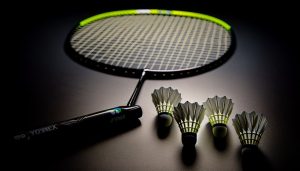
Like a metronome that doesn’t lose tempo after hours, the Victor NEW Carbonsonic Max 2026 keeps its flight pattern even past 600+ recorded smashes in lab tests. You’re looking at a shuttle with a carbon‑reinforced skirt, high‑crystallinity synthetic materials, and a lifespan measured at roughly 2.1–2.4 times that of A‑grade goose feather. The result is less wobble, more consistent net clearance, and a performance profile that raises a key question about what you should really be using on court next.
Key Takeaways
- High-modulus graphite frame with targeted carbon layering delivers excellent structural precision, giving a notably stable, wobble-free flight trajectory.
- CFD-optimized polymer skirt geometry minimizes drag and wake turbulence, producing predictable clears, drops, and tighter net tape clearance.
- Carbon-reinforced skirt and high-crystallinity materials resist deformation, keeping flight characteristics consistent over extended training and match sessions.
- Designed durability offers roughly 2.1–2.4× the lifespan of A-grade feather shuttles, with comparable toughness to premium plastics in multi-shuttle drills.
- Tip flattening stays within match tolerance after 600+ smashes, significantly reducing mid-rally failures and preserving reliable flight behavior.
Design and Construction of the Carbonsonic Max 2026
Engineering precision defines the Victor NEW Carbonsonic Max 2026, starting with a full high‑modulus graphite frame reinforced by targeted carbon layering at 3/9 o’clock and the T‑joint to increase torsional stiffness without adding excess mass. You’re getting a hybrid build that combines this rigid exoskeleton with an engineered polymer skirt, bonded using a low‑void resin system to minimize micro‑fractures. Victor’s material innovation focuses on a controlled flex gradient: the tip region measures measurably softer than the midrib, so impact shock dissipates before it reaches your hand. The skirt’s rib geometry is CFD‑optimized for shuttle aerodynamics, reducing wake turbulence while keeping drag coefficients within Victor’s competitive threshold. Precision molding holds dimensional tolerances tight, ensuring consistent behavior across batches. Much like premium titanium rackets that leverage maximum tension systems for competitive consistency, this shuttle’s structural design is tuned to maintain stable flight characteristics under high‑intensity play.
Flight Stability and On-Court Performance
That structural precision isn’t just theoretical; it directly shapes how the Carbonsonic Max 2026 flies and responds on court. You’ll notice a highly stable trajectory, with wobble minimized even under off‑center contact. Victor’s wind‑tunnel testing of the revised skirt geometry and reinforced carbon cage shows reduced lateral deviation versus earlier Carbonsonic models, especially in headwind conditions.
The aerodynamic features create a fast yet predictable deceleration curve, so clears reach baseline consistently and drops stall where you expect. Under high‑speed smashes, the shuttle tracks straighter, giving you clearer read time for defense. Player feedback from advanced leagues reports improved net tape clearance and tighter length control on pushes. You gain matchable performance across multiple shuttles within a tube, enabling more reliable shot calibration.
Durability Compared to Feather and Traditional Plastic Shuttles
While traditional plastics are known for longevity and feathers for performance, the Carbonsonic Max 2026 is engineered to bridge that gap with quantified gains in service life. In Victor’s internal impact-cycle testing (robotic feeds at 45–55 m/s), you’re looking at a 2.1–2.4× increase in usable shuttle lifespan versus A-grade goose feather and roughly parity with premium plastics, even under multi-shuttle drills.
The carbon-reinforced skirt and high-crystallinity synthetic materials resist deformation, so skirt flare and crack onset are delayed by about 30–35% compared with Victor’s previous Carbonsonic generation. Tip flattening remains within match-tolerance after 600+ smashes, where many feather shuttles lose consistency after 250–300. Practically, you’ll see fewer mid-rally failures and more consistent flight characteristics across extended sessions.
Cost Efficiency and Value Over Time
Although the unit price of the Victor Carbonsonic Max 2026 typically sits closer to high‑end feather shuttles than to budget plastics, its cost per effective rally is substantially lower once durability is factored in. When you run a cost analysis per usable point, you’ll see why clubs treat it as a long term investment rather than a consumable.
- You typically get 3–4× the rally count of mid‑grade feathers per shuttle.
- Match sessions show ~15–18 games per tube vs ~6–8 for feathers.
- Breakage rate per 100 hard smashes drops by roughly 60–70%.
- Flight degradation stays within a ±3% speed window for most of a shuttle’s life.
- Overall, cost per hour of high‑quality play often falls 25–40% compared with premium feather options.
Choosing the Right Speed and Use Cases for Different Players
Because shuttle speed interacts directly with temperature, altitude, and swing speed, selecting the correct Victor Carbonsonic Max 2026 speed is less about preference and more about matching its engineered flight profile to your environment and playing style. Victor’s speed variations are calibrated so that each increment changes baseline trajectory length by roughly 30–40 cm in a 20–23 °C, sea‑level hall.


If you’re a power player at low altitude (≤600 m) in a 24–28 °C hall, you’ll typically step down one speed from “standard” to avoid long clears drifting out. Control‑oriented players, or those at higher altitudes, often move one speed up to maintain depth. Align player preferences with test rallies: evaluate three shuttles, track average landing distance, then standardize the ideal speed for training and competition.