When you look at Yonex’s 2026 Gearlogic racquet bags, you’re not just choosing a size; you’re choosing a compartment strategy that can either streamline or complicate your routine. Thermo-lined racquet chambers, wet/dirty gear zones, and tech-specific pockets sound useful, but they add bulk and cost. The question is whether a 2–3 frame compact, a mid-size league bag, or an 8–12 racquet coach hauler really matches how you move on and off court…
Key Takeaways
- Gearlogic bags use a consistent layout: dedicated racquet silos, apparel zones, accessory grids, tech pockets, and wet/odor-controlled compartments for sweaty gear or shoes.
- Three tiers match use cases: compact (casual/juniors), mid-size (league/competitive), and high-capacity rollers (coaches/heavy travelers and multi-racquet tournament setups).
- Compact models hold 2–3 racquets plus clothes and essentials, typically with one racquet tunnel and a ventilated wet/shoe sleeve for post-match separation.
- Mid-size bags carry 3–6 racquets, usually adding at least one thermo-lined chamber and clear dirty/clean segregation for frequent match play.
- High-capacity Gearlogic rollers support 8–12 frames, emphasizing rigid structure, reinforced bases, and balanced load distribution for travel and coaching use.
Understanding the 2026 Yonex Gearlogic Lineup
The 2026 Yonex Gearlogic racquet bag lineup is structured around three core design pillars—modular storage, thermal protection, and mobility—so it’s easier to match a bag to your exact use case rather than just its capacity. You’re fundamentally choosing between three tiers of Yonex innovations: entry Gearlogic features for casual play, mid-tier for competitive league use, and pro-oriented layouts for tournament travel. You’ll see consistent compartment logic across sizes: racquet silos, accessory grids, and dedicated tech pockets. However, some models over-prioritize racquet count while under-serving clothing and shoe volume, so you must map bags to how you pack, not how many frames you own. Mobility distinctions—backpack straps, hybrid carry, or roller systems—determine whether a model suits local courts or frequent-flight demands. Pairing these bags with high-quality rackets such as the Nanoflare Series helps players fully leverage Yonex’s performance technologies from frame to storage.
Key Materials, Build Quality, and Weather Protection
Materials are where the 2026 Gearlogic line quietly separates serious users from casual hitters. You’re getting high‑denier woven polyester shells with PU backing, which matters if you’re hauling multiple frames, shoes, and balls several times a week. Panels feel stiff enough to hold shape, but some seams still rely on single stitching in low‑stress zones, so you’ll want to monitor abrasion points around the base and strap anchors. Durability features include reinforced bottoms, bar‑tacked grab handles, and upgraded zippers that track cleanly under load. For weather resistance, Yonex uses a DWR‑treated outer plus coated zips on the top compartments, giving practical protection against light rain and court spray. In sustained downpours, though, you’ll still need an additional cover. If you’re regularly carrying multiple rackets and accessories, this level of materials and weather protection helps preserve string tension, frame integrity, and shuttle quality over time.
Compact Gearlogic Bags for Casual and Junior Players
Once you understand what Yonex is doing with fabrics and weatherproofing, the compact Gearlogic bags make more sense for casual and junior players who don’t need full‑tour capacity. You’re looking at configurations that typically handle 2–3 racquets, a change of clothes, and small accessories, not an entire stringing workshop.
For casual players, the critical question is compartment logic. These bags usually give you one primary racquet tunnel, a ventilated wet/shoe sleeve, and a segregated pocket for valuables. That’s enough for weekly hits, but cramped if you carry multiple pairs of shoes or bulky jackets.
For junior athletes, backpack‑style Gearlogic options distribute weight more safely, yet some models lack torso adjustability and padding thickness you’d want for rapid growth and heavier training loads.
Mid-Size Gearlogic Bags for League and Tournament Use
Mid‑size Gearlogic bags target league and serious tournament players who rotate 3–6 racquets and carry enough support gear to play multiple matches in a day without drifting into full‑tour bulk. You’re balancing capacity with mobility, so compartment logic matters more than sheer size.
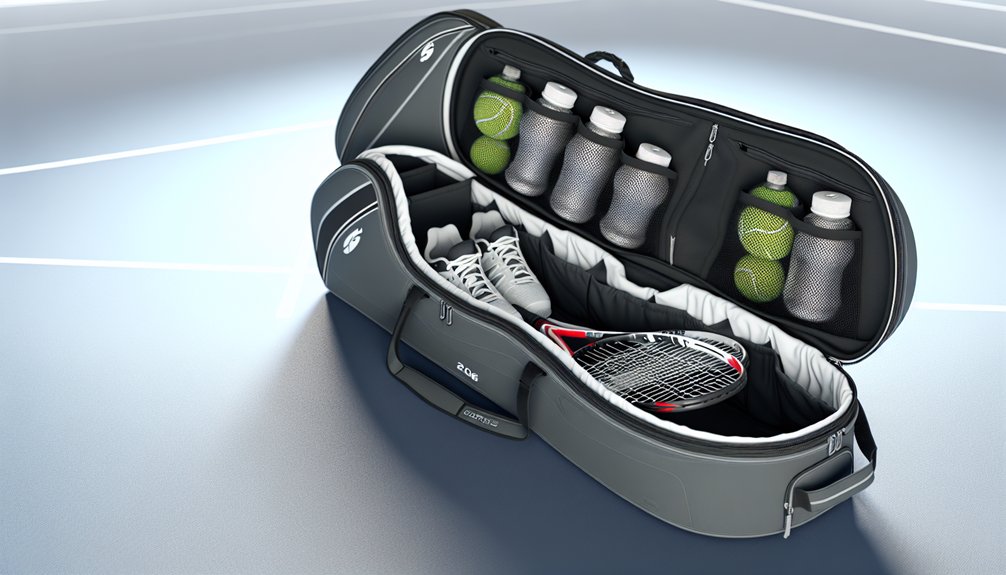
| Visual Zone | What You’re Actually Packing |
|---|---|
| Central Spine | 3–6 racquets, plus an overgrip/lead kit |
| Side Hull Panel | Shoes, wet gear, balls in ventilated sleeve |
| Cockpit Pockets | Strings, tape, snacks, small recovery tools |
You’ll want at least one thermo‑lined chamber and a dirty/clean separation to support evolving league strategies over long match nights. Critically, assess strap ergonomics and zipper durability; some 2026 models still flex under full hydration loads. For tournament essentials, prioritize fast‑access pockets over gimmicky organizers.


High-Capacity Gearlogic Bags for Coaches and Heavy Travelers
Although they look like simple “bigger tour bags,” high‑capacity Gearlogic designs are effectively rolling operations centers for coaches, teaching pros, and players flying with 8–12 frames plus full support kits. You’re not just scaling up volume; you’re demanding high capacity organization that separates team gear, demo stock, and personal equipment while surviving weekly airline handling.
For coach travel, the critical metrics are structural rigidity, handle placement, and load distribution. If the frame walls flex too much, string patterns and grommets get stressed in transit. Wheel assemblies and telescoping handles matter more than aesthetics; if they’re underspec’d, a fully loaded bag becomes unmanageable on long transfers. You should also assess abrasion resistance at base corners and seams, not just fabric denier.
Compartment Layouts for Racquets, Shoes, Apparel, and Tech
When you evaluate Yonex’s 2026 Gearlogic lineup, you’ll want to look closely at how the dedicated racquet chambers, ventilated shoe storage, and segregated apparel zones are actually partitioned and padded. The layout determines whether frames stay protected from torsion, shoes stay isolated from moisture-sensitive textiles, and tech devices remain accessible without heat or impact exposure. You should assess how each configuration matches your specific use case—single-session play, tournament travel, or coaching—because the compartment logic isn’t equally efficient for every loadout.
Dedicated Racquet Chambers
Three core chambers define how effectively a Yonex Gearlogic racquet bag actually works in practice: the racquet compartments themselves, the separated footwear zone, and the shared space for apparel and tech. In the dedicated racquet chambers, Yonex focuses on custom racquet storage, but the execution varies by capacity tier. Higher-end Gearlogic models use denser protective padding and stiffer wall materials, giving better frame isolation during travel.
You’ll typically get two full-length racquet lanes, sometimes a third “hybrid” lane that doubles for clothing when you’re carrying fewer frames. That flexibility is useful, but it can also compress strings if you overload mixed-use sections. If you travel frequently, prioritize models where thermal lining and padding fully wrap each chamber instead of partial or panel-only protection.
Ventilated Shoe Storage
Even with well-padded racquet lanes, a Yonex Gearlogic bag only works as a daily driver if its shoe bay manages sweat, odor, and bulk without contaminating the rest of your gear. You’re evaluating three things: shoe ventilation efficiency, odor control, and how the bay affects internal volume. Gearlogic’s dedicated lower tunnel uses perforated side panels and a semi-rigid floor, so wet outsoles don’t compress into your apparel space, but airflow can still be marginal if you pack the bay to capacity.
Key evaluation points:
- Panel perforation size vs. actual exhaust area
- Separation thickness between shoe bay and central cavity
- Drain-friendly lining for post-rain matches
- Zipper path that lets you access shoes without dumping the whole bag
If you routinely double-stack footwear, you’ll hit limitations quickly.
Tech and Apparel Zones
A modern Gearlogic racquet bag only delivers daily usability if its compartment hierarchy—racquets, shoes, apparel, and tech—matches how you actually move through a match day. In the 2026 lineup, Yonex pushes tech innovations, but you’ll still need to verify whether the layout genuinely separates sweaty textiles from electronics.
Racquet lanes should be thermally lined and rigid enough that laptops or tablets in adjacent tech sleeves aren’t exposed to frame impact. Apparel zones must reflect current apparel trends—bulky warmups plus compressive layers—without crushing stringed frames.
| Zone | Priority Use-Case | Critical Checkpoint |
|---|---|---|
| Racquet Core | Frame protection | Thermal + crush resistance |
| Apparel Bay | Layered clothing | Volume vs. ventilation |
| Tech Sleeve | Laptop / tablet / sensors | Padding, cable routing |
| Side Utility | Grips, tape, accessories | Subdivision, quick access |
| Wet Pocket | Post-match apparel isolation | Waterproofing, odor control |
How to Choose the Right Gearlogic Bag for Your Playing Style
When you’re choosing a Gearlogic bag, the right option depends less on its maximum capacity and more on how its technical features map to your on‑court habits. Effective bag selection tips start with honest playing style considerations: frequency, match intensity, and how much you customize string and grip setups. Just as with choosing a racket, recognizing whether you favor head heavy power frames or faster head light setups helps determine how much protected racquet storage and thermal zoning you’ll realistically need from your bag.
If you grind through long baseline rallies, prioritize thermal racquet chambers and segmented hydration zones to stabilize stringbed performance. Doubles‑first players should emphasize side‑access pockets for faster rotation between frames and coordinated team gear.
Use this short checklist:
- Map racquet count to match load, not collection size
- Align apparel zone volume with session duration
- Verify tech and accessory pockets match your pre‑match routine
- Test carry systems (backpack vs duffel) against commute constraints