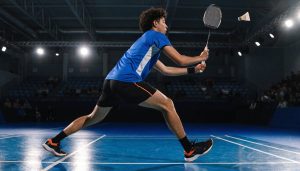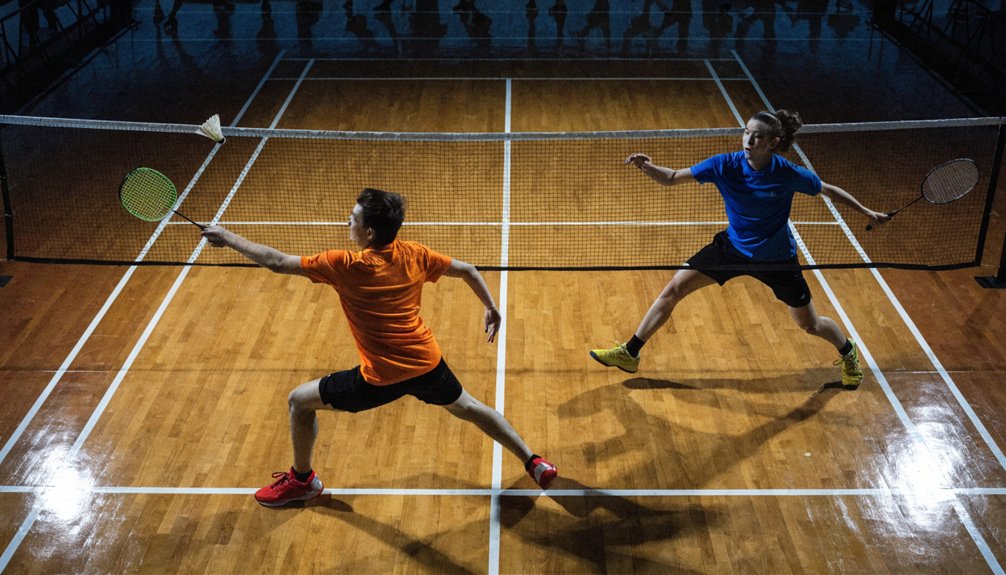
If you want to control rally pace in badminton, start by adding just one extra shot to exchanges you’d normally finish or bail out of. That extra clear, drop, lift, or push lets you shift tempo, disturb your opponent’s rhythm, and buy recovery time without surrendering initiative. The key is knowing *when* to extend, *how* to stay balanced, and *which* stroke changes the pace in your favor—rather than theirs.
Key Takeaways
- Add one safe extra shot in neutral rallies to extend exchanges, increasing opponent fatigue, timing errors, and positional mistakes.
- Use high, deep clears to reset pace, regain balance, and force the opponent to wait before attacking.
- Vary drop-shot depth and tightness to pull the opponent off their base and dictate when the rally speeds up or slows down.
- Recover with disciplined footwork and early preparation so your extra shot doesn’t leave you exposed to fast counterattacks.
- Practice +1 shadow and multishuttle drills to hard-wire the habit of adding one more controlled shot before committing to full attack.
Why One Extra Shot Can Change a Badminton Rally
When you force yourself to play just one more controlled shot under pressure, you extend the rally into a phase where your opponent’s timing, balance, and shot quality are more likely to break down than yours. That extra shot pushes their movement pattern one step further from ideal: deeper lunge, later contact point, higher shuttle, or weaker recovery step. You’re exploiting cumulative micro-fatigue and technical slippage. Each added stroke slightly distorts their base position and racket preparation, making their next choice more predictable and their margin for error smaller. Just as top shuttlers use psychological tactics to trigger errors under pressure, insisting on one extra shot applies a quieter but equally ruthless form of mental and physical stress. Your goal isn’t survival; it’s engineered deterioration. By insisting on one more solid, high-percentage shot, you convert a neutral or defensive exchange into a situation where the next loose lift, short push, or half-court block becomes statistically inevitable.
How to Read Rally Pace and Decide on One More Shot
| Rally cue | What you read | One-more-shot intention |
|---|---|---|
| You off-balance | Late recovery, heavy breathing | Neutralize, don’t attack |
| Opponent late | Rushed swing, poor split-step timing | Sustain pressure safely |
| Shuttle dropping fast | Contact below net tape | Lift or block with clear structure |
| Flat, fast exchange | Both in front-court ready positions | Add a safe, directed extra stroke |
Controlling rally pace with one more shot works best when your sweet spot consistency is high enough that you can neutralize or apply pressure without overhitting.
Use Clears to Reset Rally Pace and Buy Time
Reset the rally with a clear whenever the pace’s become chaotic, your base is exposed, or your preparation is late. A deep, high clear gives you time to recover stance, rebalance your grip, and re-establish your base on the center line. Aim for maximum length, crossing just inside the rear tramlines, with a steep, safe trajectory. Prioritize height over speed under pressure; the shuttle should peak well above your opponent’s reach, forcing them to wait and hit on descent. Use neutral clears (straight or cross) rather than attacking clears when you’re late, so you’re not inviting immediate counterattack. As you recover, scan their preparation: body rotation, grip change, and starting position, then adjust your base slightly forward or backward before their stroke. When you use clears to slow the pace, a slightly more flexible or head-heavy racket can help you generate effortless length while you focus on regaining position and control.
Use Drops to Tighten the Pace and Draw Opponents In
To tighten the pace with drops, you’ll use precise control of shuttle depth to manipulate your opponent’s court position and reaction time. By alternating tight spinning net drops with slightly deeper, slower-falling drops, you force constant adjustment in their lunge distance and base recovery. Once they’re drawn into repeated front court exchanges, you can dictate tempo with quick interceptions, tight net kills, or sudden pushes to the midcourt. Mastering quick grip changes lets you execute these varied drops and follow-up shots efficiently, maintaining control of the rally pace under pressure.
Varying Drop Shot Depth
Although it’s often treated as a simple “soft shot,” a well‑planned drop is one of your most precise tools for controlling rally pace and court positioning. By varying depth, you decide how far your opponent must travel and how early they contact the shuttle, which directly affects their shot quality and your next attacking window.
Use three main depth zones: tape‑tight, mid‑court “dying” drops, and deeper, slower slice drops that land near the service line. Mix these without changing your preparation.
- Match your elbow height and swing path on all drops to hide depth.
- Use tighter drops when opponents recover late or stand deep.
- Use deeper drops when they crowd the net.
- Track their contact height to judge if depth variation works.
- Immediately adjust base position to exploit their weaker reply.
Forcing Front Court Exchanges
You should aim for three things: a tight net reply, early shuttle interception, and immediate re‑positioning. Use sliced drops to pull them forward, then follow up with a net shot or soft push that lands around the service line. This forces them to lift under pressure. As soon as they contact upward, you’re ready to step in, accelerate the pace, or switch to a decisive attack.


Use Lifts and Pushes to Turn Defense Into Attack
Shift defensive rallies in your favor by using lifts and pushes as deliberate tempo-change tools, not just emergency shots. When you’re under pressure, a high, deep lift resets the rally lengthwise, forcing your opponent to generate pace from the rear court. A fast, flat push does the opposite: it compresses time, targeting their body or tramlines to provoke weak replies. Using a head-light racket like the Nanoflare Series can further enhance your ability to accelerate these lifts and pushes, making your tempo changes more explosive and harder to read.
Use these shots as planned shifts:
- Vary lift height: deep, high lifts to slow; flatter lifts to invite rushed smashes.
- Push at hips or racket shoulder to restrict swing options.
- Aim pushes to corners to stretch their recovery time.
- Mix straight and cross pushes to disrupt anticipation.
- Pre-select lift or push based on opponent’s preferred follow-up.
Footwork and Positioning for Safe, Attacking Extra Shots
When you add those extra attacking shots, your footwork and positioning must let you recover fast enough to cover the next reply. You’ll learn how to position your base for early preparation, so you can see the shuttle sooner and commit to an assertive reply. We’ll also map out specific footwork patterns into the corners that keep your body balanced, your center of gravity controlled, and your racket ready for the next attacking option. Understanding how your base shifts within the singles court width and doubles width helps you choose attacking extra shots that still keep the entire court safely covered.
Recovering After Extra Shots
Although extra shots often look improvised, the key to making them safe and dangerous is how fast and how cleanly you recover into a balanced, central base. Right after contact, you must think “finish, push, land, reload.” You’re not watching your shot; you’re already rebuilding your stance.
- Use a controlled braking step after the lunge, absorbing force through a flexed front knee, then push explosively off that leg.
- Lead with your hips back toward base; let your upper body stay relaxed and square to the net.
- Recover on the balls of your feet, avoiding flat-footed steps that delay the next push-off.
- Rebuild a shoulder-width stance with knees flexed and racket slightly forward.
- Time your recovery rhythm to the opponent’s swing tempo, not to the shuttle’s flight.
Positioning For Early Preparation
Exploit early preparation by treating every rally phase as a pre-positioning problem, not just a movement problem. You’re not simply “getting” to the shuttle; you’re arranging your base so the extra shot is safe and still threatens. After each stroke, recover to a base that slightly biases toward your opponent’s strongest reply, while keeping access to the other three corners.
Use split-step timing as the anchor: land your split just before the opponent’s contact so your weight’s centered, knees loaded, and racket in neutral, slightly in front of your body. Keep your torso half-open to the shuttle, never square or completely side-on, so you can pivot explosively in either direction. Prioritize stable, shoulder-width stance over raw distance; you can’t attack early from a narrow, off-balance base.
Footwork Patterns Into Corners
Instead of treating each corner as a desperate sprint, you should hard-wire specific footwork patterns that deliver you there balanced, loaded, and facing back in. From your base, every push-out must already contain your recovery: you arrive in a hitting stance that coils the body to send the shuttle and your weight back toward center. That’s how your “extra shot” slows the rally for you while keeping pressure on the opponent.
- Use a split step timed to their hit, not your guess.
- Push diagonally from your base, never side-step first.
- Land the outside leg loaded; hit as the weight drives inward.
- Keep your chest roughly facing the net on all corner entries.
- Pre-plan one recovery step the instant you initiate the lunge.
Best Extra Shot Choices in Singles vs Doubles
Shot selection for “extra” pace-control strokes changes markedly between singles and doubles, because your spacing, court coverage responsibilities, and risk tolerance are different. In singles, you’ll often add a neutralizing shot that stretches the opponent, resets your base, and keeps your recovery simple. In doubles, your extra stroke must respect your partner’s position and the tighter attacking formations.
| Format | Primary Extra Shot Choice | Purpose |
|---|---|---|
| Singles | High clear to backhand corner | Gain time, move opponent, reset base |
| Singles | Soft straight drop | Shorten rally, invite lift, hold center |
| Doubles | Flat push to midcourt | Deny lift, keep pair on attack |
| Doubles | Controlled half-smash | Apply pressure, limit counter angles |
You’ll choose differently based on your speed, stamina, and technical reliability. And remember that your ability to control pace is also shaped by racket characteristics such as string tension and shaft stiffness, which influence both power and touch in these extra shots.
Common Rally Pace Mistakes and How to Fix Them
Although rally pace seems like a “feel” skill, most errors follow a few repeatable patterns that you can diagnose and correct. You’re not just hitting; you’re sequencing tempo so that each extra shot moves the opponent closer to compromise while keeping you balanced.
- Over-attacking from neutral: you hit full-power when the opponent’s base is stable. Instead, add one probing shot (fast drop, half smash) before committing.
- Passive lifting under no pressure: you reset when you should press. Use a quick, flat extra shot to keep them on defense.
- Symmetric pacing: you play at one constant speed. Deliberately alternate slow, high shots with fast, flat ones.
- Late contact: rushed swings spike pace randomly. Prioritize earlier preparation.
- Ignoring opponent’s recovery: adjust pace based on their landing position and posture.
Choosing a racket with suitable weight distribution and shaft flexibility makes it easier to change speeds smoothly and maintain stable rally pace over long exchanges.
Drills to Practice Badminton Rally Pace With One Extra Shot
Build your rally sense with drills that hard‑wire the habit of adding exactly one extra shot before you change pace or commit to attack. Start with a “+1 shadow drill”: shadow a neutral rally pattern (clear–drop–lift, or drive–block–net) and verbally count “plus one” before every intended attack, reinforcing delay. Maintaining a relaxed forehand grip while shadowing helps reduce wrist and arm strain as you repeat these patterns.
Next, run a multishuttle “+1 attack drill.” Your feeder plays a sequence: neutral shot, neutral shot, lift. You must always play one more neutral stroke after the lift, then attack the next shuttle.
Finish with a consistency rally: play controlled, even‑tempo shots, and every third attackable shuttle must be recycled once (clear, block, or soft net) before you’re allowed to hit hard. Track errors that occur when you skip the extra shot.