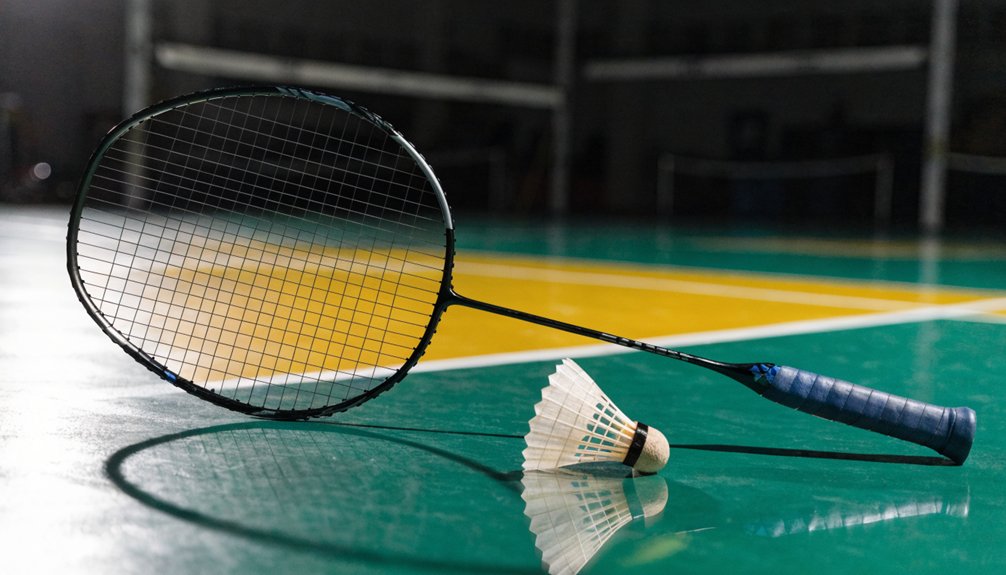
If you’re considering the Yonex Astrox 99 Tour 2026, you’ll want to look past the marketing and focus on how its head-heavy balance, stiff shaft, and graphite-carbon build affect real match play. It’s aimed at players who can generate a full swing, but that also means you may trade some ease of use for sharper rear-court output. The key question isn’t whether it’s powerful, but whether its performance profile actually suits your game.
Key Takeaways
- The Yonex Astrox 99 Tour suits advanced players who use full swings and prioritize rear-court power over quick, wristy defensive play.
- It features a head-heavy balance, stiff shaft, and Rotational Generator System for strong power transfer and stable, crisp contact.
- On court, it delivers explosive smashes, solid lift carry, and dependable block stability, but feels slower than even-balanced rackets.
- The 3U version offers more smash weight, while the 4U version improves maneuverability for drives, blocks, and faster exchanges.
- Compared with the 99 Pro and 99 Game, the Tour balances punch, forgiveness, and value for skilled competitive players.
Who Should Buy the Astrox 99 Tour?

If you generate most of your pace from a full, committed swing, the Yonex Astrox 99 Tour is a strong fit. You’ll benefit most if your game emphasizes rear-court pressure, steep finishes, and deliberate shot construction rather than constant flat exchanges. Compared with more even-balanced frames, it rewards timing, preparation, and clean contact with heavier penetration and better shuttle hold. Drawing on Yonex’s emphasis on Rotational Generator System technology in its Astrox series, the Astrox 99 Tour particularly suits players who want head-heavy power and optimized weight distribution for steeper, more punishing attacks. You probably shouldn’t choose it if you rely on compact defensive reactions or wrist-dominant counterplay. For beginner players, the learning curve can feel steep because mishits and late contact are punished more clearly. For advanced users, though, that feedback is useful: it exposes technical inefficiencies while amplifying a disciplined attacking pattern. If your mechanics are stable and you want a more demanding, attack-oriented response, it’s a logical upgrade path.
What Are the Astrox 99 Tour Specs?
When you assess the Astrox 99 Tour’s specs, you should first look at the frame and shaft, since they largely determine how it compares in stiffness, stability, and power transfer to other attacking rackets. You’ll also want to check the weight and balance, because those numbers directly affect swing speed, head heaviness, and overall handling. Taken together, these specs show whether the 99 Tour aligns more with a demanding power profile or a slightly more versatile setup. Since many modern graphite frames are engineered for stability and vibration absorption, these areas of the spec sheet are crucial for understanding how comfortably and efficiently the racket will play over longer sessions.
Frame And Shaft
At the core of the Astrox 99 Tour, you’re getting a high-modulus graphite frame and shaft built around Yonex’s Rotational Generator System, with a distinctly head-heavy balance and stiff flex that closely mirrors the Astrox 99 Pro on paper.
From a construction standpoint, the frame materials give you a crisp, stable response under load, especially during full-power swings and steep interceptions. Compared with more flexible attacking rackets, the shaft flexibility here is clearly restrained, so you’ll notice less whip but greater directional accuracy when your timing is clean. That makes the Tour feel more disciplined than forgiving. Versus the Pro, it’s still designed to reproduce a similarly compact, controlled feedback profile, though the overall layup feels slightly less refined in vibration damping and impact polish during off-center contact.
Weight And Balance
That firm frame-and-shaft setup only tells part of the story, because the Astrox 99 Tour’s on-court behavior is just as dependent on its weight class and balance point. You’ll typically see it in 3U and 4U, so your choice directly affects swing momentum, recovery speed, and defensive timing versus lighter, faster rackets.
- 3U gives you more mass behind full smashes.
- 4U improves maneuverability in drives and blocks.
- The head-heavy balance point boosts shuttle hold and power.
- Weight distribution feels concentrated up top, not evenly neutral.
- Compared with even-balanced frames, you’ll trade speed for penetration.
If you generate your own power, 4U can feel more efficient. If you want heavier impact and steeper attack angles, 3U usually suits you better, especially from the rear court.
How the Astrox 99 Tour Feels
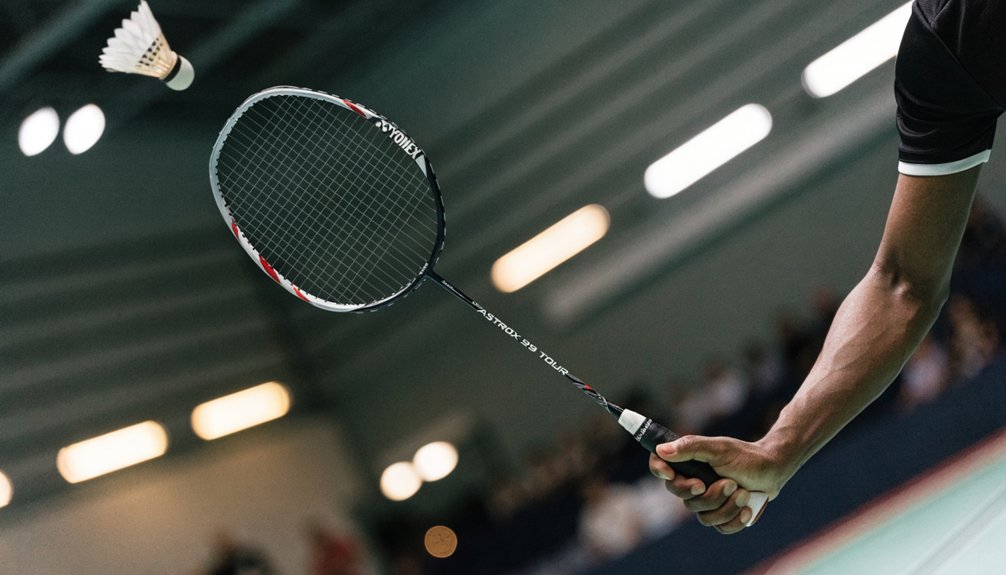
Although the Astrox 99 Tour is marketed as an attacking racket, its feel is defined as much by stability and feedback as by raw power. In hand, you notice firm grip comfort, a compact response, and measured swing speed.


| Feel aspect | Your experience |
|---|---|
| Frame feedback | Crisp, slightly damped |
| Torsional stability | High on off-center shots |
| Shaft response | Firm, controlled kick |
| Grip comfort | Secure, minimally harsh |
| Swing speed | Moderate, not sluggish |
Compared with even-balance models, you get a denser, more deliberate sensation through drives, blocks, and net exchanges. The head weight doesn’t feel unwieldy, but it does slow quick redirections slightly. You’ll likely appreciate how consistently the string bed communicates contact quality, especially when timing is precise under pressure. Many players will find that pairing this frame with titanium-infused strings further enhances its blend of feedback, power, and durability over long sessions.
Power and Smash Performance
You’ll notice the Astrox 99 Tour generates explosive smash output by loading more mass through the head, giving your attack a heavier, more penetrating finish. From the rear court, it transfers power efficiently, so you can produce steep, high-velocity smashes with less loss through the swing. Compared with more even-balanced rackets, it gives you stronger back-court punch, though it demands cleaner timing to access its full power ceiling. Thanks to its head-heavy balance and aerodynamic frame, it behaves like a powerful even-balance compromise between raw smash strength and the maneuverability needed for fast doubles exchanges.
Explosive Smash Output
When you load the Astrox 99 Tour properly, its smash output is unquestionably the defining trait. You’ll notice how the head-heavy balance and stiff response convert committed acceleration into steeper, heavier contact. Compared with more even-balanced frames, its racket dynamics favor terminal pace over effortless repetition, so your smash technique matters more.
- Head weight boosts shuttle compression.
- Stiff shaft sharpens energy transfer.
- Compact timing rewards clean contact.
- Mishits lose more pace noticeably.
- Steeper trajectories pressure defenders.
Analytically, the frame doesn’t create power for you; it amplifies efficient mechanics. If your preparation is late, the shuttle leaves flatter and less penetrating than with more forgiving alternatives. But when your sequencing is synchronized, the Astrox 99 Tour produces a denser, more abrupt impact signature that feels distinctly more punishing at contact.
Rear-Court Power Delivery
Because rear-court power depends on how efficiently a racket sustains momentum through a full overhead swing, the Astrox 99 Tour performs best for players who can load the shaft decisively from the back line. You’ll notice its head-heavy balance preserves shuttle speed better than even-balanced frames when you commit fully through clears, steep smashes, and punch drops.
In comparative terms, its medium-stiff response gives you more accessible power generation than the Pro version, though with slightly less refined feedback at maximum acceleration. For your rear court strategy, that means easier depth and stronger late-contact recovery under pressure. The frame doesn’t feel as instantly whippy as lighter attacking rackets, but it transfers mass more effectively once timing is set. If your mechanics are compact yet forceful, you’ll extract consistent, repeatable rear-court penetration.
How It Handles Fast Rallies
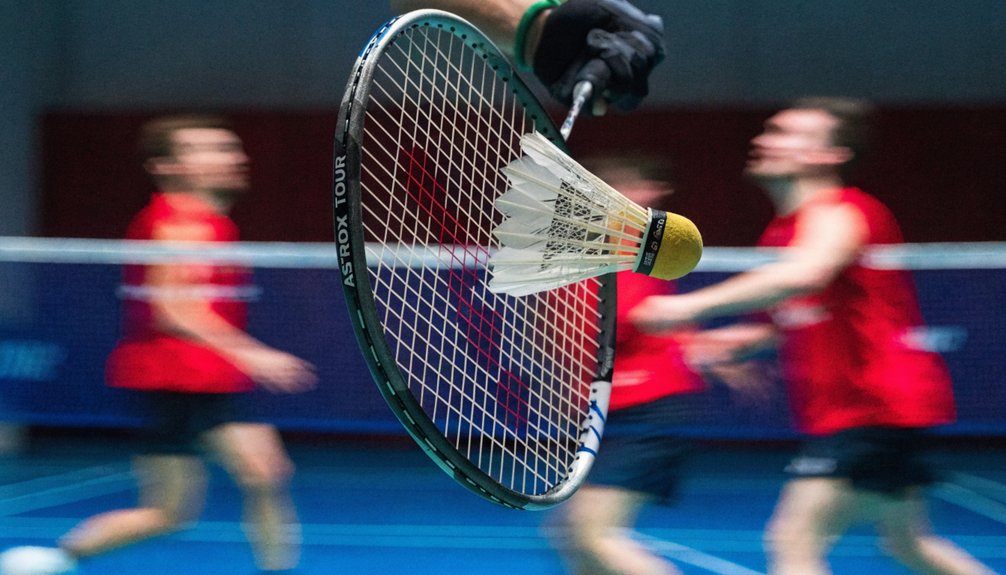
Pace is where the Astrox 99 Tour shows its trade-offs most clearly. In flat exchanges, you’ll notice the head-heavy balance asks more from your forearm and timing than quicker, even-balanced rackets. It doesn’t feel sluggish, but it rewards fast footwork and strategic positioning because late contact costs you racquet-head speed and directional accuracy.
- Drives carry solid weight through midcourt exchanges.
- Rapid redirections require cleaner preparation than lighter frames.
- The shaft recovers predictably, helping you sustain rhythm.
- Net interceptions feel stable, not especially whippy.
- Tempo changes favor committed strokes over reactive flicks.
Compared with speed-oriented models, you’ll generate a heavier response per shot, but less effortless maneuverability. If you initiate rallies and take the shuttle early, the frame stays efficient under pressure and remains consistently precise. For players upgrading from head-light rackets, this increased head weight can boost smash power but will initially demand more strength and refined technique in fast rallies.
How Easy It Is to Defend
That same head-heavy setup shapes the Astrox 99 Tour’s defensive feel more than anything else. You’ll notice solid stability on blocks, especially against steep smashes, but recovery isn’t as instant as on even-balanced frames. Your defensive techniques need cleaner timing because the racket prefers compact preparation over late reactions. For players coming from head-light rackets, the contrast in maneuverability and recovery speed will be immediately noticeable in fast defensive exchanges.
| Area | Astrox 99 Tour | Defensive effect |
|---|---|---|
| Blocks | Stable head | Firmer contact |
| Drives | Moderate speed | Less whip |
| Lifts | Strong carry | Good depth |
| Counters | Solid face | Controlled redirection |
Compared with quicker rackets, you’ll defend best when your shot selection stays proactive. Straight lifts, guided blocks, and controlled pushes feel more reliable than rushed wrist flicks. If you’re set early, the frame absorbs pace well and returns a heavier, more penetrating reply under pressure.
Is the Astrox 99 Tour Hard to Use?
How hard the Astrox 99 Tour feels to use depends mostly on your timing, strength, and usual racket preference. If you’re used to even-balanced frames, its head-heavy swing can initially feel slower, especially during rapid shifts. However, if your preparation is compact and contact point consistent, it becomes manageable rather than punishing. Drawing from Li-Ning’s approach to head-heavy construction, you’ll find that similar power-focused balance profiles demand stronger technique but can significantly enhance smash penetration once mastered.
- Demands clean timing on drives
- Rewards full swings and pronation
- Feels slower than flexible all-rounders
- Suits stronger wrists and forearms
- Improves with focused adaptation drills
Compared with lighter, softer rackets, you’ll notice less instant forgiveness on mishits and late interceptions. That said, it isn’t excessively difficult; it’s selectively demanding. For beginner tips, lower tension and shorten your backswing. For advanced techniques, use earlier racket preparation to reveal steeper smashes and tighter control under pressure in fast doubles exchanges.
Astrox 99 Tour Vs Pro Vs Game
When you compare the Astrox 99 Tour, Pro, and Game, you’ll notice clear differences in performance and feel, especially in stability, shaft response, and overall feedback. The Pro gives you the most refined and solid hitting experience, while the Tour targets a similar spec with slightly less precision, and the Game feels more forgiving but less crisp. You should also weigh build quality against price, since each version shifts the balance between premium materials, on-court performance, and value. As you decide between these three models, remember that your style of play and overall game impact matter more than any single spec difference on paper.
Performance And Feel
While the Astrox 99 Tour sits closest to the Pro in overall intent, the three models diverge clearly in feel once you start hitting with them: you’ll notice the Pro delivers the most solid control stability, with the crispest response under full acceleration. The Tour feels slightly less refined but still authoritative, balancing feedback and swing speed well. The Game is easier to access, with a softer, less demanding response.
- Pro gives the cleanest shuttle hold and sharpest repulsion.
- Tour preserves punch while feeling marginally more forgiving.
- Game swings easier, especially in fast defensive exchanges.
- Pro rewards stronger timing and more complete strokes.
- Tour offers the best middle ground for advanced club play.
If you generate power consistently, the Pro feels superior; if you want usability without losing backbone, you’ll prefer the Tour most.
Build And Price
Feel on court only tells part of the story, because the Astrox 99 Pro, Tour, and Game are also separated by material quality, finishing detail, and pricing logic. You’ll notice the Pro has the highest build quality, with tighter manufacturing tolerances, cleaner paintwork, and the most refined shaft-to-frame response under load.
The Tour sits one tier below, but it still feels solid, structurally consistent, and better finished than the Game. For many players, that makes it the value midpoint. The Game is the most budget-oriented, using simpler materials and showing less precision in feedback and cosmetic detailing. In a direct price comparison, the Pro asks for premium-level investment, the Tour offers the strongest cost-to-performance ratio, and the Game gives you the most accessible entry into the Astrox 99 line overall.
Best String Tension for the Astrox 99 Tour
Choosing the best string tension for the Astrox 99 Tour depends mainly on how much of its stiff shaft and head-heavy balance you can realistically load through your swing. Lower string tension gives you easier repulsion and a larger sweet spot, while higher ranges sharpen control but demand cleaner timing and stronger acceleration for you. For most Astrox 99 Tour owners, starting within the manufacturer’s recommended string tension range helps balance performance with durability and warranty safety before fine-tuning up or down.
- 22–24 lbs: easiest power access
- 24–26 lbs: balanced ideal settings
- 26–28 lbs: tighter control, less forgiveness
- Hard hitters benefit from firmer beds
- Defensive players often prefer lower tension
Compared with even-balanced rackets, this frame usually feels better slightly lower unless your player style is aggressive and technically consistent. Your personal preference still matters most, because string type, shuttle speed, and contact quality all shift the effective response under pressure.
Is the Astrox 99 Tour Worth It?
Once you’ve dialed in the right tension, the value of the Astrox 99 Tour comes down to whether its performance profile matches your game better than lighter, faster, or more forgiving alternatives. If you generate power with full swings and want a firm, head-heavy response, you’ll likely see strong returns from its frame stability and steep attack angle. From a value comparison standpoint, you’re getting much of the Astrox 99 Pro’s intent at a lower price, though not the same premium feel or refinement. Compared with even-balanced or speed-focused rackets, it asks more from your timing and forearm strength. That tradeoff can be worth it if singles or rear-court doubles define your style. Across user reviews, the consensus is clear: it’s worth buying when your technique can fully reveal its design. The Astrox 99 Tour’s use of carbon fiber aligns it with the broader trend of lightweight and durable high-performance rackets that justify a premium through superior power and frame stability.
Frequently Asked Questions
Does the Astrox 99 Tour Come With a Full Racket Cover?
Yes, you typically get a full racket cover with the Astrox 99 Tour. You’ll find it supports racket durability, though inclusions can vary by retailer. Compared with premium models, your player experience remains well-protected overall.
Where Is the Astrox 99 Tour Manufactured?
It’s manufactured in Taiwan. You’ll find Yonex’s manufacturing process there emphasizes consistency, while quality assurance standards remain stringent. Comparatively, it doesn’t match Japan-made premium lines exactly, but you’re still getting reliable build precision overall.
What Grip Size Options Are Available for the Astrox 99 Tour?
Available grip sizes are typically G4 and G5—precision through proportion. You’ll find G5 slimmer for quicker handling, while G4 offers greater grip comfort. Comparatively, overgrip choice further affects fit, control, and grip durability overall.
Which Colorways Are Offered for the Astrox 99 Tour?
You’ll typically find the Astrox 99 Tour in Cherry Sunburst and White Tiger. These color options emphasize distinct design features; compared technically, Cherry Sunburst looks bolder, while White Tiger delivers a cleaner, more contrasting aesthetic.
How Often Should the Astrox 99 Tour Be Restrung?
You should restring the Astrox 99 Tour every 2–3 months if you play weekly, or after roughly 50 hours. Your string tension drops differently across string materials, so thinner gauges generally degrade faster than thicker alternatives.