Studies on racket sports show movement errors can cost you the point before you even swing. If your ready stance is late, your split step mistimed, or your recovery slow, you’ll keep working harder than necessary and still arrive off balance. The good news is that most badminton footwork mistakes are predictable, which means you can correct them with the right cues and drills. The first fix is simpler than most players expect.
Key Takeaways
- Start with a balanced ready stance: feet wider than shoulders, knees bent, and weight on the balls of your feet.
- Identify where movement fails by reviewing video and focusing on one recurring mistake, like late split steps or flat feet.
- Avoid crossing your feet too early; use chasse or adjustment steps to stay balanced and reach the shuttle efficiently.
- Recover immediately after each shot by pushing off strongly and returning to a base position that matches your opponent’s options.
- Practice shadow footwork, ladder drills, and multi-shuttle exercises with short, high-quality repetitions to build consistent, reliable movement.
Fix Your Badminton Ready Stance First
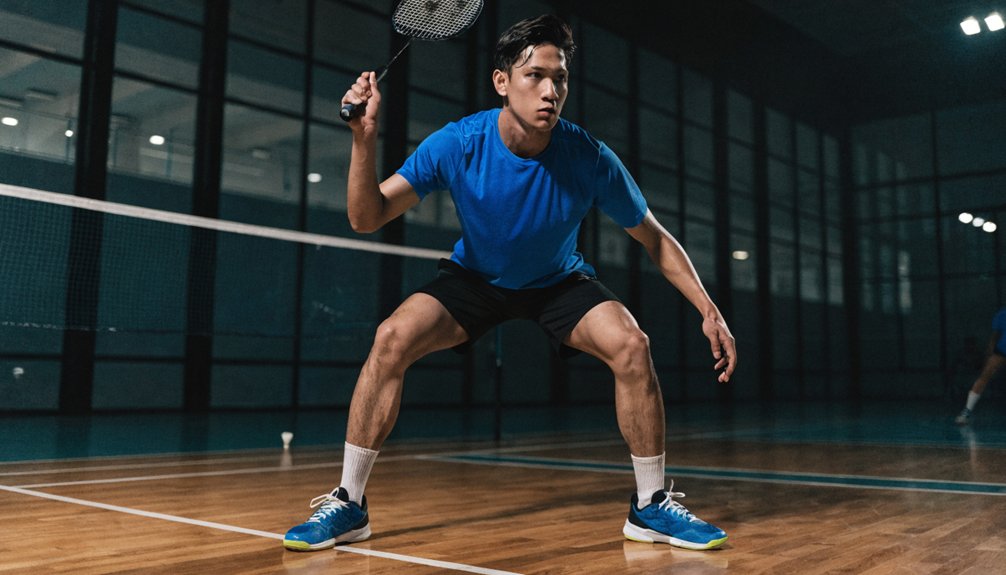
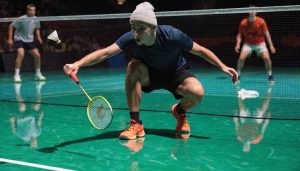
Before you try to fix split steps, lunges, or recovery speed, start with your ready stance because it sets up every movement that follows. Your ready position should feel balanced, light, and alert, not stiff or upright. Keep your feet just wider than shoulder width, knees bent, hips loaded, and weight on the balls of your feet.
Small stance adjustments make a big difference in how quickly you can react. If your feet are too narrow, you’ll lose balance; too wide, and you’ll push off slowly. Let your racket foot sit slightly behind for easier forward and backward movement. Keep your chest lifted and shoulders relaxed so tension doesn’t delay your first step. When your stance is efficient, every direction becomes easier, cleaner, and more controlled on court. Good movement also depends on secure racket handling, and using the right basic grips helps you stay adaptable as rallies speed up.
Spot the Footwork Mistakes Hurting You Most
Where do your rallies start to break down—on the first step, the stop, or the recovery? Use simple footwork analysis to identify the phase where you lose balance, delay contact, or waste energy. Video a few rallies, then compare what you feel against what actually happens. In tight matches, mental focus matters too, because distractions and pressure can make small footwork errors show up more often.
| Phase | Common errors | Quick check |
|---|---|---|
| First step | Late split, flat feet | Do you react after opponent contact? |
| Stop | Upright braking, drifting | Can you decelerate without extra hops? |
| Recovery | Watching shot, slow reset | Are you returning to base immediately? |
You don’t need dramatic changes. Fix the mistake that appears most often, not the one that looks worst. When you measure one pattern at a time, your movement gets cleaner, faster, and more reliable under pressure during long rallies.
Stop Crossing Your Feet at the Wrong Time
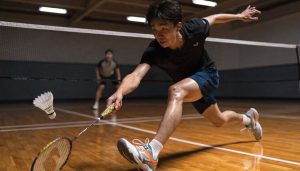
Once you’ve identified the phase that keeps breaking down, watch for one of the most common causes: crossing your feet when you should be using quick chasse or adjustment steps. Crossing too early narrows your base, delays racket preparation, and makes direction changes less stable. You’ll often notice it when you’re rushing wide shots or reacting late to deception.
Focus on cleaner foot placement: keep your outside leg leading, then use short, connected steps to stay balanced into the hit. Strong timing cues help here. If the shuttle is still traveling and you’ve got space, glide with chasse steps; if contact is near, use adjustment steps instead. Footwork drills can sharpen movement speed and agility, making it easier to stay balanced without crossing too soon. Film yourself and check whether your feet cross before your body turns. Fix that sequence, and you’ll move with more control, precision, and confidence under pressure.
Recover Back to Base Faster
Often, the reason you feel late on the next shot isn’t the lunge or jump out to the shuttle—it’s the pause after contact. If you admire your shot for even a moment, you give away recovery time. The fix is simple: push off immediately after striking, using the outside leg to drive your body back under control.


Good recovery isn’t just about speed; it’s about base positioning. You should return to a spot that matches the opponent’s options, not blindly retreat to the exact center every time. Keep your stance balanced, racket up, and feet active so lateral movement feels ready, not rushed. A lightweight racket can also support faster recovery by improving maneuverability and reaction time during quick exchanges. As you practice, focus on landing stable, then rebounding smoothly. When recovery becomes automatic, you’ll feel earlier to rallies and far less reactive under pressure overall.
Move Efficiently to Every Shuttle
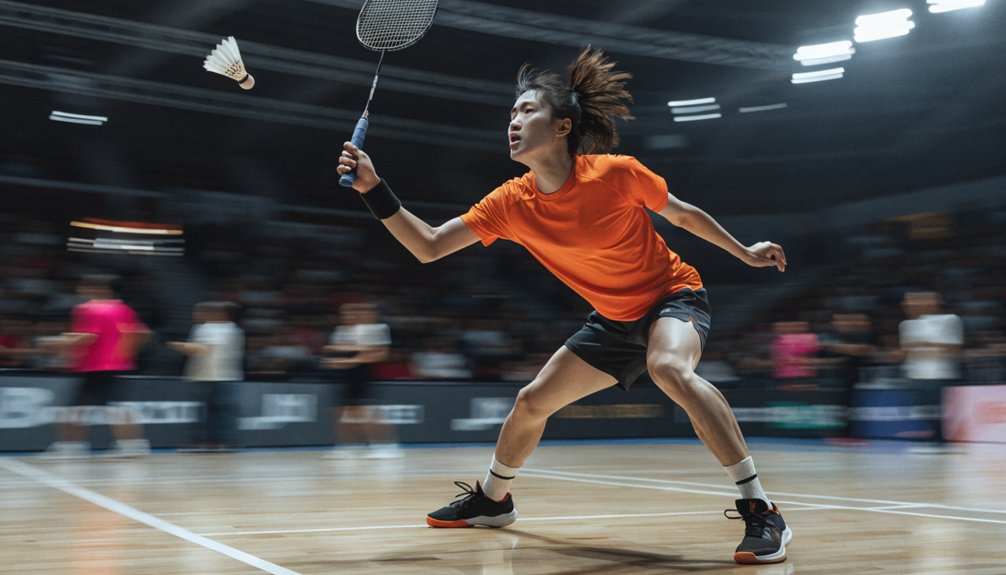
To move efficiently to every shuttle, you need footwork that gets you there quickly without wasting steps. When your court coverage improves, you’ll reach shots earlier and stay balanced for the next movement. Focus on clean recovery steps after each hit, and you’ll cut delays, conserve energy, and keep rallies under control. Just as playing style should guide racket selection, your footwork patterns should match how you play so your movement stays quick, balanced, and effective.
Faster Court Coverage
When your court coverage improves, you don’t need to rush—you simply arrive sooner and in better balance. That starts with smarter court positioning before your opponent strikes. If you stand too flat or too deep, every shuttle feels farther away. Instead, hold a ready base that lets you push explosively in any direction. Keep your weight on the balls of your feet, knees loaded, and racket leg prepared to drive.
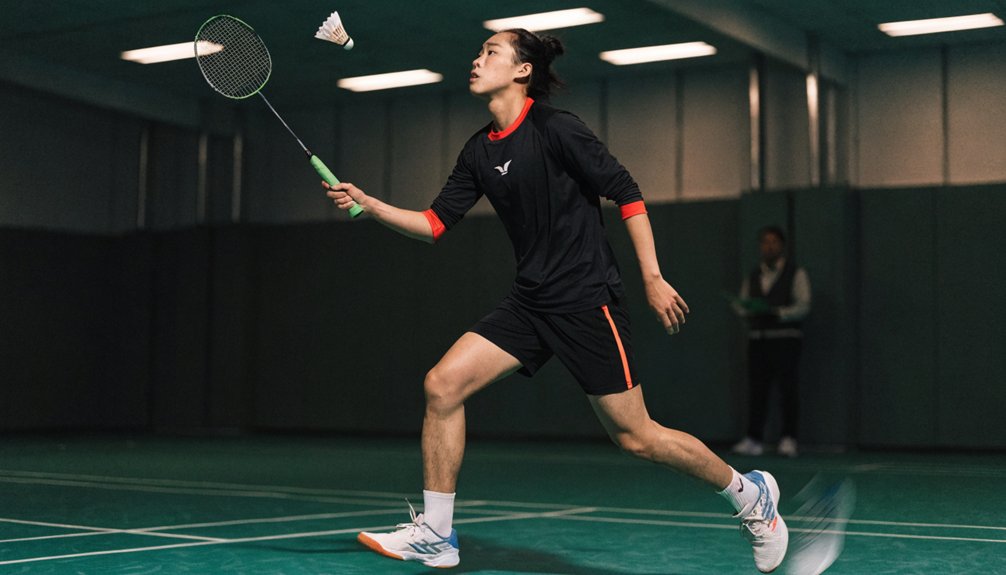
Efficient lateral movement is equally important. Rather than crossing your feet early, use quick adjustment steps to stay stable while changing direction. On deeper shots, open your hips and take your first step immediately, not after you recognize the shuttle’s full path. You’ll cut wasted motion, reach shots earlier, and create more time to play controlled, accurate returns under pressure consistently.
Better Recovery Steps
Although reaching the shuttle matters, recovery is what keeps the next movement efficient. After each shot, you should push back with controlled lateral movement, precise foot placement, and steady balance control. Don’t admire your shot; reset your base early so quick pivots and explosive starts stay available. Good rhythm timing helps you absorb momentum and prepare for sudden directional changes, improving reaction speed.
| Focus | Cue |
|---|---|
| Foot placement | Land under your center, not behind it |
| Balance control | Stay low, chest stable, racket ready |
If you’re late recovering, analyze whether your last step was too long or upright. Shorter, sharper recovery steps let you cover the next shuttle sooner, conserve energy, and move with confidence under pressure during longer, faster rallies.
Use Drills to Fix Badminton Footwork
To correct footwork mistakes, you need drills that isolate movement patterns and build better habits through repetition. Shadow footwork drills help you sharpen court positioning, balance, and recovery without the distraction of the shuttle. Ladder speed drills then improve your quickness and coordination, so you can move more cleanly and react faster in rallies.
Shadow Footwork Drills
Start with shadow footwork because it lets you isolate movement errors without the distraction of the shuttle. You can slow each sequence down and check whether your base returns are balanced, your first step is efficient, and your recovery stays controlled. That makes shadow movement techniques ideal for correcting habits before they appear under pressure.
Map simple footwork patterns to each corner, then rehearse them with purpose. Move from your base, plant cleanly, simulate the stroke, and recover immediately. Count rhythm if your timing breaks down, and use a mirror or video to spot drifting hips, crossed feet, or upright posture. Keep repetitions short so quality stays high. As you improve, add speed without losing form. You’re training consistency, not just effort, and that’s what sharpens court movement.
Ladder Speed Drills
A ladder gives you immediate feedback on foot placement, rhythm, and balance, which makes it a useful tool for cleaning up sloppy badminton movement. If your steps cross, drag, or land unevenly, the pattern exposes it instantly. Start with simple in-and-out steps, then add lateral runs, split-step entries, and single-leg hops to mirror court demands.
Use these ladder techniques with short, controlled bursts instead of rushing. You’re training precision first, then speed. Keep your hips low, chest stable, and feet light so you don’t bounce or overstride. Count your contacts to maintain tempo, and reset when form breaks down. The agility benefits show up when you recover faster, change direction cleanly, and arrive balanced for the next shot under pressure during long rallies and tight exchanges.
Train Faster Footwork for Match Pressure
Build speed under pressure by training your feet to react, not just move. When rallies speed up, hesitation ruins recovery. You need dynamic agility that links split steps, first-step explosion, and balanced braking. Use match simulation so your footwork adapts to real timing, angles, and deception. Pair this with a secure forehand grip, which helps reduce wrist and arm strain during fast exchanges.
| Drill | Focus | Benefit |
|---|---|---|
| Shadow rally bursts | First-step reaction | Faster court coverage |
| Random cone calls | Direction changes | Better decision speed |
| Multi-shuttle pressure sets | Recovery balance | Stronger repeat movement |
Train in short, intense intervals, then assess whether you’re arriving early, balanced, and ready to hit. If you’re late, reduce complexity and rebuild precision before adding speed. That’s how you make quick feet reliable when points get tight and decisions must happen instantly under fatigue too.
Frequently Asked Questions
How Often Should I Replace Badminton Shoes for Proper Support?
Replace your badminton shoes every 6–12 months, depending on play frequency. Like a car tire thinning after 500 miles, declining shoe durability reduces foot support. If cushioning flattens or grip fades, you should replace them sooner.
Can Badminton Footwork Training Help Prevent Ankle and Knee Injuries?
Yes, badminton footwork training can help prevent ankle and knee injuries by improving balance, alignment, and landing mechanics. If you practice footwork drills consistently, you’ll strengthen stability, reduce strain, and support better injury prevention over time.
What Type of Court Surface Affects Badminton Footwork the Most?
Wooden sprung floors affect your footwork most because they balance grip and shock absorption. You’ll need smart footwork adaptation on slippery synthetic or concrete court surface types, adjusting push-offs, braking, and recovery to stay efficient.
Should Beginners Practice Footwork Before Learning Advanced Racket Techniques?
Yes, you should practice footwork first, because beginner focus on footwork fundamentals builds balance, speed, and court awareness. You’ll learn advanced racket techniques faster, move more efficiently, and avoid developing habits that limit progress later.
How Long Does It Take to See Footwork Improvement?
You’ll often notice footwork improvement within two to six weeks, if you’re practicing with training consistency. Use visual aids to analyze movement patterns, correct inefficiencies, and stay encouraged—steady, focused repetition usually delivers measurable gains quickly.