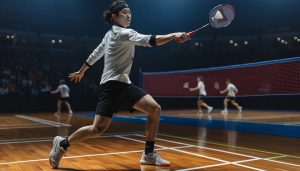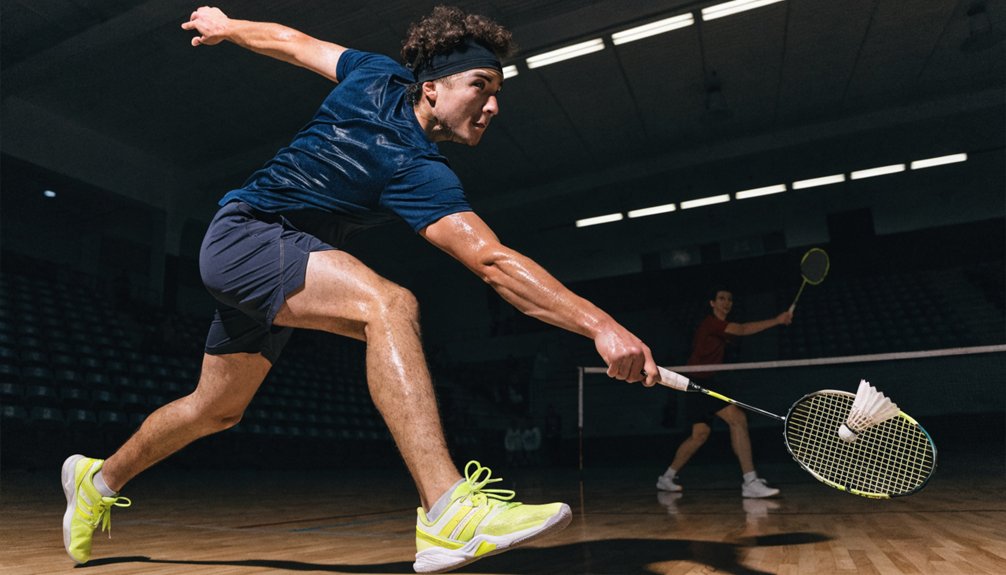
If your attack feels a little underpowered, you’re likely giving away initiative before the shuttle even drops. You build pressure by starting with a balanced stance, preparing your racket early, and moving behind the shuttle soon enough to strike at full reach. From there, your smash, clear, drop, and net follow-up need to work as one pattern, not separate shots. The difference usually comes from a few precise adjustments that most players overlook.
Key Takeaways
- Build an attacking base with a wide stance, bent knees, relaxed grip, and racket up for faster movement and recovery.
- Improve smash power by using legs and core, tightening the grip at contact, and striking the shuttle at the highest point.
- Attack earlier by using a quick first step, taking shuttles in front, and staying slightly forward after soft attacking shots.
- Create openings with deep clears, disguised drops, and half smashes to stretch opponents and force weak returns.
- Vary angles, pace, and placement based on your opponent’s balance and court position to stay unpredictable and maintain pressure.
Build Your Attack Stance and Preparation
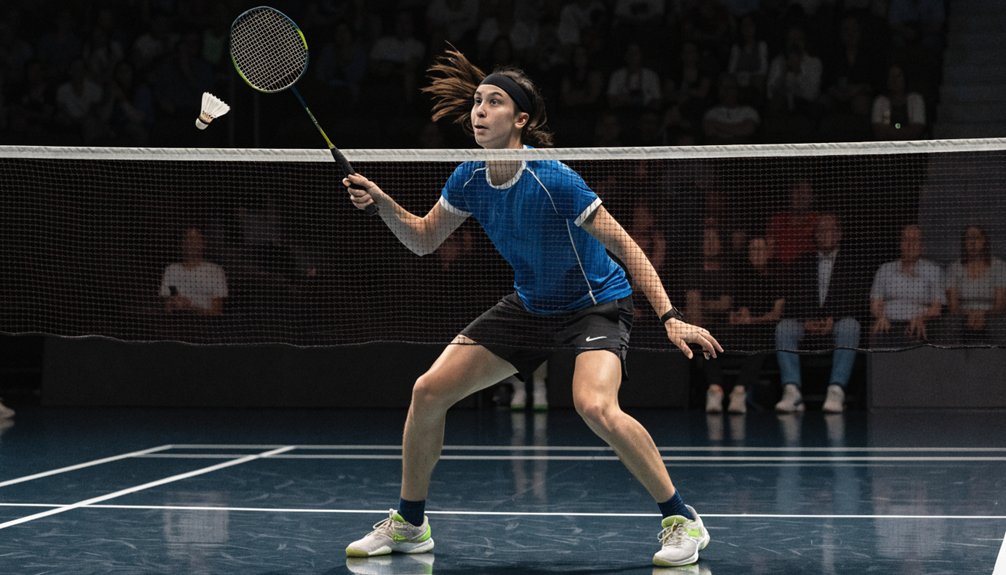
A strong attack starts with an efficient stance and early preparation. You need a slightly wider base than neutral, knees flexed, weight on the balls of your feet, and your racket held in front at chest height. Keep your center of gravity stable so you can push explosively in any direction without losing balance.
Your attack mindset should begin before the shuttle crosses the net. Read your opponent’s contact point, recover quickly, and position yourself behind the shuttle whenever possible. Effective body positioning means turning your hips and shoulders early, setting your non-racket arm for balance, and aligning your racket foot to support forward transfer. Stay relaxed through the grip and upper body, because tension delays your first move and reduces your ability to intercept attacking opportunities early. Using a relaxed forehand grip can reduce wrist and arm strain while helping you prepare efficiently for powerful attacking shots.
Improve Your Badminton Smash Technique
To strengthen your smash, you need efficient power generation mechanics that start from the legs, transfer through the core, and finish with a fast, controlled racket action. You also can’t ignore smash timing precision, because contacting the shuttle at the highest reachable point improves angle, speed, and pressure on your opponent. When you coordinate these two elements, you’ll produce a more reliable and more aggressive attack. Using a racket with a well-defined Sweet Spot can also improve smash power and accuracy by helping you strike the shuttle more cleanly.
Power Generation Mechanics
When you want a heavier smash, focus on sequencing force from the ground up rather than swinging harder with your arm alone. Drive upward using leg strength, stabilize through core engagement, and transfer energy through body rotation into the hitting shoulder. Keep shoulder alignment organized so your chest opens powerfully without collapsing your posture.
As the racket accelerates, manage grip pressure progressively: stay relaxed early, then tighten near contact to amplify swing speed and sharpen wrist action. Your racket angle should stay consistent with your intended downward trajectory, not forced by excessive forearm tension. Use a compact loading phase, then unwind smoothly so the arm works as the final link, not the primary engine. Finish with a balanced follow through that preserves recovery position and reinforces efficient power production under pressure.
Smash Timing Precision
Power means little if your contact point is late, rushed, or mistimed, because smash quality depends on meeting the shuttle at the highest reachable point with your body already organized behind the shot. You must load early, track the shuttle continuously, and synchronize your final step, shoulder rotation, and pronation.
Use timing drills and rhythm training to calibrate approach speed and strike sequencing. Vary shuttle placement so you learn to adjust spacing without breaking mechanics. Improve reaction speed through multi-shuttle feeds, but combine them with reading opponents and anticipation skills, so you move before the lift peaks. During practice routines, rehearse delayed and fast tosses to sharpen adaptation. Keep mental focus on three cues: split-step timing, hitting height, and contact out front. When these align, your smash becomes earlier, cleaner, and harder.


Use Footwork to Attack Earlier
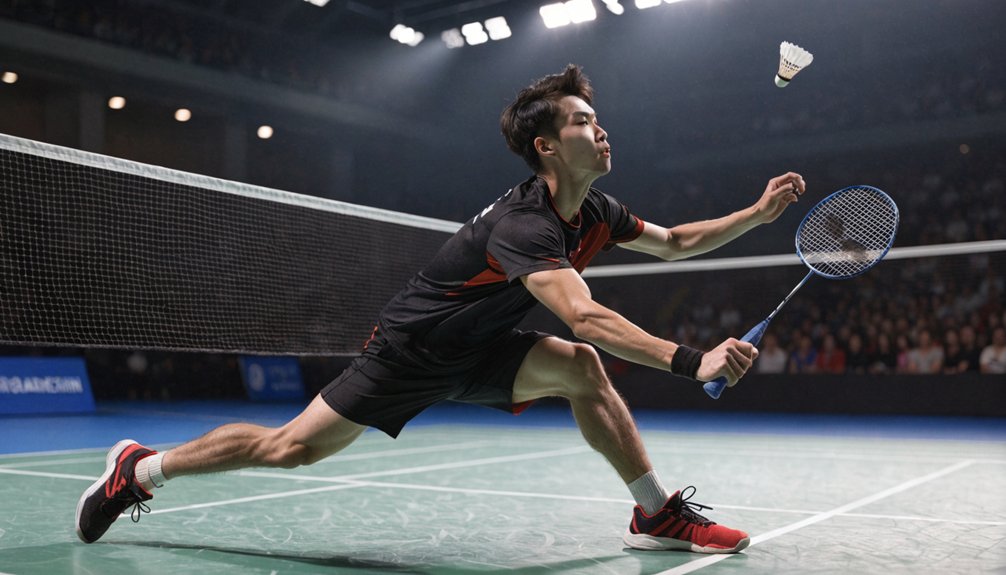
To attack earlier, you need a faster first step that gets your body moving the instant you read the shuttle. That quick reaction lets you reach the shuttle in front of your body and strike from a more aggressive contact point. If your footwork is sharp, you’ll take time away from your opponent and create stronger attacking options. Strong movement also helps you stay composed under mind games, so you can keep attacking without losing focus.
Faster First Step
Explode off the split step so you reach the shuttle earlier and turn neutral exchanges into attacking chances. Your first move should be compact, loaded, and directional. Time the split as your opponent strikes, then push sharply from the outside leg. This creates explosive movements without wasting steps and improves lateral speed into forecourt, midcourt, or rear-court lanes.
Build this with reaction drills that force immediate changes of direction, plus agility training that sharpens foot placement under pressure. Add balance exercises and core stability work so your hips stay aligned during the initial drive. That alignment lets you transfer force cleanly and recover faster after the plant. Pair physical work with mental readiness cues, so your quick reflexes trigger instantly when you read racket angle, contact point, and likely shot pattern.
Reach The Shuttle Early
A fast first step only matters if it carries you into position early enough to take the shuttle in front of your body and above tape or shoulder height. That contact point lets you hit steeper smashes, tighter net kills, and faster drives before your opponent resets.
To reach it sooner, you need efficient recovery, explosive chasse steps, and early anticipation from your opponent’s preparation. Read racket angle, body rotation, and shuttle speed immediately, then move on the first reliable cue. Your goal isn’t just speed; it’s precise shuttle positioning so your last step balances you for attack. Arrive with your racket up, non-racket arm stabilizing, and weight slightly forward. If you’re late, your options shrink into lifts or flat replies. Get there early, and you control pressure and direction consistently.
Create Badminton Attack Chances With Clears
Pressure starts with a clear that does more than reset the rally. When you apply sound clear techniques, you can push your opponent deep, force a late contact point, and shorten their reply options. Aim high and deep to the rear tramlines, varying height and pace so they can’t settle into rhythm. A flatter attacking clear can rush their recovery if you’ve taken the shuttle early.
Your objective is to move them backward while preserving your own strategic positioning. Recover to base immediately after contact, ready to intercept a weak block, short clear, or loose lift. If their backhand rear corner is weaker, target it repeatedly until their footwork breaks down. Use clears to stretch their court coverage, create imbalance, and earn shorter returns that let you step in and seize initiative on the next shot. Using a racket with an even balance can help you maintain both rear-court control and quick recovery during attacking clear exchanges.
Use Drops and Half Smashes for Angles
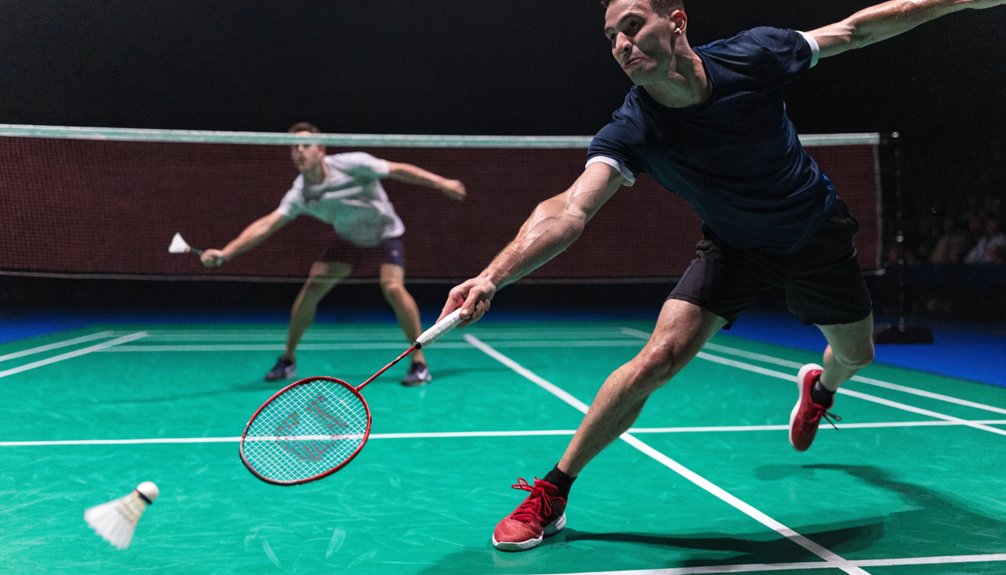
Once you’ve pushed your opponent deep, use drops and half smashes to change the shuttle’s angle and make their recovery path longer. Instead of repeating full-power attacks, vary your contact point and racket face to redirect the shuttle sharply across court or steeply downward. This creates angle variation without sacrificing control or exposing your base.
Your drop shot strategy should disguise softer strokes from the same preparation as your clear or smash. Aim drops just past the service line or toward the sideline to force awkward lunges. With half smashes, reduce pace slightly but keep a fast, descending trajectory that lands wider than a straight smash. A lightweight racket can improve maneuverability and help you recover faster between these attacking variations. You’re trying to stretch their footwork patterns, disrupt timing, and open weak replies. When you alternate these options, your attack becomes less predictable and more efficient overall.
Win More Points With Quicker Net Attacks
After using drops and half smashes to pull your opponent forward and off balance, you need to capitalize with faster net attacks before they can reset. Take the shuttle early, above tape height when possible, and keep your racket head up so your contact stays compact and threatening. Effective net positioning strategies let you close space without overcommitting your base. Choosing a racket with the right string tension can also improve your ability to control quick net interceptions and delicate front-court pushes.
- Hold a slightly forward stance after each soft attack.
- Intercept spinning replies before they dip below tape.
- Push through the shuttle with short, controlled finger power.
- Recover one step back only after forcing a lift.
- Use quick reaction drills to sharpen first-step explosiveness.
Your goal isn’t power; it’s denial. By reducing your opponent’s time and angles at the net, you’ll create weak lifts and maintain attacking pressure through tighter, faster front-court exchanges consistently.
Choose the Right Attack Each Rally
Because every rally presents a different balance of shuttle height, opponent position, and your own recovery time, you can’t default to the same attacking shot each time. Your attack strategy should begin with shot selection based on rally dynamics and court positioning. If the shuttle sits short, you can press steeply; if it’s flatter, drive through the body or into space.
Use opponent analysis to read balance, grip, and base position before committing. Good risk assessment helps you decide whether to hit hard, hold and push, or vary pace with tactical variations. In pressure situations, trust anticipation skills to recognize weak replies early. The better your reaction time after contact, the more confidently you can choose aggressive options without losing structure or exposing the next shot. Racket setup also matters, because string tension affects both control and power when choosing how aggressively to attack each rally.
Fix Common Badminton Attack Mistakes
Even with smart shot selection, an attack breaks down fast if a few recurring errors keep showing up. You need to diagnose them quickly, then apply precise corrections that preserve pressure without sacrificing balance, timing, or court coverage.
- Hitting too hard too early reduces control; build pace progressively.
- Attacking from poor positions weakens recovery; set your base before accelerating.
- Repeating one pattern makes you predictable; vary angle, height, and tempo.
- Ignoring strategic placement wastes opportunities; target hips, backhand, and open space.
- Losing your attack mindset after one block hands initiative away; stay proactive.
A racket with even balance can help you maintain both power and control while correcting rushed or off-balance attacking shots.
You should also watch racket preparation and contact point. If your racket drops or you strike late, your attack loses penetration. Keep preparation compact, contact high, and recover immediately for the next shot.
Frequently Asked Questions
How Often Should I Practice Attacking Drills Each Week?
You should practice attacking drills 3–4 times weekly, balancing recovery and quality. Use attack drill variations to target timing, placement, and shift speed. Adjust practice intensity so you don’t compromise technique, consistency, or match readiness.
What Racket String Tension Helps Improve Attacking Shots?
Picture your smash exploding like thunder: use 24–28 lbs string tension for ideal power and shot control. You’ll balance player preference with string durability; make careful tension adjustment, testing incrementally until your attack feels precise, fierce.
Can Doubles Tactics Strengthen My Singles Attack Strategy?
Yes, doubles tactics can strengthen your singles attack strategy by sharpening anticipation, changeover speed, and shot selection. You’ll adapt doubles formations principles and maintain aggression balance, improving pressure creation, recovery positioning, and counterattack readiness in singles.
How Do I Stay Aggressive Without Losing Too Much Stamina?
Like fire controlled, you stay aggressive by pairing an Offensive mindset with disciplined Energy management: attack selectively, shorten rallies, recover efficiently, and vary tempo. You’ll pressure opponents without draining yourself, preserving explosiveness for decisive points.
What Mental Habits Help Build Confidence in Attacking Rallies?
Build confidence by rehearsing attacking patterns with visualization techniques, using positive affirmations between points, and reviewing successful decisions. You’ll trust your shot selection more when you focus on process cues, controlled breathing, and immediate tactical resets.