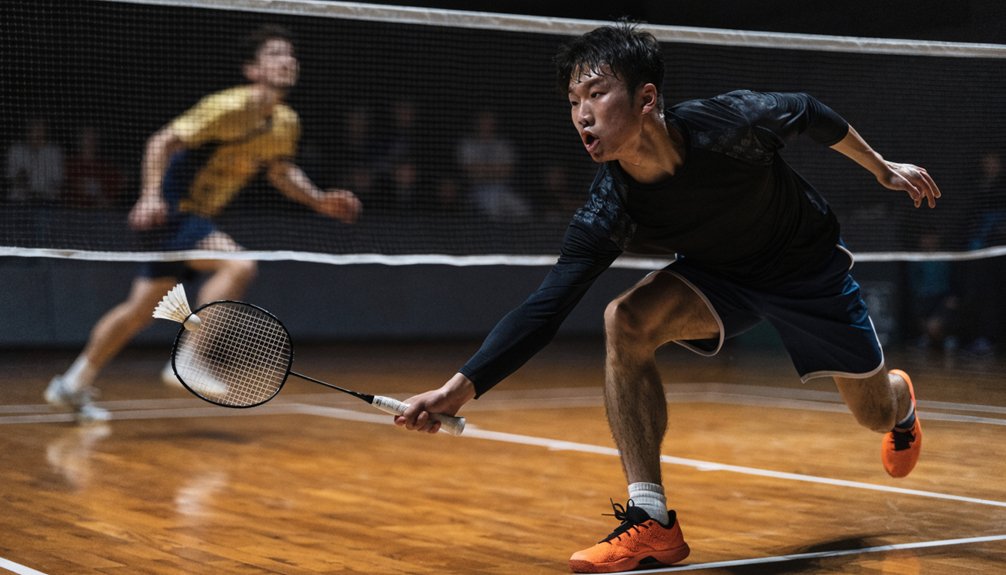
What you may not realize is that a faster badminton opponent often becomes easier to manage when you control where they have to move. You don’t need to match their speed; you need to take away their best angles, break their rhythm with height and depth, and force late contact. If you stay composed and choose your shots with intent, you can make quick players feel rushed—and that shift changes everything.
Key Takeaways
- Control the rally with deep, high clears and changing pace so faster opponents cannot dictate every exchange.
- Recover quickly to a smart base position, keep shoulders square, and read body cues early to cut off angles.
- Use tight drops, spinning net shots, and mixed straight-cross placements to force awkward movement and disrupt rhythm.
- Target the body and rear court with deep clears, hip-height drives, and varied lifts to jam timing and footwork.
- Stay composed, breathe between shots, and choose disciplined, high-margin placements instead of forcing risky winners.
How to Beat a Faster Badminton Opponent
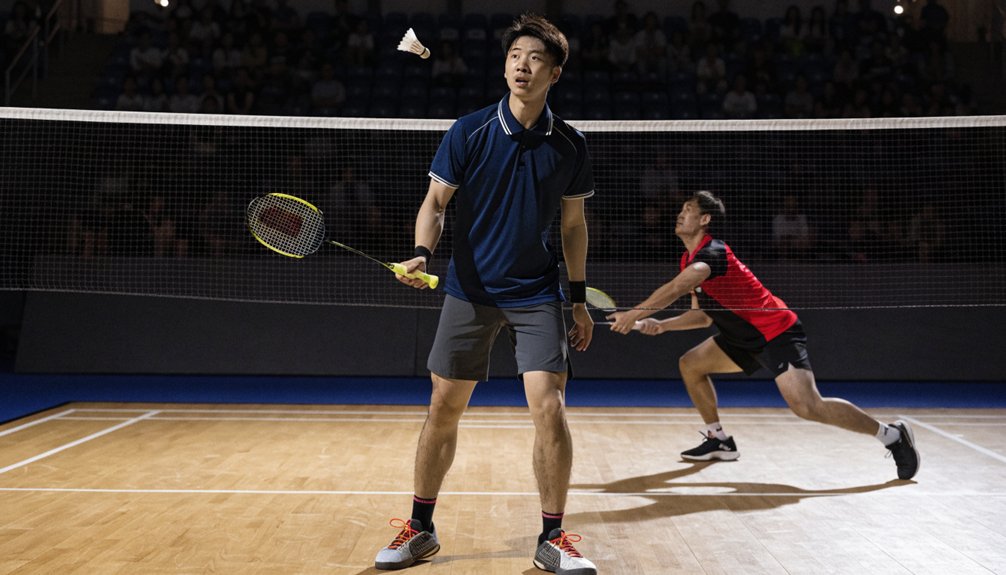
Even if your opponent gets to the shuttle quicker, you can still take control by making speed less important and decision-making more difficult. You should anticipate movements early, maintain focus through every rally, and adjust strategy instead of matching pace. Study patterns, analyze weaknesses, and vary your tempo to disrupt rhythm.
To stay competitive, improve footwork so you recover efficiently, enhance reflexes for tighter exchanges, and build stamina for longer points. You also need to develop patience; don’t force winners when pressure can create errors. Before each rally, visualize plays that lead to uncomfortable replies and fewer easy attacks. Most importantly, strengthen mindset so you stay calm when rallies speed up. If you think clearly and execute with intent, you’ll make quick opponents play on your terms consistently.
Using a racket with an isometric head can also help by giving you a larger sweet spot for more consistent control during fast rallies.
Use Positioning to Cut Off Angles
One smart positional adjustment can take away a fast opponent’s biggest advantage: open court. Instead of recovering to a fixed center, bias your base slightly toward their strongest option. If they love crosscourt replies, stand a half step that way and make them hit through you. This improves angle control and forces lower percentage shots.
Your goal isn’t to chase speed; it’s to shrink targets. After every shot, recover with strategic footwork so your shoulders stay square and your racket remains in front. A racket with a Dual Optimum system can further support quick interceptions by improving stability and maneuverability during fast exchanges. From there, you can intercept straighter drives, block the sideline, and pressure the next contact. Keep your base compact, read their body position early, and adjust before they strike. When you cut off angles consistently, their pace becomes less dangerous and your court feels much smaller.
Slow the Rally With High Clears
When an opponent thrives on quick exchanges, a deep high clear can reset the point and steal back time. You’re not backing off; you’re using height and depth to disrupt rhythm, recover your base, and regain rally control. Strong high clear techniques push them rearward, forcing them to hit from less comfortable positions while you reset.
- Aim high and long so the shuttle drops near the back line.
- Use a relaxed grip, then accelerate smoothly for effortless distance.
- Recover immediately after contact so you’re ready for the next shot.
If your clears are too flat, a faster player will attack early. Give the shuttle air, make them wait, and change the pace on your terms. That patience can turn their speed into frustration and errors. Because badminton uses a feather shuttlecock with high drag, a well-hit clear slows quickly on the way down and can buy you valuable recovery time.


Force Lunges With Tight Drop Shots
Use tight drop shots to sharpen your net placement and make your opponent lunge from awkward positions. If they’re rushing forward, exploit that momentum by keeping the shuttle tight so they can’t recover cleanly. You should also mix your drop shot tempo, because changing pace makes even fast opponents hesitate. Practicing drills that improve Sweet Spot consistency can help you keep these drops tighter under pressure.
Sharpen Net Placement
A tight net shot can blunt raw speed by making your opponent lunge forward and lift from below tape height. Your goal isn’t just softness; it’s precision. By sharpening net placement, you take time away and force weaker replies. Focus on net angles and disciplined shot selection so each touch lands spinning, tight, and awkward.
- Hold your racket head high and meet the shuttle early for cleaner control.
- Brush slightly across the feathers to create tumble and keep the shuttle hugging the tape.
- Alternate straight and cross placements only when balance is solid, so your disguise stays believable.
You don’t need winners here. You need replies that sit up. Make faster players bend, stretch, and hit upward, and you’ll start dictating the next exchange with confidence.
Exploit Forward Momentum
Punish rushed recovery with tight drop shots that die just past the net and drag a fast opponent into full stretch. When you see them leaning backward after a clear or smash defense, take pace off and land the shuttle low. Their speed becomes a liability because sudden forward movement from a compromised base often produces weak lifts.
Your goal isn’t merely to win the net exchange; it’s to create momentum shifts you can predict. Aim for the front corners, keep your racket prepared, and expect the reply before they reach balance again. If they lunge late, pounce on the short lift. If they scrape it back tight, hold your ground and be ready to press. By forcing repeated full-extension recoveries, you’ll drain their legs, disrupt rhythm, and make raw speed less threatening.
Mix Drop Shot Tempo
When a faster opponent starts reading your rhythm, changing the tempo of your drop shots can break their timing and force awkward lunges. Instead of feeding their speed, you make them hesitate, stop, and stretch forward late. Use tempo variation and shot disguise so your preparation looks identical, whether you hit soft, sharper, or slightly delayed drops.
- Hold your overhead shape longer, then slice a tight drop just past the net.
- Alternate a fast, skidding drop with a slower, dying one from the same setup.
- Target their forehand front corner first, then switch sides once they start cheating.
You’re not trying to outrun them; you’re making their first step uncertain. If they lunge from too far back, the reply sits up, giving you control of the next rally shot.
Push Them Back With Deep Clears and Lifts
Use deep clears and high lifts to pin your opponent in the rear court and break their attacking rhythm. You’ll force them to move back fast, which gives you precious recovery time to reset your base and prepare the next shot. Keep the shuttle deep and consistent, and you’ll turn their speed into a disadvantage. Since a badminton court is 13.40m long, aiming toward the back boundary helps you use the full court length to stretch faster opponents.
Force Rear Court
If your opponent thrives on quick exchanges at the net, push the rally deep with high, accurate clears and defensive lifts that drive them into the rear court. This disrupts their rhythm and shifts control to your preferred patterns. Smart rear court tactics make them hit from less dangerous positions while your defensive strategies stay compact and disciplined.
- Aim clears near the back tramlines to force late contact.
- Use lifts when pressured, sending the shuttle high and deep.
- Vary height and pace so they can’t settle into attacking timing.
You don’t need outright winners here. You need depth, consistency, and purpose. Each deep shot stretches their movement, limits their net pressure, and creates rallies on your terms. Stay patient, commit to placement, and make the back boundary your tactical weapon.
Buy Recovery Time
Against a faster opponent, your first priority is often buying enough recovery time to reset your base and avoid getting rushed into weak replies. Use high, deep clears and defensive lifts that land close to the back boundary. That extra flight time lets you recover balance, rebuild spacing, and prepare for the next shot instead of scrambling.
Aim for depth over pace. If your clears fall short, they’ll attack early and keep you pinned. When stretched, choose safe height and length rather than forcing a risky counter. These are smart recovery strategies, not passive shots. While the shuttle travels, use that moment for mental recovery too: breathe, reset your focus, and anticipate their most likely reply. If you keep pushing them back, you’ll slow the rally and regain control.
Mix Hard and Soft Shots to Break Rhythm
Disrupt their timing by alternating sharp, fast shots with softer replies that die short or land with less pace. Smart shot selection creates rhythm disruption, forcing a quicker opponent to hesitate instead of flowing through rallies. You don’t need constant power; you need contrast and intent. This also helps against mind games, because changing tempo on purpose can keep you focused on your own plan instead of reacting to an opponent’s psychological tactics.
- Drive or push one rally ball early, then follow with a tight drop or spinning net shot.
- Use a steep smash sparingly, so your next sliced drop feels unexpected and draws a weak lift.
- Vary clear speed too—hit one deep with pace, then float the next higher to reset positioning.
This pattern keeps you in control of tempo. When you change pace on purpose, your opponent can’t settle into automatic movement. Make every rally ask a different question, and you’ll earn more errors and shorter replies.
Aim at the Body to Jam Their Movement
When a faster opponent covers open space with ease, aiming more shuttles at the body can jam their footwork and steal their swing time. You don’t need perfect winners here; you need awkward contact points. Drive at the right hip, shoulder, or racket-side ribs so they can’t extend cleanly or rotate freely. These body target strategies force cramped replies and weaker lifts.
Use this especially after you’ve shown clears, drops, and angles. The contrast makes your flat push or quick smash into the torso far more effective. In doubles, target the player moving forward to intercept, because body shots freeze their split step. In singles, mix chest-high drives with fast half-smashes at the midline. These movement disruption techniques don’t overpower speed; they make speed unusable and turn rushed reactions into openings you can exploit. Quick grip changes also help you direct these body attacks with better control during fast rallies.
Stay Calm When the Pace Speeds Up
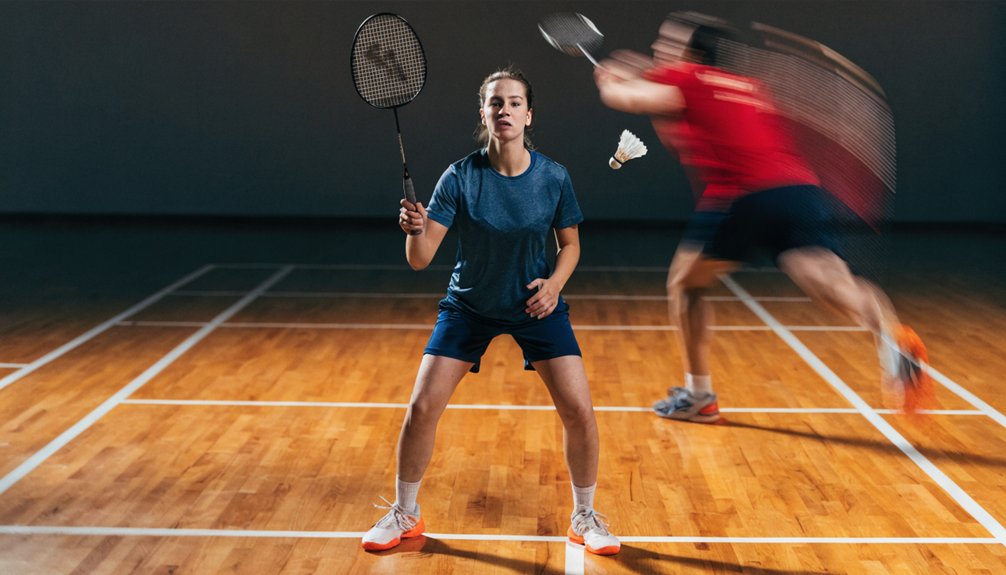
When rallies speed up, your first job is to steady your breathing so you don’t let their tempo control you. Take a quick breath between shots and force yourself to make simple, clear decisions instead of rushed ones. If you stay composed, you’ll read the next ball better and turn their speed into a mistake you can punish. Using a head-light racket can also help you react faster and stay in control during quick exchanges.
Control Your Breathing
As rallies get quicker and your opponent starts dictating the pace, your breathing becomes one of the fastest ways to steady your game. If you let it get shallow, your footwork tightens and your shots lose control. Use simple breathing techniques between exchanges to reset your body and keep your movements loose.
- Inhale through your nose as you recover to base, then exhale fully before the next shot.
- Loosen your shoulders and jaw with quick relaxation exercises so tension doesn’t travel into your swing.
- After long rallies, take one deeper breath before serving or receiving to lower urgency and regain rhythm.
You don’t need complicated routines. You need repeatable breaths that help you stay balanced, conserve energy, and respond with cleaner mechanics under pressure.
Slow Your Decision Making
Even if the rally feels rushed, you don’t have to match your opponent’s panic. Fast players want hurried choices, because rushed thinking creates weak lifts, late blocks, and poor recovery. Your job is to keep your mind one beat slower than the exchange.
Use simple priorities. First, get balanced. Second, choose the highest-percentage reply. Third, recover to base. That sequence limits decision fatigue and keeps you from chasing every fake or tempo change. Between shots, create strategic pauses in your mind: see the shuttle, read the body, then commit. You’re not freezing; you’re filtering.
When pressure builds, trust patterns instead of improvising wildly. Send deep clears, tight net shots, or controlled drives with purpose. Calm decisions buy time, break their rhythm, and let your placement beat their speed under pressure.
Avoid Mistakes That Help Fast Players
Because speed becomes far more dangerous if you feed it easy balls, your first job against a quicker opponent is to stop making choices that let them attack on their terms. Build mistake awareness and tighten your shot selection so you’re not donating pace, angles, or loose height. Every rally should force them to create, not simply react.
- Don’t lift short unless you’re balanced; that invites an immediate steep attack.
- Don’t drive recklessly through the middle; fast players love intercepting flat, predictable exchanges.
- Don’t rush low-percentage winners; a rushed miss gives away momentum and confidence.
Instead, play with margin, aim away from their strongest interception zones, and recover with purpose after each shot. You don’t need spectacular winners; you need disciplined choices that make their speed less useful and your pressure more sustainable. Using a racket with suitable string tension can also improve control, helping you avoid loose shots that fast opponents can punish.
Practice Drills for Recovery and Control
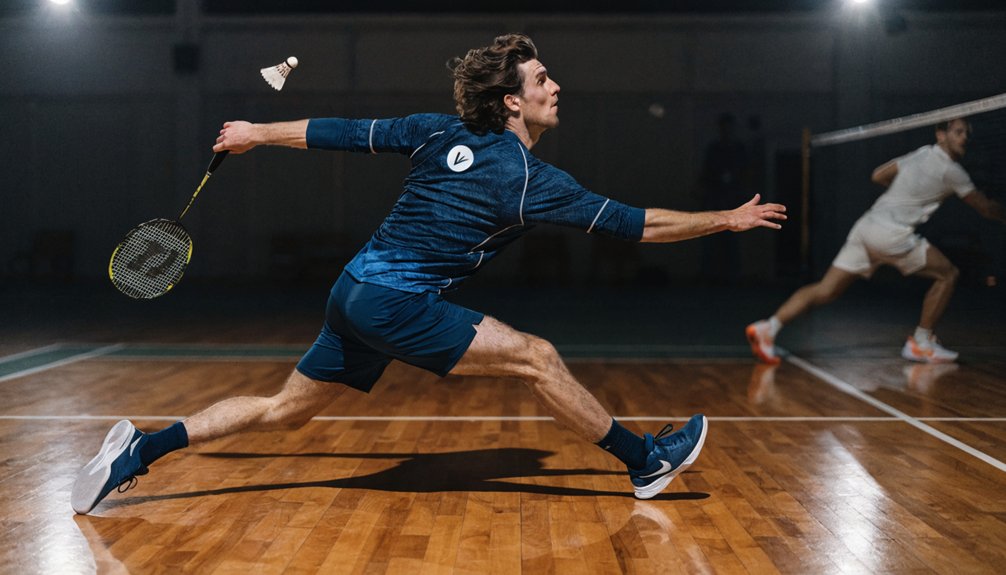
Train your recovery on purpose, not just your shots. Against faster opponents, you win time by resetting your base quickly after every hit. Use shadow footwork with a split step, then recover to center before moving again. These recovery techniques train balance, efficient steps, and readiness under pressure.
Add multi-shuttle control exercises that force you to defend, lift, and block while returning to base each time. Feed shuttles to the corners, then mix one short reply near the net. You should focus on compact swings, stable posture, and a calm first step after contact. A lighter racket can improve maneuverability and control during these fast recovery drills, helping you react more smoothly to changing feeds. Try a drill where you clear deep, recover, then play a tight net shot on the next feed. If you recover cleanly, you’ll stay composed and make faster players work harder every rally.
Frequently Asked Questions
How Does Racket String Tension Affect Control Against Faster Opponents?
Higher string tension gives you better shot accuracy and control, helping you place returns precisely against quicker players, but you’ll lose some power. Lower string tension adds forgiveness, so you should choose a balanced setup you can handle.
What Footwork Shoes Work Best for Defending Quick Attacks?
You’ll defend quick attacks best in lightweight badminton shoes with strong court grip, responsive shoe cushioning, and lateral stability. Choose low-profile soles for faster pushes, secure heel lockdown, and durable traction so you can recover confidently.
Should Singles and Doubles Tactics Differ Against Faster Players?
Yes—they should; like chess on sneakers, you’ll use different attack strategies and court positioning. In singles, you’ll move opponents and conserve space. In doubles, you’ll pressure earlier, protect channels, and rotate crisply to blunt speed.
How Can Fitness Training Improve Endurance Versus Speedy Opponents?
Fitness training boosts your stamina, so you won’t fade during long rallies. Use endurance drills, interval training, cardio workouts, and strength sessions to recover faster, maintain sharp movement, and keep applying pressure when speedy opponents try rushing you.
When Should I Change Shuttle Speed for Better Match Control?
Change shuttle speed when rallies feel like runaway trains—too long, too short, or drifting. You’ll gain match control by slowing shuttles in heat or speeding them up in cold, helping your timing, placement, and confidence.