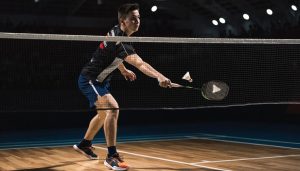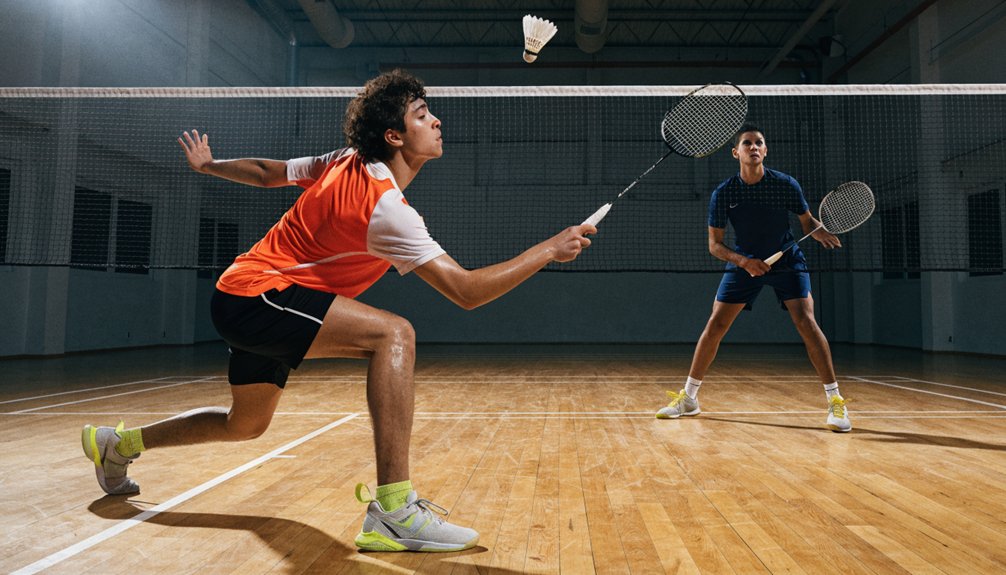
Like a chess player setting traps before the first move, you’ll win more badminton points when you think beyond the next shot. Your serve, return, positioning, and pace all shape the rally before the attack even comes. If you want to stop giving away easy points and start controlling matches with purpose, the key adjustments begin with what you do from the very first exchange.
Key Takeaways
- Vary your serves and place them accurately to force weak returns and prevent opponents from anticipating your next shot.
- Choose shots that control the rally, using safe high-percentage options unless you have a clear chance to attack.
- Combine clears, drops, and smashes to change rhythm, create openings, and make your attacks harder to read.
- Move your opponent around the court with angles, depth, and deception to create space for winning shots.
- Adjust during the match by targeting weaknesses, changing pace, and using safer recovery shots when under pressure.
Start Points Strong With Serves and Returns
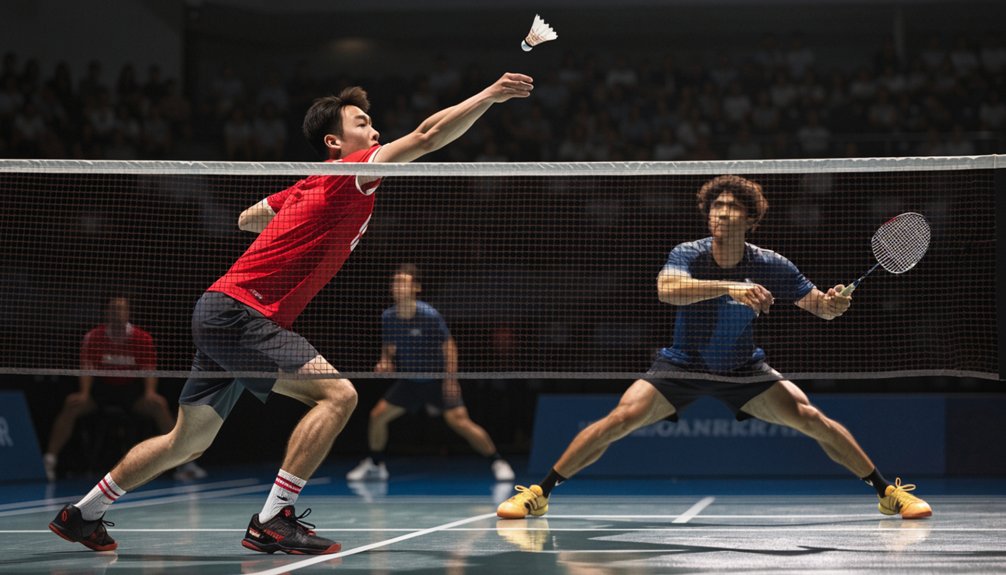
Because every rally begins with your first touch, serves and returns deserve the same attention as your smashes and defense. Use smart serve placement to force weak replies, and mix in serve variety so you’re not predictable. Keep your shot accuracy high by aiming for tight margins, not hopeful winners. On returns, apply clear return tactics: attack loose serves early, or play safely when the serve is strong.
Because racket feel is personal, a frame with an isometric head can help many players by offering a larger sweet spot for more consistent control on serves and returns. Stay sharp with mental focus before each point. Make quick opponent assessment: notice backhand discomfort, slow reactions, or habits under pressure. Pair that with strategic positioning, so you’re balanced after serving or receiving, ready for the next ball. Finally, practice pressure management. When scores tighten, trust your routine, commit to your target, and let disciplined starts create immediate advantages consistently.
Control Rallies With Better Shot Selection
Shot selection is the steering wheel of every rally, and the better you use it, the more often you’ll dictate play instead of reacting. You should treat each contact as a tactical choice, not just a return. Smart shot placement changes rally dynamics, forces weaker replies, and gives you chances to stay balanced and proactive.
To improve, combine shot variety with disciplined decision making. Read your opponent’s court position, habits, and recovery speed through constant opponent analysis. Use risk assessment before pulling the trigger; choose higher-percentage options when you’re off balance, and bolder ones when you’re set. Strong mental focus keeps you from rushing under pressure, while sharp timing strategies help you take the shuttle earlier and steal time. A racket with a reliable Sweet Spot can also support more accurate placement when you’re trying to control rallies. When your choices stay purposeful, you’ll control tempo and momentum.
Use Clears, Drops, and Smashes Together
When you link clears, drops, and smashes instead of treating them as isolated shots, you make your attack far harder to read and defend. You create smarter shot combinations by mixing clear strategies, drop techniques, and smash timing with disciplined shot selection and solid court positioning. Keep your preparation similar so deceptive shots stay believable.
- Use clears to reset balance, change height, and prepare tactical variations.
- Add drops to introduce rhythm changes and test pressure management.
- Smash when the reply sits up and your timing feels decisive.
Your goal isn’t random variety; it’s connected intent. Build patterns that disguise your next option, then repeat them with subtle changes. As you practice, focus on clean shifts between shots, stable recovery, and decision-making under pressure. That blend makes your attack sharper, calmer, and tougher to anticipate. A racket with the right string tension can also support this mix by helping you balance control on drops with power on smashes.
Move Your Opponent Before Attacking
Before you try to finish the rally, force your opponent to cover space and recover under pressure. Build the point with smart rally construction: push them deep, bring them short, then change direction. Mix angle variations and precise shot placement so they can’t settle into comfortable court positioning. Use deceptive shots sparingly to disguise your intent and steal time. At the highest level, the mental aspect can be just as decisive as shot quality, especially when pressure builds in tight rallies.


Your goal isn’t just movement; it’s rushed movement. Test their footwork fundamentals by making them lunge, turn, and adjust repeatedly. As they tire or hesitate, their anticipation skills weaken, and that’s your opening. Add subtle psychological tactics by repeating patterns, then breaking them at the right moment. When you’ve stretched them wide or pinned them late, attack the weaker reply with conviction and control. Stay patient until the chance is clear.
Recover to the Right Base After Every Shot
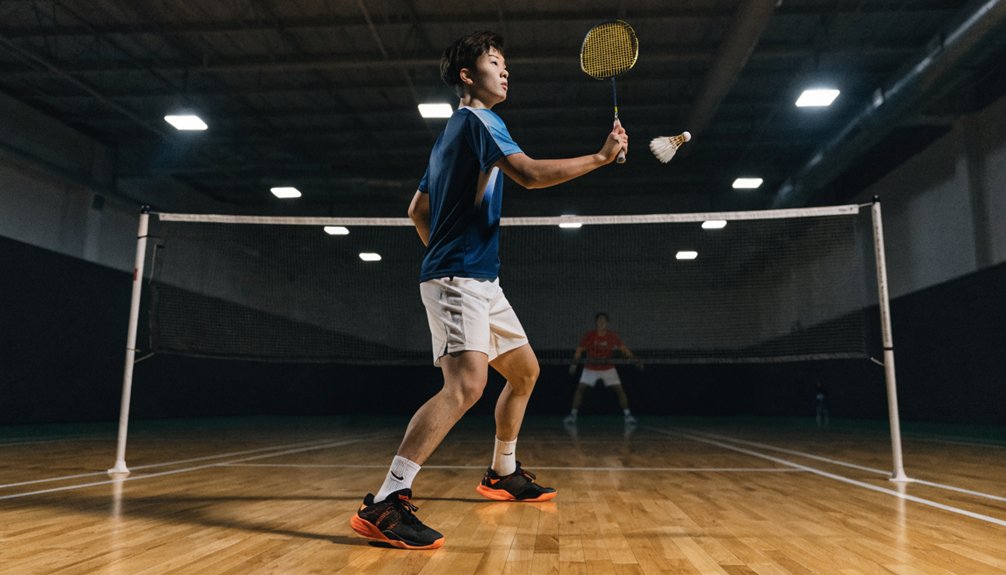
Even if you’ve played a great shot, the rally isn’t secure until you recover to the right base and prepare for the next reply. Smart court positioning lets you cover the most dangerous angles without overcommitting. Your base shouldn’t be static; it shifts slightly depending on where you hit from and how much pressure your shot created.
Use disciplined recovery techniques after every stroke:
- Push off your outside leg and return with quick, balanced steps.
- Square your body to the shuttle so you can move explosively in any direction.
- Adjust your base forward after tight net shots and slightly back after deep clears.
A racket with even balance can support faster, more controlled recovery because it improves maneuverability without sacrificing precision. If you admire your shot or recover lazily, you’ll give away the initiative. Reset fast, stay light on your feet, and make every recovery position support your next movement.
Target Weaknesses and Repeat Patterns
Once you’ve recovered well, start testing where your opponent breaks down and make that area your target. If a clear, drop, or push keeps winning points, don’t get fancy—repeat it until they prove they can handle it. You’ll control more rallies when you spot the weakness early and apply steady pressure to it. This kind of consistency can also support your progress in the BWF rankings, which reward strong results across your best 10 tournaments over 52 weeks.
Exploit Opponent Weaknesses
While rallies can feel chaotic, your best edge often comes from spotting one weakness and testing it until your opponent proves they can handle it. Use quick opponent analysis early, then guide rallies toward discomfort without rushing.
- Notice if they struggle moving backward, defending the body, or changing grip under pressure.
- Use shot prediction to anticipate weak replies after a deep clear, tight net shot, or fast push.
- Vary pace and placement just enough to confirm the weakness, not so much that you lose control.
You’re not guessing; you’re collecting evidence. If a backhand lift sits short or a forecourt scramble looks shaky, steer exchanges there again later. Stay patient, stay alert, and make them solve problems on your terms before you open the court fully.
Repeat Winning Shots
A smart pattern that wins one point can often win three more if you repeat it with purpose. When a clear weakness appears, don’t abandon it after one success. Use shot consistency and precise shot placement to make the same problem show up again under pressure.
| Pattern | Why it works |
|---|---|
| Deep clear to backhand | Forces a weak reply |
| Tight net, then lift behind | Exploits slow recovery |
Repeat the sequence until your opponent proves they can handle it. If they start cheating early, use that expectation against them with a simple variation. You don’t need constant creativity; you need disciplined execution. Build points around what already works, stay alert for adjustments, and make them solve the same tactical question again and again until the answer breaks down in a match.
Change Pace to Force More Errors
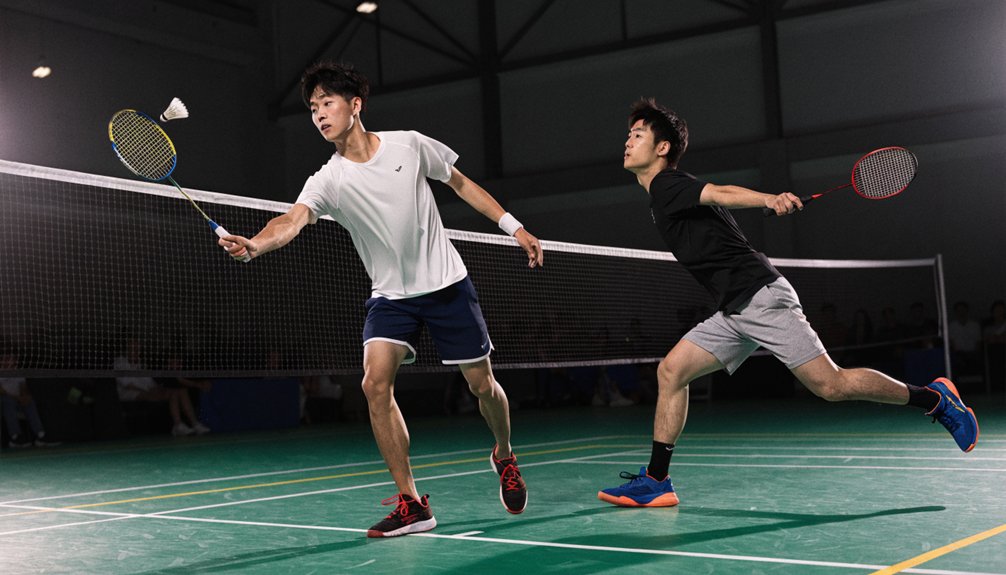
You can’t let your opponent settle into a comfortable rhythm if you want more cheap errors. Vary your shot tempo by mixing fast, attacking exchanges with slower, controlled shots that make them hesitate. When you keep changing the pace, you disrupt their timing and force weaker decisions. In best-of-three games, smart pace changes can be especially effective because momentum often swings quickly from one game to the next.
Vary Shot Tempo
Changing tempo is one of the easiest ways to pull an opponent out of rhythm and force rushed decisions. When you use shot variation with purpose, you stop rallies from becoming predictable and make your opponent hesitate. Smart tempo changes aren’t about hitting harder; they’re about controlling how quickly each exchange develops and keeping pressure on their timing.
- Hold the shuttle a fraction longer before contact to disrupt anticipation.
- Alternate compact preparation with fuller swings to disguise intent.
- Change the height and trajectory of routine shots to alter timing cues.
You should practice these adjustments until they feel natural under pressure. If you can control rhythm without overforcing attacks, you’ll draw weaker replies, create openings, and win more points through better tactical command in tight rallies consistently.
Mix Fast And Slow
When rallies start settling into a predictable speed, mix fast and slow shots to break your opponent’s rhythm and force mistakes. You don’t need constant power; you need contrast. Follow a steep smash with a soft drop, or push flat exchanges into a high clear. Smart shot placement makes each pace change harder to read, especially when paired with deceptive shots.
| Fast shot | Slow reply | Likely result |
|---|---|---|
| Smash | Tight drop | Weak lift |
| Flat drive | High clear | Late contact |
| Net kill threat | Spinning net shot | Hesitation |
Change pace with purpose, not randomly. Hit quickly when you see space, then slow the next shuttle to make recovery awkward. If you stay composed and vary tempo deliberately, you’ll draw shorter returns and create easier chances to finish points cleanly.
Disrupt Opponent Rhythm
Even a technically strong opponent can unravel if their rhythm gets interrupted often enough. You don’t need risk every rally; you need smart timing adjustments that deny comfort. Use rhythm breaks to disturb their footwork patterns, rush their anticipation skills, and test pressure handling when points get tight.
- Mix serve variations to prevent easy reads and force hesitant returns.
- Add unpredictable shots after steady exchanges to upset balance and court positioning.
- Change recovery speed and shot preparation as subtle mental tactics.
When you vary tempo with purpose, you make your opponent guess instead of react cleanly. That hesitation creates weak lifts, late contacts, and rushed decisions. Keep your own structure disciplined, but make every rally feel slightly different. Controlled disruption wins points before outright winners are even needed.
Choose Safer Shots Under Pressure
Under pressure, your best option usually isn’t the flashiest shot—it’s the one that keeps you in the rally and forces your opponent to play one more ball.
Use safe shot selection to steady pressure management and protect mental focus. Aim for smart shot placement with height, depth, and margin, not risky winners. Good risk assessment means choosing clears, blocks, or controlled drives you can trust. That builds shot confidence and reinforces tactical awareness. Reliable execution also depends on quick grip changes so you can adapt your racket handling as the rally speeds up. When stretched, lean on defensive strategies that reset the rally and buy time.
| Situation | Safer shot | Purpose |
|---|---|---|
| Late to shuttle | High clear | Recover position |
| Jammed at body | Soft block | Slow pace |
| Off-balance rear court | Deep clear | Add margin |
| Fast exchange | Controlled drive | Stay neutral |
Adjust Your Badminton Strategy Mid-Match
As the rally patterns become clearer, you can’t stay locked into the same plan and expect it to keep working. Use quick match analysis between points to spot what’s breaking down and where your opponent feels uncomfortable. Then make smart tactical adjustments before the game drifts away from you.
- Change shuttle pace to disrupt timing and force weaker replies.
- Target the backhand corner, then attack the shorter lift.
- Stand half a step forward if you’re reading softer returns.
You don’t need a complete overhaul; you need sharp tweaks you can trust under pressure. If your smashes aren’t finishing rallies, build points with clears, drops, and patient net pressure instead. A racket with a Dual Optimum Frame can also support cleaner forehand and backhand responses when you need more consistent shot execution. Stay observant, stay flexible, and you’ll start controlling momentum rather than chasing it late.
Frequently Asked Questions
What Racket String Tension Suits an All-Around Badminton Strategy?
Aim for 24–26 lbs string tension; you’ll feel a balanced snap, like steering a quick silver arrow between power and control. Let player preference fine-tune it: lower for easier depth, higher for crisper placement under pressure.
How Should I Warm up Before a Competitive Badminton Match?
Start with dynamic stretches, light jogging, and shadow swings to raise your heart rate. Then practice short rallies, footwork, and serves. You’ll sharpen timing, prevent injury, and build mental focus before competing at your best.
What Foods Help Maintain Energy During Long Badminton Matches?
Like a steady drumbeat, you’ll sustain energy with bananas, dates, oat bars, and energy boosting snacks. Pair them with hydration strategies: sip electrolytes and water regularly. You’ll avoid crashes, stay sharp, and keep pushing hard.
How Can I Prevent Common Badminton Injuries During Regular Play?
You can prevent common badminton injuries through consistent injury prevention habits: warm up dynamically, use smart stretching techniques, strengthen ankles, knees, and shoulders, wear supportive shoes, refine footwork, and stop when pain starts.
How Often Should I Practice to Improve Badminton Match Performance?
You don’t need daily sessions; practice badminton 3–5 times weekly. Set training frequency by your recovery, goals, and schedule. Use regular skill assessment to target weaknesses, build consistency, and improve match performance without burning out.