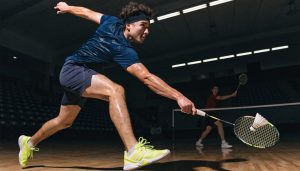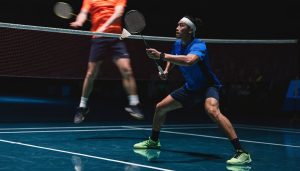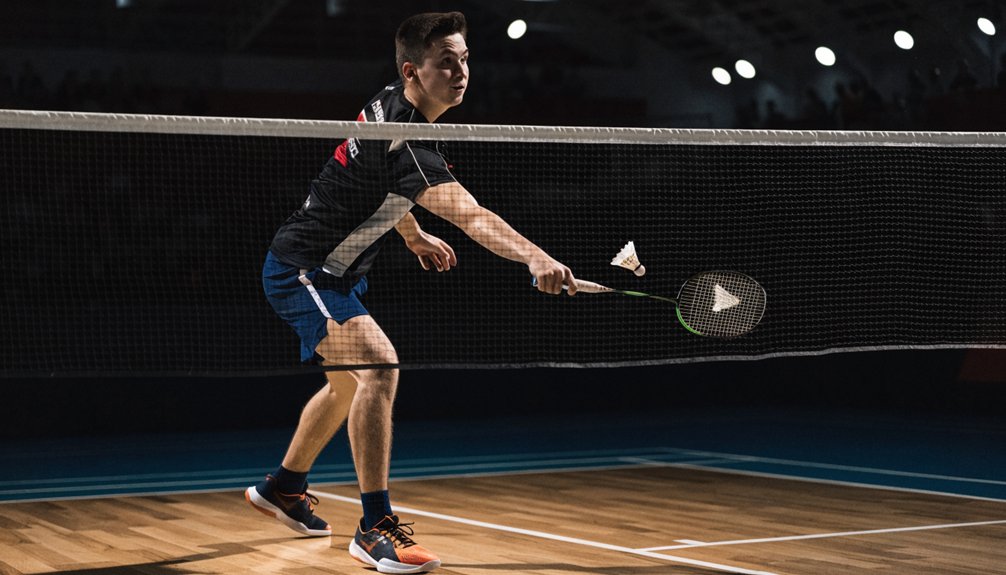
Power looks dramatic, but touch wins points when your drop shot falls steep and late. To hit it better, you need more than a soft hand: you need early movement, balanced positioning, high contact, and a racket path that stays disguised until the last moment. Small errors in grip, timing, or body angle make the shuttle sit up. Fix those, and your drop shot starts forcing weak replies—if you know which adjustment matters most.
Key Takeaways
- Reach the shuttle early and contact it high, using quick footwork and small adjustment steps to get balanced behind it.
- Hold a relaxed forehand grip with the handle in your fingers, making small grip changes for better touch and control.
- Keep the same preparation as a clear or smash, then change the racket face late to disguise the drop shot.
- Soften the impact and angle the racket face slightly downward so the shuttle clears the net tightly and falls steeply.
- Aim the drop away from your opponent’s position and practice with stationary and movement drills to improve consistency.
Understand What Makes a Good Drop Shot
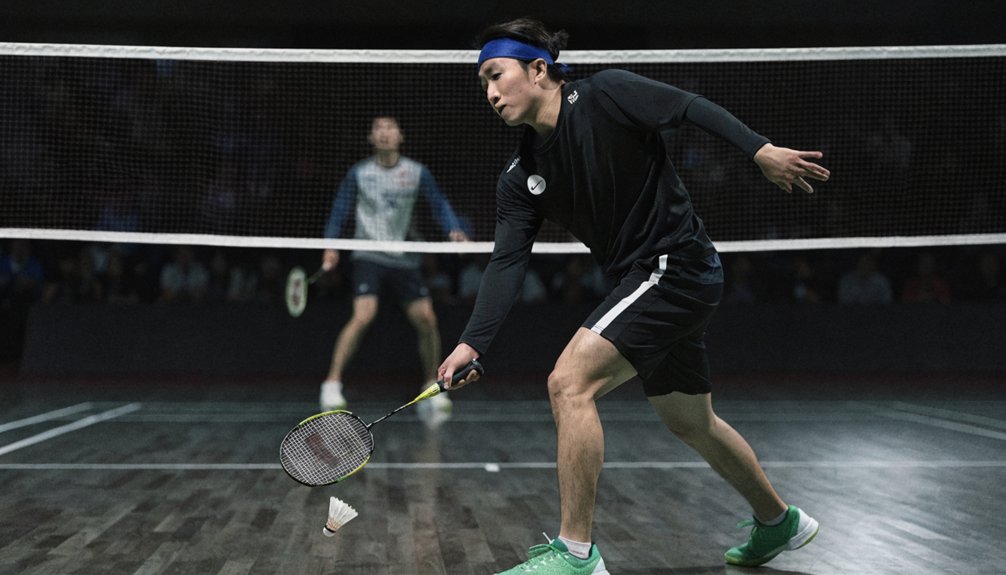
Precision is the core of a good drop shot. You’re not trying to hit softly at random; you’re forcing a late contact point and limiting your opponent’s attacking options. A strong drop shot falls steeply, clears the net by a small margin, and lands early enough to prevent easy lifts or kills.
Your shot placement matters as much as touch. Aim into spaces that exploit opponent positioning, especially when they’re recovering from the rear court or leaning toward one side. If they’re deep, shorten the shuttle. If they’re central, angle it wider. You should also disguise your intent so your preparation resembles a clear or smash. That hesitation creates time pressure. When you combine tight trajectory, smart targeting, and deception, your drop shot becomes a controlled tactical weapon in rallies. Consistent contact on the Sweet Spot helps you produce the delicate control and steep angle that make drop shots more effective.
Use the Right Grip for a Badminton Drop Shot
Start with a basic forehand grip, so your racket face stays stable and easy to angle at contact. You shouldn’t squeeze too tightly, because a relaxed hand gives you better touch and cleaner control over the shuttle. As you refine the shot, use your fingers to make small grip adjustments that improve accuracy without changing your full swing. For right-handed players, the 3rd bevel helps position the thumb correctly in a forehand grip for better racket control.
Forehand Grip Basics
A solid forehand grip gives you the control and disguise a good badminton drop shot depends on. Place your hand as if you’re shaking the racket’s handle, with the V between thumb and index finger aligned along the top bevel’s side. This forehand positioning keeps the racket face stable through preparation and contact.
Keep the handle mainly in your fingers rather than deep in your palm, so you can present the shuttle cleanly and maintain angle accuracy. Your thumb should rest lightly against the wider bevel, while your index finger sits slightly separated for guidance. Check your grip pressure too: firm enough that the racket won’t twist, yet never so tight that your swing becomes rigid. Build this foundation first, and your drop shot will feel sharper and more reliable.
Relaxed Finger Control
Once your forehand grip is set, finger control is what turns that structure into a softer, more accurate drop shot. You don’t need to squeeze hard; excessive grip pressure stiffens the wrist, slows racket head adjustment, and makes the shuttle sit up. Instead, maintain finger relaxation through the preparation phase, then apply a brief, controlled tightening at contact.
Think of your thumb, index, and middle fingers as fine-tuning tools. They stabilize the handle without locking it. As you approach impact, let the fingers guide racket face angle while the wrist stays supple. That combination helps you disguise the shot and keep the shuttle tumbling tightly over the tape. Practice varying grip pressure deliberately, so you can feel the difference between a pushed drop and a clean, sliced touch.


Move Early to Get Behind the Shuttle
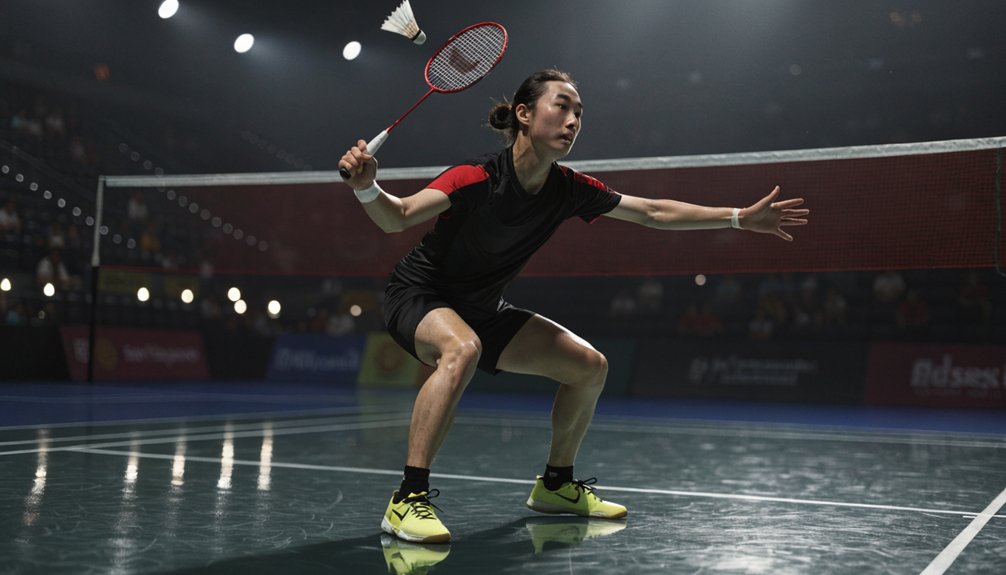
React early and move your feet quickly so you can get behind the shuttle instead of reaching across your body at the last second. Early movement gives you cleaner contact and more control over angle, speed, and deception. Using a racket with an isometric head can also help by giving you a larger sweet spot for more consistent contact on delicate drop shots.
| Focus | Benefit |
|---|---|
| Split step | Faster first push |
| Crossover steps | Better rear-court coverage |
| Small adjustment steps | Cleaner contact point |
| footwork techniques | More efficient recovery |
| positioning drills | Earlier shuttle access |
You should track the shuttle immediately off your opponent’s racket, then commit with decisive steps. Don’t drift sideways and improvise; arrive aligned to the shuttle so your racket path stays compact and repeatable. Practise this until early movement feels automatic, and your drop shot will become sharper, calmer, and much harder to read under pressure.
Prepare Your Body for the Drop Shot
Set your body before you swing so the drop shot comes off balanced, controlled, and disguisable. As you arrive, square your torso enough to stay stable, then turn your shoulders sideways to load efficiently. Good body alignment keeps your racket path compact and prevents you from leaning or reaching.
Your foot positioning should place your non-racket foot slightly forward if you’re under control, with knees flexed and weight centered through the balls of your feet. Keep your core engaged so your upper body stays quiet while your hitting side remains relaxed. Raise your non-racket arm for counterbalance and spatial awareness, which helps you judge spacing without rushing. If you’re stretched, widen your base rather than collapsing sideways. When your posture is organized early, you’ll feel calmer and hide your intention much better. A secure forehand grip also supports control by keeping the racket stable and adaptable for soft touch shots.
Contact the Shuttle at the Highest Point
To improve your drop shot, you need to contact the shuttle early, before it falls below your ideal striking zone. Reach up fully so your racket meets the shuttle at the highest point, giving you better control over angle and pace. If you time this contact correctly, you’ll create a tighter, more effective shot with less recovery time for your opponent. In high-pressure rallies, strong mental focus can help you make this early contact consistently even when opponents try to distract you.
Early Contact Timing
Because the drop shot is most effective when it looks identical to a clear or smash, you should contact the shuttle as high and as early as possible. Early contact shortens your opponent’s reaction window and preserves deception through the hitting phase. If you wait, the shuttle drops beside or behind your ideal striking zone, forcing a slower, more obvious action.
To improve this, prioritize early preparation so your feet, shoulders, and racket are set before the shuttle arrives. Then refine your interception point with timing drills that train you to strike fractionally sooner without rushing the swing. Focus on reading the shuttle’s descent, adjusting with small steps, and initiating the stroke just before peak comfort passes. When your timing sharpens, your drop shot becomes tighter, faster, and much harder to anticipate.
Reach Up Fully
Early timing only works fully when you meet the shuttle with a complete upward reach. Extend your hitting arm so contact happens at the highest comfortable point, with your shoulder lifted, elbow leading, and wrist relaxed until impact. That extra height shortens the shuttle’s path, giving your opponent less time while improving your control over shuttle trajectory.
Your body positioning matters just as much. Stay side-on, keep your non-racket arm up for balance, and push your chest slightly forward under the shuttle. If you let the shuttle drop, you’ll contact behind your ideal strike zone, forcing a steeper arm angle and reducing touch. Reaching up fully lets you slice or soften the face cleanly, so your drop shot stays tight, deceptive, and repeatable under pressure in fast rallies.
Control Badminton Drop Shot Speed and Angle
When you control drop shot speed and angle together, you make the shuttle fall shorter, tighter, and harder to attack. Use a relaxed grip, then soften impact slightly at contact. That trims pace without losing shot precision. Aim your racket face marginally downward so the shuttle clears the tape, then descends sharply. A racket with a Dual Optimum Frame can also support cleaner forehand and backhand touch on delicate drop shots. These drop shot techniques help you land closer to the net while keeping recovery balanced.
| Speed | Angle | Result |
|---|---|---|
| Slower | Steeper | Tighter tumble |
| Medium | Moderate | Safer margin |
| Faster | Flatter | Easier attack |
Adjust only one variable at a time during practice. If your shuttle sits up, reduce speed first. If it clips the net, raise the angle slightly. You’ll build repeatable control through measured changes, not force or guesswork.
Disguise Your Badminton Drop Shot
To disguise your badminton drop shot, you need to keep the same preparation as your clear or smash so your opponent can’t read the change early. Delay the racket face adjustment until the last possible moment, which reduces visual cues and preserves deception through contact. You should also use identical swing speed, because any deceleration can signal the drop before you’ve struck the shuttle.
Hold The Same Preparation
Mirror your clear and smash preparation for as long as possible, because the best drop shot starts by revealing nothing. You should turn side-on, lift your non-racket arm, and set your racket early to the same height and path you’d use for an attacking stroke. That preparation consistency keeps opponents from reading your intent.
As you move behind the shuttle, keep your steps balanced and your shoulders relaxed, so your body language doesn’t change. Use simple focus techniques: track the shuttle, commit to the same loading pattern, and resist any urge to shorten the backswing. Your elbow, torso rotation, and contact timing should match your overhead actions until the final instant. If you can preserve that identical picture, you’ll force hesitation and create more space for an effective drop.
Delay The Racket Face
That identical setup only works if your racket face stays unreadable until the last moment. Keep the strings neutral as your arm rises, with the edge of the frame leading instead of an open face. This prevents your opponent from seeing the drop angle early and strengthens shot deception. Your forearm should stay relaxed, while your grip remains controlled enough to adjust late.
Focus on racket timing: delay the slight opening of the face until just before contact. You’re not hiding the whole stroke, only the hitting surface. Use a compact forearm rotation and subtle finger control to present the shuttle’s final direction late. If you reveal the face too soon, defenders can move forward immediately. Practice this timing slowly first, then build consistency under pressure during realistic rally sequences and match play.
Use Identical Swing Speed
Even if your technique looks similar, the disguise fails when you decelerate only on the drop. Your opponent reads pace changes earlier than racket angle, so your arm speed must mirror your clear and smash preparation. Commit to an identical swing through the shoulder, elbow, and forearm, then create the softer outcome with finger control and a slightly finer shuttle contact. That preserves deception without sacrificing touch.
You shouldn’t guide the shuttle with a slower arm. Instead, maintain consistent technique until the last instant, letting grip tightening and contact point determine whether the shuttle tumbles short. Practice alternating clear, smash, and drop from the same setup, keeping rhythm unchanged. When your identical swing becomes reliable, defenders hesitate longer, and your drop shot lands with much greater surprise and control under pressure in matches.
Use Fast and Slow Drop Shots
Because a predictable drop shot is easy to read, you should learn to vary both tempo and trajectory. A fast drop travels flatter and lands earlier, pressuring your opponent to lunge forward quickly and lift from below net height. A slow drop arcs higher, falls steeper, and gives you more time to recover your base.
To execute both options effectively, keep your preparation identical until contact. For a fast drop, use slightly firmer finger power and direct the shuttle just over the tape. For a slow drop, soften the touch and let the shuttle tumble downward with more vertical descent. Alternate these choices according to your opponent’s court position. If they’re deep, a fast drop can catch them late; if they’re moving early, a slow drop can disrupt their timing and balance. Using a racket with head-light balance can also improve maneuverability and help you control these touch shots more precisely in fast rallies.
Fix Common Badminton Drop Shot Mistakes
Start by identifying where the shot breaks down: contact point, racket preparation, grip pressure, or follow-through. Most common errors happen when you contact the shuttle late, tighten your fingers too early, or show the drop too soon. Refine your player positioning so you’re balanced behind the shuttle, not reaching across your body. Keep mental focus on disguise and touch, because a rushed swing ruins control. Your drop shot strategy should also include shot variation, so opponents can’t read the same trajectory every time. A lightweight racket with strong enhanced maneuverability can help you make quicker adjustments and improve touch on fast drop shot exchanges.
- Contact the shuttle slightly in front for cleaner slicing.
- Prepare like a clear, then soften grip pressure at impact.
- Recover immediately after follow-through to protect court balance.
- Review patterns in your practice routines and correct one fault at once.
Small technical fixes create sharper, more reliable drops quickly.
Practice With Simple Drop Shot Drills
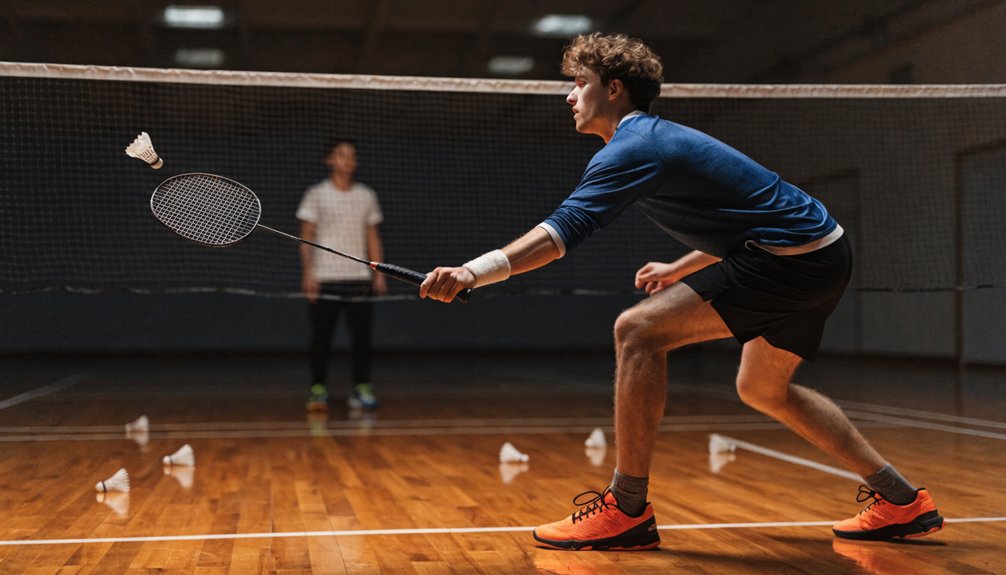
Build consistency with focused drop shot drills that isolate contact, disguise, and recovery. Start with stationary feeds from your rear court, aiming every shuttle just over the tape. Keep your preparation identical to a clear, then soften your grip at impact. Focus on brushing the shuttle cleanly while maintaining balance through your landing.
Next, add movement and decision-making. Use drill variations like alternating forehand and backhand rear-court feeds, or combining one clear with one drop. Include partner exercises where your partner lifts randomly and you must recover to base after each shot. Track how often your shuttle lands within a racket length of the service line. As your control improves, increase pace without sacrificing hold, deception, or net clearance. Short, repeatable sets will sharpen accuracy under pressure. To make these drills more match-specific, begin each sequence with a legal serve, remembering that in singles an even number of points means serving from the right side.
Frequently Asked Questions
How Often Should I Practice Drop Shots Each Week?
You should practice drop shots 3–4 times weekly, balancing volume and recovery. That practice frequency supports consistent skill progression without overtraining. If you’re newer, start with shorter sessions; if you’re advanced, increase intensity, not just repetitions.
What Racket String Tension Helps With Drop Shot Control?
For drop-shot precision, you’ll usually want medium string tension, around 22–25 lbs: tight enough for feedback, loose enough for touch. Test gradually, refine consistently, and pair string tension with solid control techniques for best results.
Can Beginners Learn Drop Shots Before Mastering Clears?
Yes, you can learn drop shots before mastering clears, if you focus on technique basics and timing tips. You’ll progress faster by building clean contact, soft grip control, and consistent shuttle placement alongside foundational overhead mechanics.
How Do Court Conditions Affect Drop Shot Effectiveness?
Like a whisper, court conditions shape drop shot effectiveness: on a slower court surface, you’ll get less skid; higher humidity reduces shuttle speed. Adjust contact point, racket face, and recovery steps, and you’ll still force weak lifts.
When Should I Avoid Using a Drop Shot in Rallies?
Avoid drop shots when you’re off-balance, late, or under heavy pressure. If your opponent positioning is forward or anticipatory, your shot selection should favor clears, drives, or lifts. You’ll reduce risk and maintain rally control.