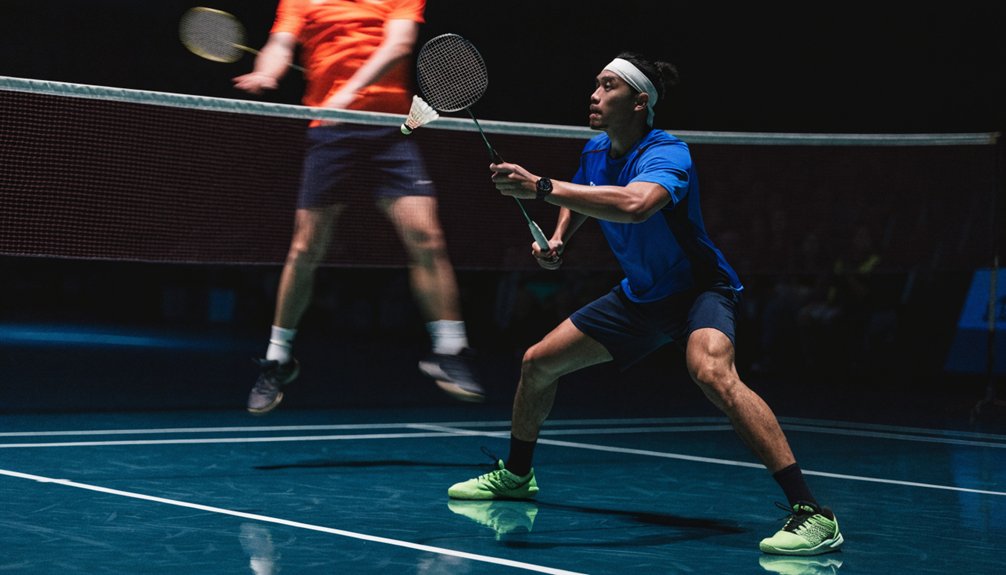
When you face a powerful smasher, your defence starts before the shuttle leaves their strings. You need a stable base, a fast split-step, and early cues from the hitter’s shoulder, racket path, and contact point. From there, your return choice—block, lift, or drive—must match the shuttle’s pace and height while disrupting their next shot. Get these decisions wrong, and you stay under pressure; get them right, and the rally begins to turn.
Key Takeaways
- Set your defensive base slightly behind centre, with knees bent and a shoulder-width stance to react quickly to steep, powerful smashes.
- Split-step as the attacker’s racket accelerates, and read shoulder rotation, jump timing, and torso cues to anticipate smash direction early.
- Block fast smashes tight to the net when contact is low, using a relaxed grip to absorb pace and regain control.
- Lift high and deep when late, or drive flatter returns at shoulder height to push the attacker off balance.
- Vary blocks, lifts, and drives away from the smasher’s recovery path, and avoid standing upright or hitting predictable, short returns.
Set Your Badminton Defence Base
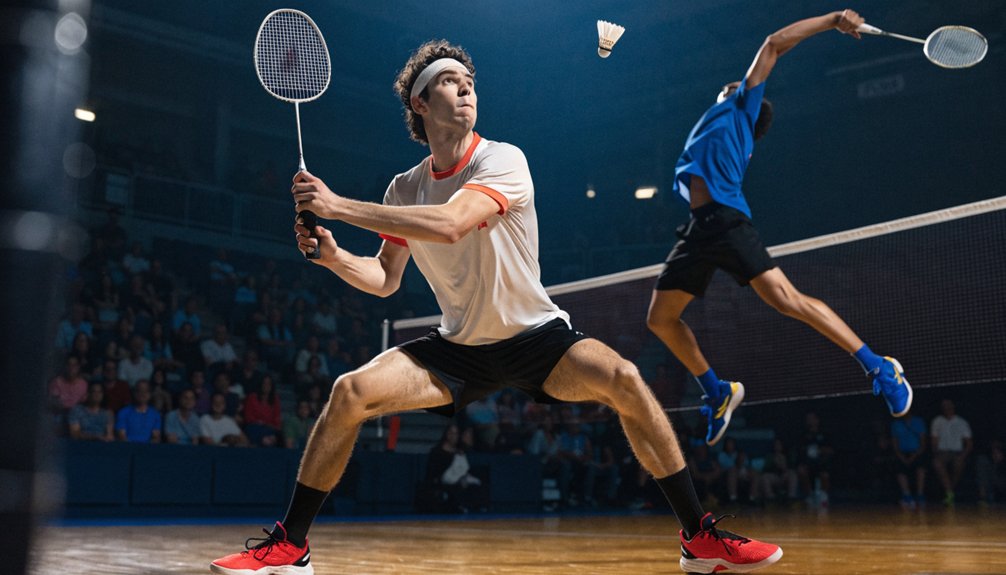
Your defence base starts with two non-negotiables: balance and readiness. You should position yourself slightly behind your centre line, knees flexed, hips loaded, and weight on the balls of your feet. Keep your racket up in front of your body, with the non-racket arm stabilising posture. This defensive stance lets you react without committing early.
You’ll defend better when your base width matches the attack angle. Stay shoulder-width apart, but widen marginally against steeper smashes. Don’t stand flat-footed or too upright; both delay your first movement. Use short split steps before contact, then push laterally or diagonally with minimal crossover. Build this positioning through footwork drills that rehearse recovery to base after each defensive shot. Efficient recovery preserves court coverage and keeps your responses compact under sustained pressure. For quicker reactions in defence, many players also prefer a head light racket because it improves speed and manoeuvrability.
Read the Smash Early
Anticipate the smash by reading the attacker’s preparation before the shuttle is struck. You should watch racket position, shoulder rotation, and jump timing to anticipate movement sooner. A steep backswing, fast elbow extension, and late contact usually signal a heavier downward angle. Don’t stare at the shuttle alone; scan the hitter’s torso and non-racket arm for balance cues. Coaching can also improve your reading accuracy by building reaction drills that sharpen early recognition of attacking patterns.
| Cue | What it tells you |
|---|---|
| Racket held high | Faster contact point |
| Shoulders turn sharply | Stronger body rotation |
| Jump peaks early | Steeper hit likely |
From your base, split-step as their racket accelerates, not after impact. That timing lets you load both legs evenly and react without guessing. Early recognition reduces panic, sharpens your first step, and helps you stay compact under sustained pressure in rallies.
Choose the Right Smash Return
Three main smash returns should guide your choice: block, drive, and lift. You shouldn’t react automatically; you should match your reply to the shuttle’s height, speed, and angle. Read the opponent’s smash technique, then decide which return gives you the best shot placement and recovery time under pressure. Staying calm also matters, because mind games from aggressive opponents can break your focus if your return choice becomes emotional instead of deliberate.
- Use a block when contact is below net height and pace is extreme.
- Choose a drive when the shuttle sits slightly higher and your racket face is stable.
- Select a lift when you’re late but can still send the shuttle deep.
- Aim returns away from the smasher’s recovery path to disrupt their next movement.
- Prioritize balance, compact preparation, and a relaxed grip for cleaner control.
The right selection turns defense from survival into a calculated response, keeping you composed against heavy attacking pressure.
Use Blocks, Lifts, and Drives to Reset
When a smash pins you deep, blocks, lifts, and drives don’t just keep the rally alive—they reset the exchange on your terms. Your objective is to neutralize pace while changing the shuttle’s trajectory, height, or timing enough to disrupt the attacker’s rhythm and recovery.


Use block techniques when contact is in front of your body: soften the grip, absorb impact, and guide the shuttle tight across the net or straight short. Apply lift strategies when you’re late or off balance: send a high, deep return to the back tramlines, buying time to recover base. Choose drives when the shuttle sits shoulder height: punch flat through the midcourt, preferably at the smasher’s hip or racket shoulder, forcing a rushed interception. Rotate these options deliberately so your defence stays unreadable and tactically stable. A racket with medium flex shaft characteristics can further support quick, controlled defensive responses during these reset shots.
Stop These Common Badminton Defence Errors
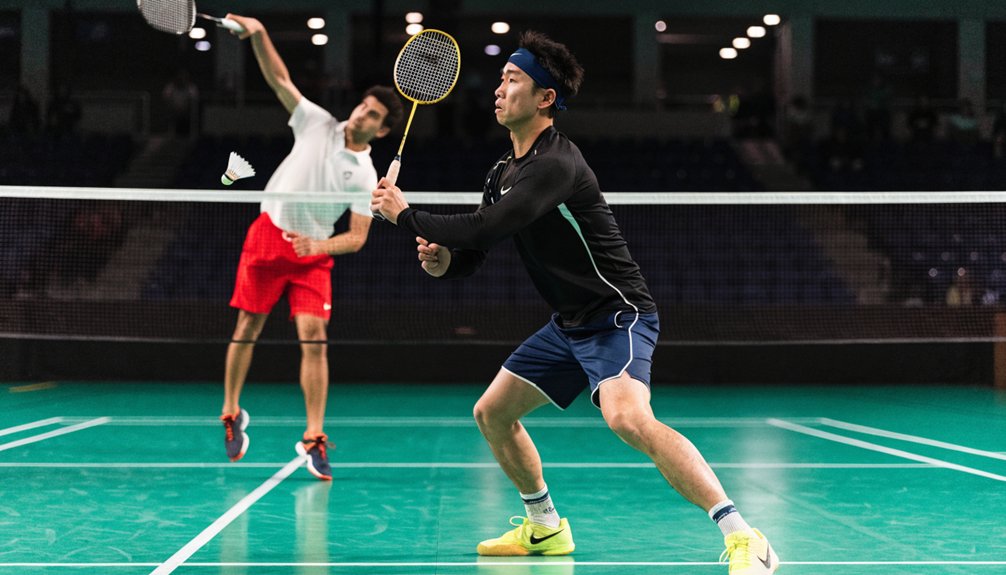
Mixing blocks, lifts, and drives well only works if you don’t undermine them with avoidable defensive mistakes. Your defence breaks down when technique, positioning, and decision-making lose structure under pressure. Use disciplined footwork techniques and sharper mental preparation to remove these errors before powerful smashers exploit them. A lightweight racket can also improve defensive reaction speed by increasing maneuverability and reducing fatigue during fast exchanges.
- Standing too upright, which slows your split step and weakens racket readiness.
- Reaching late instead of moving early, forcing unstable contact behind your body.
- Lifting too short, giving the attacker another steep, aggressive hitting window.
- Driving predictably, allowing easy interceptions and keeping you trapped defensively.
- Watching the shuttle only, not the hitter’s shoulders, grip, and preparation cues.
Correct these habits, and you’ll defend with earlier reads, cleaner contact, and better recovery into the next shot under sustained attacking pressure.
Frequently Asked Questions
How Can I Improve Reaction Speed Against Fast Smashes?
Improve your reaction speed by practicing reaction drills, sharpening split-step timing, and adding agility training. You’ll read cues earlier, stay balanced, and intercept faster smashes by training anticipation, racket readiness, and explosive first-step recovery.
What Racket Tension Helps Most With Defensive Returns?
You’ll usually defend best with medium tension, around 22–25 lbs; test the theory that lower tension always helps, because control matters too. Match racket weight and string material strategically, so you’ll gain repulsion, stability, and precision.
Should Doubles and Singles Defence Tactics Differ Significantly?
Yes, your doubles strategies and singles techniques should differ notably: you’ll adjust positioning tactics for shared court coverage in doubles, while singles prioritizes endurance and precision; strong communication skills matter in doubles, but less in singles.
How Do I Train Stamina for Repeated Smash Defence?
Like a metronome, you’ll build stamina through endurance drills and interval training: alternate multishuttle smash-defence bursts with recovery, increase work-rest ratios weekly, add footwork circuits, and monitor heart rate so you don’t overtrain.
When Should I Switch From Defence to Counterattack?
You should switch from defence to counterattack when your defensive positioning forces a weaker reply and your balance is stable. Trust counterattack timing after a shorter smash, higher lift, or predictable drive, then press forward decisively.