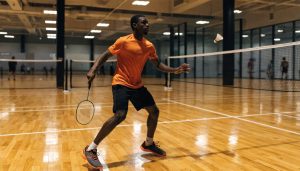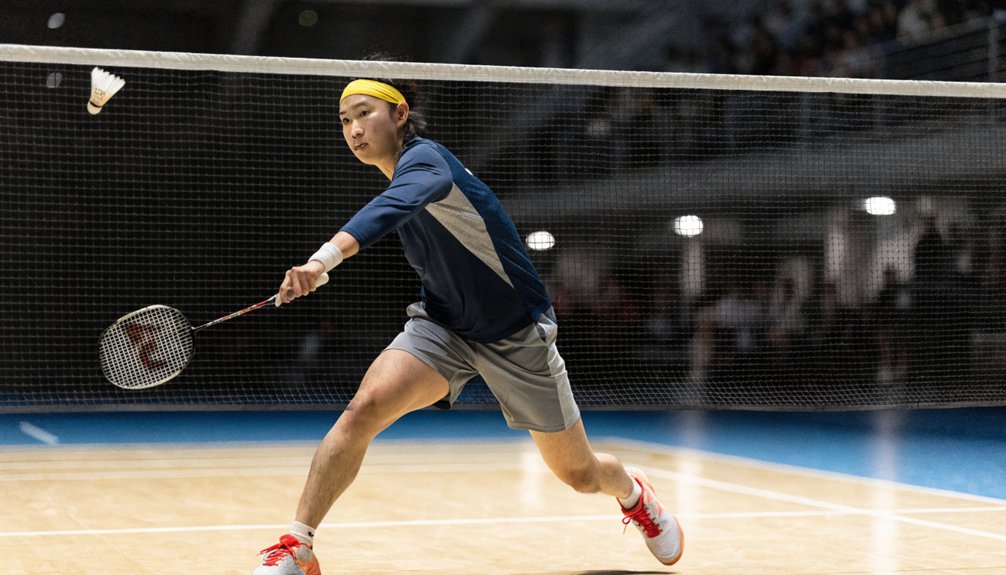
Power beats pressure, but control wins points at the net. If you want tighter placement and fewer loose returns, start with the basics you can actually train: quick footwork, early shuttle contact, and a softer grip. From there, you’ll shape the shuttle with better racket angles and cleaner brush contact. A few small adjustments can change your net game more than you’d expect—and the most important one usually gets missed.
Key Takeaways
- Reach the shuttle early with a split step, quick first move, and low lunge to take it close to the tape.
- Keep a relaxed grip and shorten the swing so the shuttle stays soft and doesn’t pop up.
- Hold the racket head above the net and slightly open the face for better control and disguise.
- Brush lightly across the cork instead of pushing to create tumble and tighter net placement.
- Practice controlled net-feed drills on both sides, aiming to land shuttles within a racket length of the net.
Use Fast Footwork to Reach Early
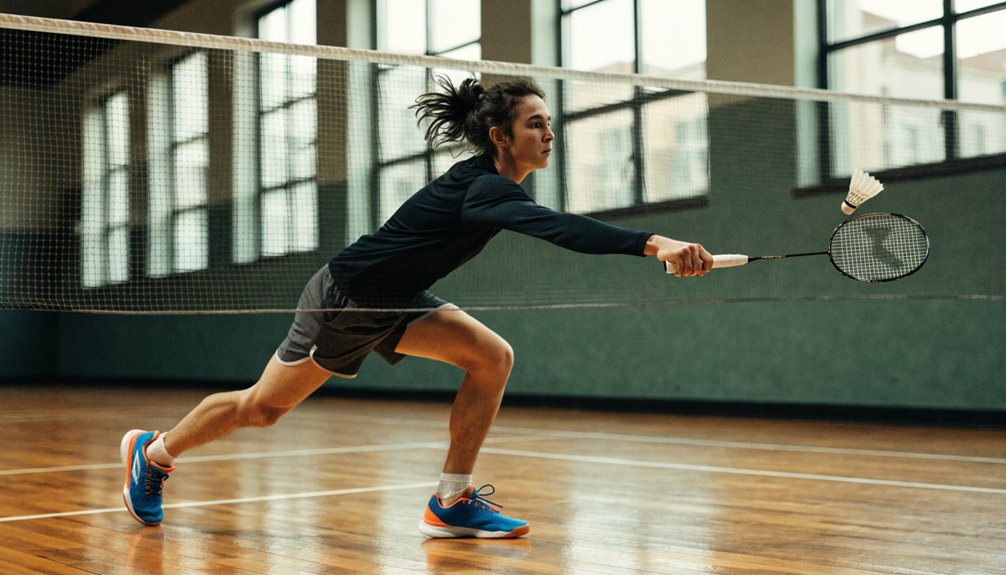
Explode toward the shuttle as soon as you read the opponent’s touch, because early preparation gives you far more control at the net. Push off your base with a sharp first step, keep your center low, and glide forward without bouncing. If you hesitate, you’ll arrive late and lose options before the rally even settles.
Build this habit through focused footwork drills that train reaction speed and balance under pressure. Practice split stepping on every opponent hit, then lunge decisively with your racket leg while your rear leg trails for recovery. Strong movement also helps you resist mind games by keeping your attention on your own timing and positioning instead of an opponent’s distractions. Your net shot strategy improves when you reach the forecourt sooner, because you can set your stance, stay composed, and recover faster after each exchange. Quick feet don’t just save shots; they create time, confidence, and better tactical control overall.
Contact the Shuttle Close to the Net
Getting there early matters most because it lets you take the shuttle as close to the net tape as possible. From that position, you can meet it before it drops too low, keeping your racket head above the tape and your options open. This is central to good net shot strategy, because earlier contact gives you tighter angles and better control over height. Coaching drills that improve Sweet Spot consistency can also help you guide delicate net shots with more accuracy.
Focus on precise shuttle positioning by moving your body behind the shuttle and setting your racket in front. Aim to contact it slightly in front of your body, with a compact forward action. If you wait until it falls, you’ll have to lift more and lose precision. By taking the shuttle high and early, you force a weaker reply and make your net shots harder to attack. Stay balanced through contact too.
Relax Your Grip for Softer Net Shots
Because touch matters at the net, you don’t want to squeeze the handle too tightly through contact. A relaxed hand helps you cushion the shuttle, control pace, and keep the reply tumbling tightly over the tape. If your grip pressure stays firm, the shuttle often pops up and gives your opponent an easy kill. Think of holding the racket securely, not forcefully, so your fingers can still feel the shuttle on impact. Good touch at the net also depends on grip principles, since proper racket handling improves control and shot accuracy.
- Loosen your fingers before the shuttle arrives.
- Tighten slightly only to stabilize the racket face.
- Keep your wrist calm and your forearm free of tension.
- Practice gentle feeds to learn consistent grip pressure.
Among effective net shot strategies, this softer hold improves precision and helps you play with confidence under pressure, especially in fast exchanges.
Use Brush Contact to Add Spin
Use a light brushing contact instead of a direct push to make the shuttle spin as it crosses the net. You’ll need to control the racket angle carefully, because even a small adjustment changes how much spin you create. When you get it right, the shuttle tumbles tighter to the net and makes your reply much harder to attack. A lightweight racket with enhanced maneuverability can make these delicate angle changes faster and more precise at the net.


Brushing Angle Control
When you want tighter net control, brush the shuttle lightly across the cork instead of striking straight through it, so the racket face adds a small amount of spin. Your goal is subtle angle adjustment, not extra force. Keep your grip relaxed, meet the shuttle early, and guide it with a short brushing motion for better shuttle placement.
- Open the racket face slightly to lift without popping it up.
- Brush across the side of the cork to control direction.
- Stay soft in your fingers so contact feels precise.
- Recover your racket head quickly for the next touch.
If the shuttle floats too high, reduce the brushing length. If it dies into the tape, soften the face angle less. Practice slow repetitions first, and you’ll build cleaner, more confident net control under pressure.
Spin For Tighter Nets
Spin makes a good net shot even harder to attack, and it builds directly on the brushing control you’ve already practiced. Instead of pushing through the shuttle, brush lightly across the cork and feathers so it tumbles just over the tape. Keep your grip relaxed, your racket face slightly open, and your contact soft.
To create useful spin variations, adjust the brushing direction without changing your preparation. A finer sideways brush can make the shuttle wobble and fall sooner, while a gentler upward brush helps it clear tightly before dying. This strengthens your net shot strategy because your opponent sees the same setup but receives a different reply. Practice with short, controlled feeds and aim for consistent tumble, not force. When your touch improves, your tighter nets will pressure mistakes.
Fix Common Net Shot Mistakes
If your net shots keep sitting up or drifting too high, start by correcting your racket angle at contact. Keep the face controlled and slightly closed so you can guide the shuttle tightly over the tape. Then improve your net timing by meeting the shuttle early, and you’ll gain better touch and consistency. Using a light forehand grip can also reduce wrist and arm strain while helping you control delicate net shots.
Correct Racket Angle
One simple angle change can clean up most net shot errors: keep your racket face slightly open so the shuttle is guided upward and tight over the tape instead of being pushed flat into the net.
Use a relaxed racket grip so you can fine-tune the face angle at contact without forcing the shuttle. If your strings point too downward, you’ll dump shots short; too open, and you’ll lift too high. Let shot selection guide small adjustments, since tighter returns need a gentler, softer face.
- Keep the racket face slightly open, not square.
- Relax your fingers to control touch and direction.
- Match the angle to the shuttle’s height and spin.
- Check whether misses are into the net or too high.
With practice, you’ll feel the shuttle stay on the strings a fraction longer, giving you cleaner, more precise net control.
Improve Net Timing
Because net shots happen so close to the tape, timing often matters more than power: take the shuttle as early as you can, ideally just after it crosses the net and before it drops below tape height. If you wait, you’ll contact lower, lift unintentionally, and lose control.
Use small split steps and keep your racket up so you’re ready without rushing. Good timing techniques start with reading your opponent’s racket face, then moving on the shuttle’s upward path, not after it falls. During rhythm practice, feed slow shuttles and aim to meet each one at the same contact point. Count “split, reach, tap” to build consistency. Stay relaxed through your fingers and forearm, because tension delays contact. With earlier preparation and cleaner rhythm, you’ll make tighter, softer, more accurate net shots consistently.
Practice Drills to Improve Touch
Start with controlled net-feed drills to build the soft touch a good net shot demands. Have a partner toss shuttles just over the tape, and focus on brushing, not pushing. You’ll develop touch sensitivity faster when you aim to make each shuttle tumble tightly and land short. Rotate forehand and backhand positions so your hands learn different contact angles and net shot variations.
- Feed ten shuttles to one corner, then switch sides.
- Alternate straight and crosscourt returns with identical preparation.
- Practice holding your racket still after contact to check control.
- Count how many shuttles land within a racket length of the net.
Keep rallies short and repeatable. If the shuttle rises, soften your grip and shorten the swing. Consistent, deliberate reps will sharpen feel and improve net precision under pressure during matches. Using the right grip size can also improve comfort and control during delicate net shot practice.
Frequently Asked Questions
How Often Should I Replace My Badminton Strings for Net Play?
Replace your badminton strings every 2–3 months for regular net play—it’s a game-changer. If you play weekly, monitor string tension and string material; restring sooner when control drops, fraying appears, or shots feel dull.
What Racket Balance Works Best for Precise Net Shots?
You’ll get the best precision on net shots with an even-balance or slightly head-light racket. Match racket weight to your hand speed, and choose the right grip size so you can relax, guide, and control delicately.
Can Humid Conditions Affect Net Shot Control and Shuttle Behavior?
Yes—humidity effects are real: you’ll notice reduced shuttle speed, softer cork response, and slightly less crisp control. You should tighten technique, use gentler fingers, and test shuttles early, so you can adjust touch confidently.
Are Feather or Nylon Shuttles Better for Practicing Net Shots?
Feather shuttles are better for practicing net shots because you’ll get truer touch and more predictable shuttle speed. Use nylon shuttles too, though, to refine grip technique and adapt your control across different playing conditions.
What Warm-Up Exercises Help Prevent Wrist Strain During Net Practice?
Start with wrist circles, gentle flexion-extension stretches, forearm rotations, and light squeeze drills. You’ll improve wrist flexibility and grip strength while increasing blood flow. Keep movements controlled, pain-free, and gradually build intensity before net practice.