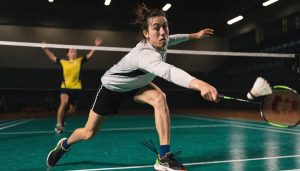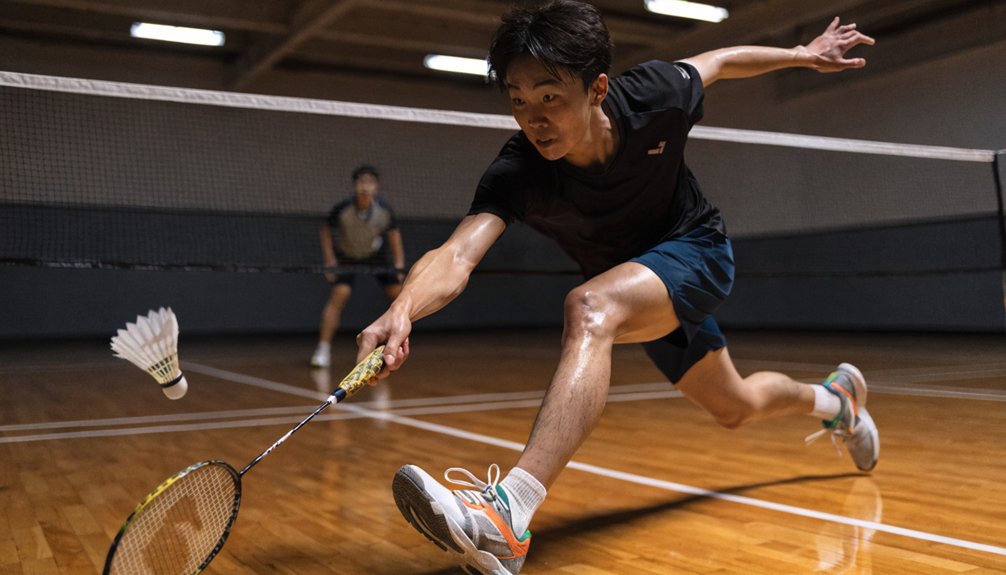
Reaction speed in badminton is the hinge your whole game swings on, and small gains here change every rally. You’ll improve faster when you test your baseline, tighten your split step, and train your eyes and feet to react as one system. Sharp net hands, earlier shot recognition, and unpredictable multi-shuttle work also matter. But a few hidden habits may be costing you more time than you think.
Key Takeaways
- Time your split step with your opponent’s shuttle contact to launch faster in any direction.
- Keep your racket head up, use a short backswing, and relax your grip for quicker net reactions.
- Train with unpredictable multi-shuttle feeds to improve shot reading and match-ready reflexes under pressure.
- Focus on the first two footwork steps, staying light on your toes and balanced through every movement.
- Track reaction progress with repeated timed drills, video review, and error logging under consistent conditions.
Test Your Reaction Speed Baseline

How fast do you actually react when the shuttle changes direction? Before you train harder, measure what your nervous system is doing now. A simple reaction time assessment gives you objective data, not guesses. Use a partner’s random toss, a phone app, or video review to record how quickly you recognize and respond to an unexpected feed. Track multiple trials, then average the results.
Baseline testing matters because improvement is easiest to verify when you know your starting point. Test under consistent conditions: same court, same shoes, same fatigue level, and similar feed quality. Record errors too, not just speed, because clean responses beat rushed mistakes. In badminton, the shuttlecock is designed to fly cork-first, so testing with realistic feeds helps you measure reactions that better match actual play. When you quantify your reactions, you’ll train with purpose, adjust drills intelligently, and see progress that actually transfers into match play over time.
Sharpen Your Badminton Split Step
Master your split step, because it’s the timing link between seeing the shuttle and moving explosively in the right direction. When your opponent strikes, you should land lightly, knees loaded, hips centered, and heels barely touching. That instant preload sharpens reaction speed and keeps your body primed for immediate acceleration.
- Match split step timing to your opponent’s contact, not their swing.
- Keep foot placement shoulder-width, with weight balanced through the balls of your feet.
- Stay compact: chest up, core braced, arms relaxed, eyes locked on the shuttle.
- Practice repeated land-and-freeze reps to groove stable, reactive positioning.
Done correctly, your split step becomes automatic. You’ll read faster, launch cleaner, and waste less time resetting after each shot under pressure in fast rallies. Quick movement also depends on grip adjustments, since changing your hold efficiently helps you react faster during dynamic exchanges.
Use Footwork to React Faster
Once your split step is timed well, faster reactions come from cleaner footwork patterns that convert readiness into efficient movement. You should focus on your first two steps, because they determine whether you arrive balanced or rushed. Stay low, push explosively off the outside leg, and recover through compact chasse or crossover steps depending on distance. Efficient lateral movement lets you cover angles sooner without wasting energy. A lighter racket with a head light balance can also support quicker defensive exchanges by improving maneuverability during fast changes of direction.
Build consistency by rehearsing shadow patterns to all six corners, emphasizing posture, braking control, and immediate recovery to base. Add agility drills like ladder work, cone shuffles, and multi-direction sprints to improve coordination and reacceleration. Keep your feet active between shots instead of planting flat. When your movement becomes automatic, you’ll read earlier, react quicker, and maintain pressure through longer rallies under fatigue too.
Improve Your Hand Speed at the Net
Sharpen your hand speed at the net by reducing excess racket movement and preparing with the racket head already up in front of your body. That compact setup shortens your contact path, improves control, and lets you intercept shuttles with less delay. Keep your grip relaxed so you can tighten instantly on impact.


- Hold a short backswing to accelerate faster.
- Practice finger power for quick taps and blocks.
- Train hand eye coordination with rapid-feed net drills.
- Refine net positioning so your racket reaches forward early.
You’ll react better when your elbow stays stable and your wrist stays active. Focus on clean preparation, minimal swing length, and balanced posture. A racket with a Dual Optimum system can also improve stability and maneuverability, helping you make faster, more controlled interceptions at the net. With repetition, your hands will fire quicker, your interceptions will feel automatic, and your net exchanges will become far more decisive under pressure.
Read Badminton Shots Earlier
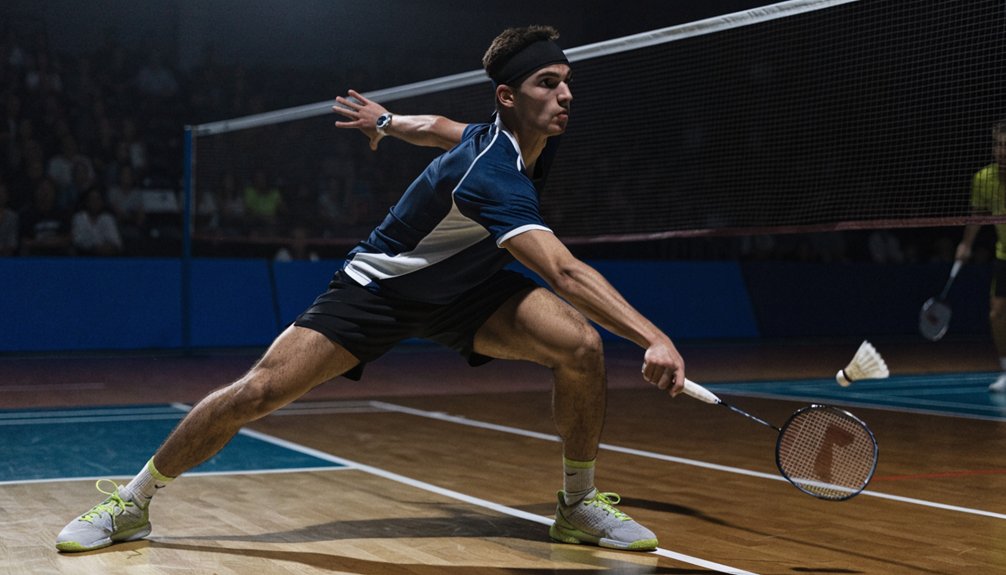
To react faster, you need to pick up the shot before contact by tracking your opponent’s body cues, especially shoulder rotation, grip changes, and approach angle. You should also read the racket face closely, since its position and last-second adjustments often reveal direction, height, and pace. When you train your eyes to process these signals earlier, you’ll move sooner and recover more efficiently. Staying calm during mind games also helps you keep reading these cues accurately under pressure.
Opponent Body Cues
Because badminton unfolds in fractions of a second, reading your opponent’s body cues can give you a critical head start before the shuttle even leaves the racket. You’ll react faster when you track opponent positioning, torso rotation, shoulder height, and foot pressure. Their body language often reveals intention before contact, letting you load your base and move decisively.
- Watch the hips: open hips often precede crosscourt options, while closed hips favor straighter replies.
- Read the shoulders: rising shoulders can signal lift preparation, while dipped shoulders may indicate a faster, flatter exchange.
- Check weight transfer: a forward lean usually supports attacking pressure; backward balance often limits sharp angles.
- Study recovery steps: rushed footwork exposes weaker choices, so you can anticipate and intercept earlier under match pressure better.
Racket Face Reading
One of the fastest ways to read badminton shots earlier is to study the racket face through the final moments of your opponent’s swing. The angle, speed, and racket grip often reveal shot selection before contact. Train your eyes to track whether the face stays open, closes slightly, or cuts across.
| Racket face | Likely shot | Your cue |
|---|---|---|
| Open | Clear/drop | Move back, hold |
| Neutral | Smash/drive | Split early |
| Closed | Slice/push | Recover fast |
You’ll react faster when you pair racket-face reading with body cues. During drills, freeze video just before impact and call the shot. On court, stay balanced, keep your split step timed, and trust the pattern recognition you’re building. Earlier reads create calmer movement, cleaner defense, and stronger counterattacks under pressure.
Use Multi-Shuttle Drills for Reflexes
When you want to sharpen court reactions fast, multi-shuttle drills are hard to beat because they overload your visual processing, footwork, and racket preparation in rapid succession. You’re training your brain and body to recognize cues, explode, and recover without hesitation under pressure. Because badminton is played to 21 points in a best-of-three format, faster reactions can make a major difference during long, high-pressure rallies.
- Use shuttle variety to force different contact points, trajectories, and timing demands.
- Increase drill intensity gradually so your split step, first push, and recovery stay technically sharp.
- Keep feeds unpredictable across forecourt, midcourt, and rear court to strengthen real-match reflexes.
- Work in short bursts, then rest briefly, so each repetition stays fast, precise, and game-relevant.
Done consistently, these drills improve neural speed, movement efficiency, and shot readiness. You’ll feel quicker to intercept, defend, and counterattack during rallies under real pressure.
Fix Habits That Slow You Down

A few small habits can quietly add essential milliseconds to your reactions, even if your speed and fitness are solid. If you stand flat-footed, grip too tightly, or watch the shuttle late, you’re creating delay. Keep your split step active, shoulders relaxed, and racket prepared earlier. Sharpen mental focus between shots, not after mistakes. Coaching drills that improve Sweet Spot consistency can also help you prepare the racket earlier and react more cleanly under pressure.
| Habit | Better choice |
|---|---|
| Flat feet | Light bounce |
| Tight grip | Relax fingers |
| Late racket prep | Set early |
| Watching opponents only | Track shuttle |
| Rushing thoughts | Use visualization techniques |
You’ll react faster when your body stays loose and your cues stay simple. Build cleaner habits during every rally, and your nervous system will respond with less hesitation and more efficient first movement under match pressure.
Track Progress and Raise Drill Speed
Cleaner movement habits give you a solid baseline, but you won’t know if your reactions are actually improving unless you measure them. Track split-step timing, first-step direction, and shuttle contact quality after each drill. Use video analysis to compare sessions and identify delays you can’t feel in real time.
- Record ten-rep averages, not one lucky burst.
- Increase drill pace only when accuracy stays high.
- Shorten feed intervals to force earlier reads.
- Retest weekly and log errors, recoveries, and wins.
This approach turns guesswork into feedback. Your speed training should progress from controlled feeds to randomized, match-like patterns. If your form breaks under pressure, reduce complexity, clean it up, then accelerate again. When you track the right metrics, you’ll build reflexes that hold up in real rallies under stress. Equipment also matters, because string tension can affect control and shuttle contact quality during fast reaction drills.
Frequently Asked Questions
Can Nutrition Affect Reaction Speed During Badminton Matches?
Yes, your nutrition can directly sharpen reaction speed during badminton matches; you’ll benefit from precise carbohydrate timing and disciplined hydration strategies, which stabilize blood glucose, sustain neuromuscular firing, delay fatigue, and keep your decision-making fast.
How Much Sleep Improves Badminton Reflex Performance?
You’ll see the sweetest gains with 8–10 hours nightly; that sleep duration sharpens reflexes, decision speed, and coordination. Don’t shortchange recovery importance—consistent, high-quality rest lets your nervous system reset, so you’re quicker on court.
Do Certain Badminton Racket Setups Help Faster Reactions?
Yes—you’ll react faster with optimized racket weight, string tension, grip size, and frame stiffness. Choose lighter, balanced setups you can maneuver confidently; test incrementally, because the fastest reaction comes from control, stability, and repeatable timing.
Can Age Significantly Limit Improvements in Reaction Speed?
Yes, age can slow gains, but it doesn’t prevent meaningful improvement in reaction speed. You’ll still benefit from targeted training techniques, consistent drills, and strong mental focus, optimizing neural efficiency, anticipation, and movement timing over time.
How Often Should Beginners Train Reflexes Each Week?
You should train reflexes 2–3 times weekly—yet here’s the key: consistency beats volume. With smart training frequency and beginner techniques, you’ll build neural responsiveness, avoid overload, and improve steadily. Keep sessions brief, focused, and progressive.