If you’re starting badminton in 2026, your biggest performance gains won’t come from flashy sensor rackets or smart grips—they’ll come from a correctly matched racket, proper shoes, and a few key accessories. The challenge is knowing what genuinely affects your timing, power, and movement, and what’s just clever marketing. Get those first choices wrong, and you’ll waste money and slow your progress before you even…
Key Takeaways
- Spend first on court time, basic coaching, and durable shuttles; these improve skills far more than any gear upgrade.
- Buy a mid-range racket (3U/4U, medium balance, medium-flex shaft) and string it at 22–24 lbs with standard synthetic gut.
- Get proper badminton shoes with non-marking soles and good lateral support; they prevent injuries and instantly improve movement.
- Add essentials only: overgrips, small towel, water bottle, tape, and nail clipper; skip branded bags, accessories, and cosmetic upgrades early on.
- Avoid overhyped gadgets (smart rackets, AI trackers, gimmick strings); rely on coaching, video feedback, and consistent restringing in 1 lb tension steps.
Understanding Your Badminton Goals and Budget
Before you buy gear or book court time, you need to define exactly what you want from badminton and how much you’re prepared to invest. Are you aiming for casual weekly games, structured club play, or competitive tournaments? Your answer sets required training volume, coaching needs, and equipment durability standards.
Clarify constraints: realistic weekly hours, available courts near you, and monthly spend. Separate a start-up budget (first 2–3 months) from an ongoing budget (shuttles, court fees, coaching).
Next, set performance-oriented goals: movement efficiency, shot consistency, or match results within a timeframe. Prioritize spending on whatever most accelerates those goals—often court time, coaching, and shuttles over aesthetic upgrades. A clear plan prevents overspending on marginal gains while neglecting core skill development.
The Racket: What Matters and What Marketing Hypes
Once your goals and budget are defined, the racket becomes your primary performance tool, not a fashion item. What truly matters is how it converts your strength, timing, and technique into shuttle speed and control. Ignore flashy paint jobs and “pro signature” labels; they don’t improve your training outcomes. Over time, experimenting with different weight distribution and flex profiles is a trial‑and‑error process that helps you discover what best matches your skill level and style.
Focus on:
- Weight class (3U/4U): Heavier gives stability and power; lighter helps speed and recovery in rallies.
- Balance (head‑heavy, even, head‑light): Head‑heavy aids smashes; head‑light favors defense and fast flat exchanges.
- Shaft stiffness: Stiffer suits fast, clean technique; more flexible helps developing players generate length.
- String pattern and tension range: Verify it supports your target tension so you can tune feel, control, and shuttle feedback as your technique improves.
Shoes and Footwork Gear You Should Never Skip
Even with perfect racket technique, you’ll leak speed and stability if your shoes and footwork gear aren’t up to standard. You need badminton-specific shoes with non‑marking gum soles, low stack height, and solid lateral support. Running shoes are unstable for lunges and split steps; they roll and waste reaction time.
Prioritize a snug midfoot, slightly roomy toe box, and firm heel cup. Cushioning should be responsive, not soft and spongy, so you can decelerate hard without sinking.


| Item | What to Look For | Why It Matters |
|---|---|---|
| Badminton Shoes | Gum outsole, lateral stability, low drop | Faster push‑off, safer cuts |
| Socks | Padded, moisture‑managing, snug arch | Reduces blisters, improves shoe fit |
| Ankle Support | Lightweight braces or tape (if needed) | Extra stability after previous sprains |
| Insoles | Firm, supportive, low‑volume | Better alignment, reduced fatigue |
Shuttlecocks, Grips, and Strings That Actually Affect Your Game
Although racket choice gets most of the attention, the shuttlecocks, grip, and strings you use will quietly dictate how much of your technique actually shows up on court. As a beginner or early-intermediate player, you don’t need premium options, but you do need equipment that behaves predictably so your practice transfers into consistent shots.
- Choose slow–medium speed shuttles so you learn full swings, not lazy taps.
- Use durable nylon shuttles for training; feather only when you’re drilling control and feel.
- Regrip until the handle fills your hand comfortably; too thin or thick ruins timing and pronation.
- Start with 22–24 lbs string tension; go higher only once you’re consistently hitting the sweet spot.
- For your first restring, pick synthetic gut strings in a slightly thicker gauge so you get a forgiving mix of control, comfort, and durability without spending too much.
Essential Accessories to Keep in Your Bag
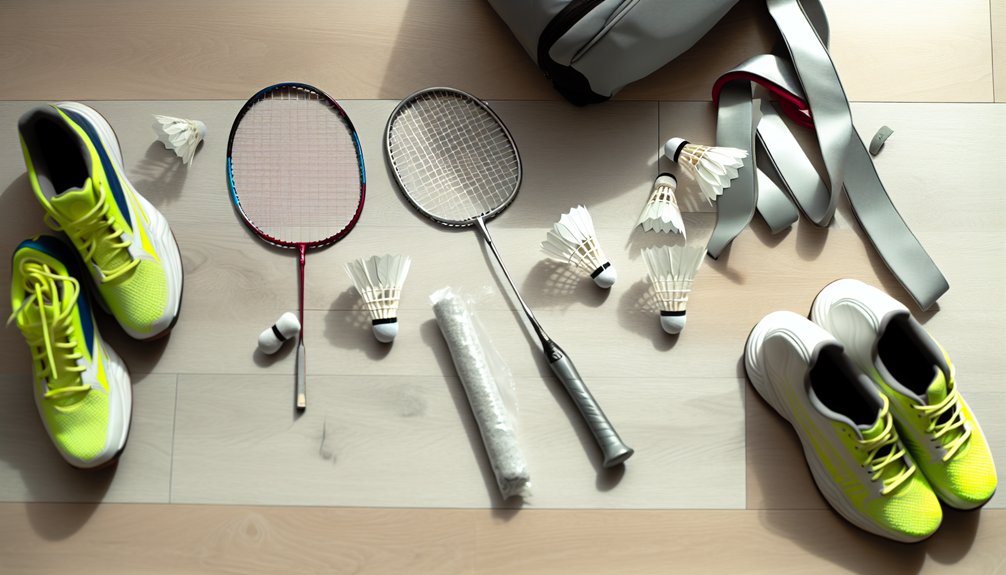
Three or four small accessories in your bag will solve 90% of on-court problems before they affect your performance. First, keep at least two spare overgrips; replace them the moment they feel slick to maintain consistent racket feedback. Add a small towel to manage sweat on your hands and face—slip risk drops, and you’ll hit cleaner under pressure.
Pack scissors or a nail clipper with a file; long or jagged nails ruin finger power and control. Include pre-cut athletic tape or finger tape for quick support if a joint starts feeling unstable.
Finally, carry a water bottle and a simple electrolyte sachet. Dehydration quietly kills footwork speed, reaction time, and shot precision long before you actually “feel tired.”
Smart Upgrades Once You’ve Played for a While
Once your technique is stable and you can consistently hit the shuttle’s sweet spot, it’s time to think about upgrading your racket and string setup for better performance. You’ll want to match racket specs—weight, balance, and stiffness—with your playing style, then refine control and power by selecting the right string type and tension. In this section, you’ll learn when that upgrade actually helps your game and how to choose smart configurations instead of just chasing “pro” gear. Upgrading to rackets that use technologies like the Dual Optimum Frame or aerodynamic frame shapes can further improve both power and maneuverability as your skills advance.
When to Upgrade Racket
As your timing, footwork, and shot consistency improve, your first racket can start limiting your progress rather than supporting it. You should consider upgrading when your current frame can’t keep up with the speed, precision, or tactical demands of your sessions.
Key signs it’s time to move on:
- You’re consistently late on fast exchanges even with good preparation and efficient swings.
- Your clears and smashes feel technically clean but lack penetration despite solid contact.
- The racket feels unstable on defense or at the net, twisting in your hand on hard drives.
- You’ve developed a clear playing style (attacking, counter-attacking, control-based) that your current racket’s weight balance and stiffness no longer complement.
Upgrade once these limits appear consistently over several weeks.
Smart String and Tension
One of the highest‑value upgrades after a basic racket is dialing in your string type and tension so they match your technique and swing speed. Factory strings are usually thick, loose, and inconsistent, which hides feedback and wastes power.
If you’re still developing clean contact, use thicker strings (0.69–0.70 mm) at 20–22 lbs for a larger sweet spot and better durability. Once your timing’s reliable, you can move to 0.65–0.68 mm at 23–26 lbs for sharper control and crisper net shots.
Stronger, fast‑swing players who hit the sweet spot consistently can push 27–29 lbs, but only if the frame is rated for it. Always restring at the same shop initially, then adjust tension in 1 lb steps based on feel and match performance.
Gear You Can Borrow, Rent, or Buy Used to Save Money
You don’t need to buy everything new to train effectively—many clubs let you borrow beginner rackets and rent core court essentials like shuttles and grip tape. By testing gear this way, you can evaluate weight, balance, and stiffness before committing money to your own setup. Once you know what supports your technique and playing style, you can target smart used-gear picks that maximize performance per dollar. When borrowing or renting rackets, pay attention to features like racket weight and balance, grip size, and string tension so you can later choose a model that matches your preferred feel and performance.
Borrowable Beginner Rackets
Even before you invest in your own high-end racket, it makes sense to test your interest and build foundational skills with equipment that’s borrowed, rented, or bought used. As a beginner, you’re better off prioritizing correct technique over premium specs. When you borrow, focus on rackets that feel neutral and controllable, not flashy.
Look for:
- Weight: 80–90 g (4U/3U); lighter helps reaction speed, heavier improves stability.
- Balance: Even-balance gives you all-court versatility while you learn strokes.
- Flex: Medium flex forgives poor timing yet still transfers power efficiently.
- Grip size: Slightly smaller than you think; you can always build it up with overgrip.
Borrow several rackets, track what helps your clears, net control, and defense, then narrow preferences before buying.
Rentable Court Essentials
Although a racket is the obvious starting point, the rest of your court setup can also be borrowed, rented, or bought used to keep costs down while you focus on performance. Most clubs provide courts with fixed posts, nets, and boundary lines included in the hourly fee, so you don’t need to buy any of that early on.
Instead, use club shuttles when possible, especially for drills where durability matters more than brand. They’re usually sold or rented by the tube at the desk, letting you test different speeds and materials without committing.
You can also borrow court accessories: loaner grip towels, shared court mops for sweat spots, and even basic first‑aid or athletic tape—everything you need to maintain safe, high‑intensity sessions.
Smart Used-Gear Picks
Once court time and shuttles are sorted, the next leverage point for saving money is smart used gear that preserves performance while slashing cost. You want items where age barely affects function—or is easily reset with maintenance.
Prioritize borrowing, renting, or buying used for:
- Racquets (frame only) – Skip cosmetics; check for cracks, warps, and loose grommets. A fresh string job makes a used frame perform like new.
- Bags – A ventilated, multi-compartment bag protects racquets and shoes; scuffs don’t impact performance.
- Clothing – Moisture-wicking shorts and shirts bought used free budget for coaching and court time.
- Accessories – Grips, towels, and wristbands can be sourced cheaply; replace any worn surfaces for consistent feel.
This approach maximizes training value per dollar.
Overhyped Gadgets and Trends You Can Safely Ignore
While the badminton market keeps pushing “must‑have” tech and accessories, most of these products add cost and distraction without improving your stroke mechanics, footwork, or match results. You don’t need sensor‑embedded rackets, “AI” shuttle trackers, or swing‑analyzer stickers. A coach or training partner plus phone video offers more actionable feedback. Skip gimmick strings that promise “power zones” or “spin boosters.” Consistent tension and a reputable string type matter far more. Avoid ultra‑stiff, ultra‑head‑heavy “pro‑signature” rackets early on; they punish imperfect technique and delay clean timing. Although carbon fiber rackets can be great long‑term tools, beginners don’t need to pay a premium for advanced carbon fiber composites when technique and consistency are still developing. You can also ignore compression sleeves with vague “performance” claims, vibration dampeners, and most “grip‑enhancing” sprays. Solid footwork drills, structured hitting routines, and basic conditioning deliver the real performance gains.