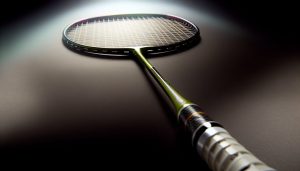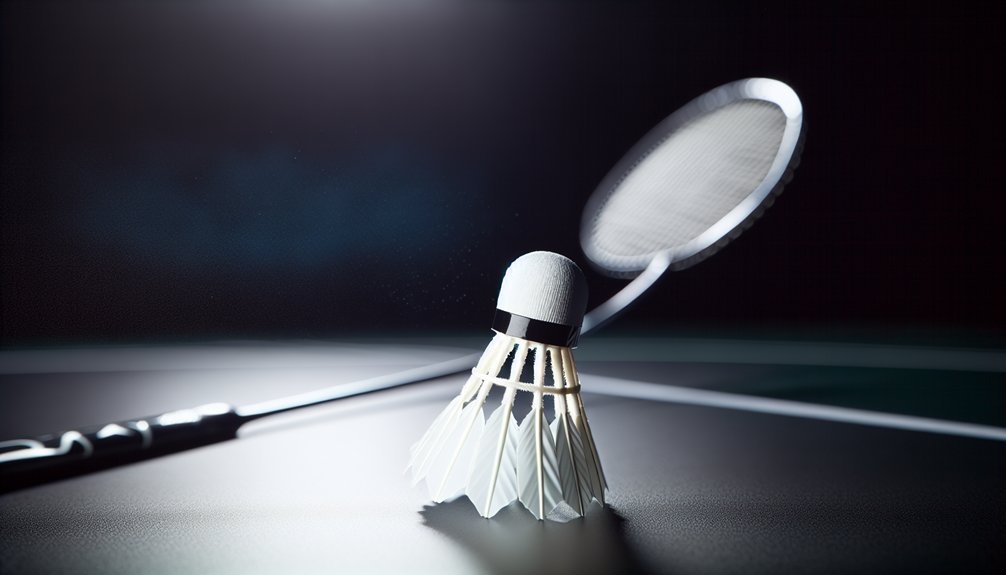
If you’re pushing for match-level consistency with a synthetic shuttle, the Victor NCS Pro Synthetic Shuttle 2026 deserves a closer look. Its nylon skirt geometry and composite cork base are tuned to stabilize drag, reduce wobble, and keep trajectory predictable under pressure. You’ll notice it most on flat drives, counter lifts, and spin-heavy net shots—where small deviations expose weaknesses in design. To decide if it truly matches your game, you’ll want to examine how it…
Key Takeaways
- Meticulously molded nylon skirt and tuned vent geometry give feather-like flight with clean, predictable arcs and excellent mid-rally stability.
- Composite cork base provides a stable rotational axis and consistent compression, improving control and match feel on both smashes and delicate net shots.
- Maintains trajectory stability even under heavy slice, punch clears, and mixed-quality strokes across different skill levels in league and tournament-style play.
- Upper-tier durability reduces skirt fatigue and rib breakage, keeping spin, speed, and feel consistent over extended multi-point training sessions.
- Correct speed selection, adjusted for hall conditions and playing style, is crucial to maximizing stability, responsiveness, and realistic feather-like match feel.
Design, Materials, and Build Quality
Engineering precision defines the Victor NCS Pro synthetic shuttle, starting with a meticulously molded nylon skirt and a resilient composite cork base engineered to replicate feather-like aerodynamics. When you inspect it, you’ll notice the skirt’s rib geometry and vent sizing aren’t decorative; they’re tuned for consistent drag and torsional rigidity, giving the shuttle a stable rotational axis under repeated impact.
Victor’s aerodynamic design leverages high-grade synthetic materials to maintain structural integrity under heat, humidity, and high-string tensions. The skirt resists fraying and deformation, so you don’t get wobble from bent vanes after hard smashes. The composite cork base combines density consistency with a responsive feel at impact, ensuring predictable compression, robust durability, and minimal variance across shuttles within a tube.
Flight Path, Speed, and Control Characteristics
That structural precision directly informs how the Victor NCS Pro travels through the air, giving it a flight profile that’s noticeably closer to high-grade feathers than most nylons. You’ll notice it in the shuttle’s flight dynamics: it accelerates off the stringbed with a clean, predictable arc, then decelerates smoothly without the “floaty” hang typical of cheaper synthetics.
On clears, the NCS Pro maintains trajectory stability even under heavy slice or punch, so your depth control remains consistent across different swing speeds. Smashes penetrate with a strong initial peak speed, yet the shuttle still drops steeply enough for effective follow-up positioning. At the net, the shuttle’s controlled glide and quick speed decay let you tighten tumbling net shots and hold tighter margins over the tape.
Durability, Consistency, and Cost Performance
In durability terms, the NCS Pro sits in the upper tier of synthetic shuttles, especially under hard, multi-point training loads. You’ll notice slower skirt fatigue and fewer broken ribs compared with typical nylon designs, so your tube turnover rate drops. Longevity factors are driven by the denser skirt polymer and reinforced cork interface, which delay deformation even at high swing speeds.
Key consistency and cost-performance points:
- The shuttle maintains nearly identical flight and spin profiles across its usable life, so your performance metrics remain stable session to session.
- Batch-to-batch speed variance is tightly controlled, reducing the need for ad-hoc tipping or tube sorting.
- Higher unit price is offset by extended lifecycle per shuttle, improving cost per rally in club and team environments.
On-Court Testing for Training, League Play, and Tournaments
Durability and cost metrics only matter if a shuttle holds up under real workloads, so on-court testing with the NCS Pro focused on how it behaves in distinct use cases: multi-shuttle drills, league matches, and tournament-style matchplay. You should first evaluate it in high-intensity feeding drills—smash repetitions, defense chains, and lift–clear patterns—to verify flight stability under fatigue and off-center contact.


In league play, monitor how well it maintains aerodynamic symmetry and spin after rallies with mixed stroke quality across different skill levels. For tournament-style simulations, standardize warm-up, then track trajectory consistency in pressure points—especially late-game pushes and counter-attacks. Collect structured on court feedback from singles and doubles specialists, mapping player preferences to stability, responsiveness, and retained feel over extended sessions.
How to Choose the Right Speed and Get the Best Performance
Although the NCS Pro is engineered for broad playability, its performance hinges on matching shuttle speed to your hall conditions and game style. Effective speed selection guarantees the skirt geometry, synthetic feather stiffness, and cork response produce a predictable flight curve and timing window.
To get reliable performance optimization, validate speed in your actual venue, not just by label.
- Test from rear court to opposite singles long line; an ideal NCS Pro should land 30–50 cm inside, compensating for your usual swing speed.
- In slow halls or cold conditions, move one speed faster; in hot, fast halls, drop one speed.
- For attacking players, prioritize a slightly faster speed; for control-oriented rally play, favor a marginally slower, more stable trajectory.