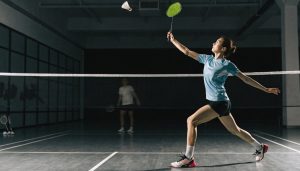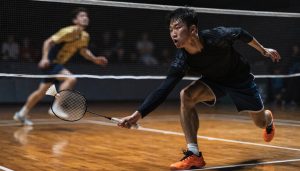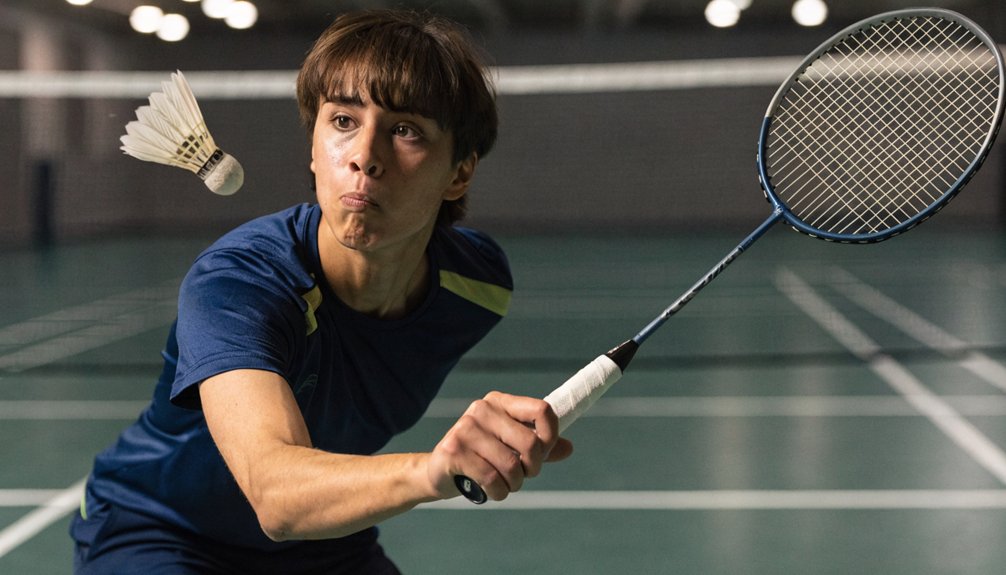
If your backhand keeps flaring up your wrist, you’re likely muscling the shot instead of using structure and timing. You’ll need to adjust your grip, shorten your swing, and let your shoulder, core, and legs generate the power so the wrist only guides. Once you fix how you hold the racket, how you move to the shuttle, and when you contact it, you’ll notice both less pain and more control—especially when you start to…
Key Takeaways
- Use a proper bevel/backhand grip with relaxed pressure, tightening only at impact to reduce excessive wrist bending and strain.
- Prepare early and contact the shuttle slightly in front of your body, using a compact, elbow-led swing instead of flicking only with the wrist.
- Rotate hips and torso to generate power from the core and shoulder, keeping the wrist stable rather than the primary power source.
- Coordinate footwork with a split step and quick chasse or crossover steps to get behind the shuttle, avoiding overreaching that stresses the wrist.
- Strengthen forearm and grip with controlled exercises and elastic-band drills to improve wrist stability and support safer backhand mechanics.
Quick Backhand Fixes to Reduce Wrist Pain
Start reducing backhand‑related wrist pain by correcting three fundamentals: grip, contact point, and swing path. First, audit your current stroke: film from side and rear, then note when pain appears—during preparation, impact, or follow‑through. Use this to target quick adjustments instead of guessing. Since poor backhand technique is often rooted in how you hold the racket, review your basic grips to ensure your backhand grip aligns with proper principles instead of overloading the wrist.
Shift the contact point slightly in front of your body line. If you’re reaching late and behind your hip, your wrist compensates with forced extension and radial deviation, creating overload. Prioritize early preparation so your shoulder and forearm, not your wrist, take the load.
Refine swing path by shortening your stroke. Use a compact, elbow‑led motion with controlled forearm rotation. Avoid sudden directional changes mid‑swing; instead, commit to a clean, single‑plane trajectory through the shuttle.
Fix Your Backhand Grip to Protect Your Wrist
Once you’ve shortened your swing and moved the contact in front of your body, the next limiter on wrist stress is how you hold the racket. For a safe, powerful backhand, shift from a forehand grip to a bevel/backhand grip. Rotate the handle so the racket face is slightly closed and the thumb rests flat along the wider bevel, not wrapped. Keep your index finger relaxed; avoid pinching with thumb and index. Maintain a “hammer-like” hold: firm enough for control, loose enough for quick micro-adjustments. In neutral position, your wrist should feel straight, not kinked backward or inward. During preparation, let the grip pressure stay low (3/10), then tighten briefly on impact (6–7/10) to stabilize the joint and transfer force efficiently. If you still feel wrist strain, experiment with slightly thicker overgrips to find your optimal grip size and improve both comfort and control.
Use Your Whole Body for a Safer Backhand
To make your backhand both safer and more powerful, you’ll need to connect your core and hips to the stroke instead of muscling it with your arm. You’ll coordinate your footwork and swing so that your body weight transfers efficiently through the shot, reducing stress on your shoulder and wrist. You’ll also maintain a relaxed grip and controlled follow-through to absorb impact and keep your joints protected. Incorporating proper footwork, such as dynamic stretching and movement drills before play, helps your body support the backhand motion and further reduces strain on your wrist.
Engage Core And Hips
Driving a strong, safe backhand begins with your core and hips, not your wrist or shoulder. You generate force by rotating your pelvis and trunk as a single unit, then transmitting that energy through your shoulder, forearm, and finally the racket. Keep your abdominal wall lightly braced, ribs stacked over hips, and avoid arching your lower back.
| Focus Area | What You Do | Performance Effect |
|---|---|---|
| Core Brace | Gently tighten abs and obliques | Stabilizes spine, protects wrist |
| Hip Load | Slightly hinge and rotate hip back | Stores elastic energy |
| Hip Drive | Rotate hips toward shuttle | Adds racket-head speed efficiently |
| Trunk Follow | Let torso continue rotation | Smooth power transfer, less strain |
Coordinate Footwork And Swing
Solid core and hip rotation only pay off if your feet and swing path are timed as one system. As the shuttle travels to your backhand side, execute a quick chasse or crossover to turn your body sideways, non-racket shoulder pointing toward the shuttle. Plant your racket-side foot slightly behind, knees flexed, weight mostly on the inside edge of that foot.


Initiate your swing as your weight transfers from the rear foot toward the front. The racket starts moving only after your last step makes contact, not before. Keep your hitting shoulder relaxed but aligned with your hip rotation, so the racquet travels on a consistent arc. This sequencing lets your legs and torso generate force, sparing your wrist from compensating under pressure.
Relaxed Grip And Follow-Through
Although backhand power often feels like it should come from a tight squeeze on the handle, you’ll generate safer, cleaner shots by keeping a relaxed grip and allowing a full, body-led follow-through. Hold the racket at about 4–5/10 tension before impact, then briefly tighten to 7–8/10 at contact, relaxing again as your arm, shoulder, and trunk complete the motion.
| Feeling | Problem | Performance Reframe |
|---|---|---|
| Tense | Wrist pain | Let the shoulder lead |
| Rushed | Late shuttle | Prepare earlier |
| Weak | No length | Use forearm rotation |
| Anxious | Mishits | Watch the shuttle |
| Frustrated | Inconsistent | Trust the follow-through |
Finish with your chest facing slightly cross-court, racket high, and wrist neutral—not snapped.
Footwork and Positioning for Pain-Free Backhands
When your base position and movement patterns are efficient, your backhand becomes both stronger and less stressful on your shoulder and elbow. Stand slightly turned sideways to your backhand corner, feet wider than shoulder-width, with your non-racket foot slightly forward. Keep your center of mass low and balanced so you’re ready to push explosively. Use a split step as your opponent strikes, landing on the balls of your feet. For rear-court backhands, initiate with a powerful lateral push from your non-racket leg, then use small adjustment steps to align your hitting shoulder behind the shuttle’s projected path. Avoid reaching from a square stance; instead, rotate your hips and shoulders. This alignment lets your arm swing naturally, minimizing joint strain. Pairing this efficient movement with a racket that has a medium flex frame can further reduce joint stress while still allowing solid power generation on your backhand.
Time the Shuttle for Safe, Powerful Backhands
Efficient footwork puts you in range, but your backhand only becomes safe and explosive if you meet the shuttle at the right moment in its flight. You’re aiming to strike it slightly in front of your body, around hip to chest height, as it descends. This contact window lets you transfer force through your arm and shoulder instead of flicking from the wrist. Because timing is so crucial, choosing a racket with suitable shaft flexibility and weight for your skill level helps you swing smoothly through the shuttle without overloading your wrist.
Track the shuttle early: rotate your upper body, set your non-racket shoulder toward the shuttle, and load your racket arm before it arrives. Count the rhythm—“turn, set, hit”—to avoid late, snatched swings. In multi-shuttle drills, ask for varied heights and speeds, training yourself to adjust preparation timing while keeping the same smooth acceleration pattern.
Pick Backhand Shots That Spare Your Wrist
Instead of reflexively flicking at every backhand, you should select strokes that shift load away from the small wrist joints and into the larger muscles of your forearm, shoulder, and trunk. Prioritize compact, whole-arm swings: use backhand clears, drives, and blocks with a stable wrist and controlled forearm rotation rather than sharp radial deviation. Using a racket with even-balance and appropriate shaft flexibility can further reduce wrist strain by spreading the load more evenly through your arm and shoulder. On tight defensive shots, favor a leaning block or guided lift, letting the shuttle’s momentum work for you instead of forcing a last‑second jab. When under pressure, choose a high, safe backhand clear instead of an all‑out backhand smash that demands extreme wrist snap. On serve returns, step in and use a short, firm push or drive, engaging shoulder rotation and grip tightening rather than pure wrist flick.
Build Wrist-Friendly Strength and Drills Off Court
To support a stronger, pain-free backhand, you’ll need targeted forearm and grip strength that doesn’t overload the wrist. Off court, you can use elastic band resistance training to build the specific muscles and movement patterns your backhand relies on. Pair that with precise shadow swings and footwork patterns so your improved strength transfers directly into faster, cleaner backhand execution on court. Strength work is most effective when you pair it with correct backhand grip technique, using your thumb on the bevel to generate power without overstraining the wrist.
Forearm And Grip Strength
Build stronger forearms and a smarter grip if you want a backhand that’s stable under pressure and explosive on contact. You’re not chasing bulk; you’re training fine motor control and endurance so the wrist stays neutral while the racket head accelerates.
Prioritize crush strength (squeezing), pinch strength (finger control), and rotational control (pronation/supination). Use slow, full ranges and stop if you feel sharp wrist pain.
| Focus Area | Key Exercise | Coaching Cue |
|---|---|---|
| Crush Strength | Towel squeeze holds | Max squeeze, 20–30s, no wrist bending |
| Pinch Strength | Plate or book pinches | Thumb opposes fingers, shoulders relaxed |
| Finger Power | Rice bucket finger digs | Drive straight down, keep wrist locked |
| Rotation Control | Hammer rotations | Move only forearm, small controlled arc |
| Endurance Grip | Racket shadow swings (backhand) | Light grip, tighten briefly at “impact” point |
Elastic Band Resistance Training
Once your forearms and grip can hold a stable racket, elastic bands let you load backhand-specific patterns without beating up your wrist or shoulder. Anchor a light–medium band at chest height. Stand side-on, non-racket shoulder toward the anchor, and hold the band in your backhand grip.
From a neutral elbow angle (about 90°), practice backhand extension: drive the back of your hand outward while keeping the wrist firm, then return under control. Do 3 sets of 12–15 reps each arm.
Next, train external rotation: tuck your elbow by your ribs, forearm across your body, then rotate the forearm outward against band tension. Maintain scapular stability and avoid shrugging. This reinforces racket-head control and joint integrity essential for protecting your wrist during powerful backhands.
Shadow Swings And Footwork
Think of shadow swings and footwork as your off-court lab for building a powerful backhand without overloading the wrist. Focus on clean biomechanics: neutral wrist, relaxed grip, and force initiated from legs, hips, and core. Perform 3 sets of 15–20 backhand shadow swings, emphasizing smooth racket path, shoulder rotation, and balanced recovery stance.
Use targeted footwork patterns to get behind the shuttle early so you’re not compensating with the wrist. Practice split-step, chasse, and crossover steps into the rear backhand corner, then recover to base.
| Drill Focus | Key Wrist-Friendly Cue |
|---|---|
| Backhand shadow swings | Lead with forearm rotation, not wrist snap |
| Rear-corner movement | Turn hips/shoulders before stepping |
| Defensive backhand | Absorb with legs, keep grip pressure moderate |
| Recovery steps | Stay light on toes, avoid reaching with arm |