Picture your groundstroke arcing safely over the net, landing deep with room to spare from the lines. That’s the foundation of cutting unforced errors: you choose smarter targets so you can swing freely instead of steering the ball. By building in height, margin, and depth, you shrink your risk without going passive. Once you understand how to apply these simple target rules to serves, returns, and rallies, your error count starts to drop fast…
Key Takeaways
- Aim 3–5 feet above the net and 3–4 feet inside the sidelines to reduce misses long and wide.
- Default to deep crosscourt or deep middle targets, using spin and shape to land safely in the last third of the court.
- Use consistent, repeatable swing tempo and commit mentally to your chosen target to avoid steering or mid-swing bailouts.
- Structure rallies and serve/return patterns around large, high-percentage zones rather than low-margin lines or highlight shots.
- Practice with depth and margin drills that only count balls landing in safe corridors, training your body to default to safer targets under pressure.
How Safer Targets Cut Errors
When you start aiming for safer targets instead of the lines, your unforced errors drop because you’re no longer demanding “perfect” execution on every ball. You’re building a larger “acceptable” window for contact, timing, and footwork. That lets you swing with a repeatable tempo instead of steering.
First, choose targets you can hit under pressure at your normal rally speed, not your absolute best speed. That becomes your default pattern, so your body learns a consistent swing path.
Next, link your target choice to ball difficulty. On neutral or defensive balls, automatically shift to safer targets so you’re not attempting low‑percentage shots from poor positions.
Finally, commit mentally: once you’ve picked a safer target, don’t bail out mid‑swing.
Core Target Rules: Height, Margin, Depth
Once you’re thinking regarding safer targets, you need concrete rules for where to actually aim: over the net, inside the lines, and into the court. Start with height. On neutral balls, clear the net by 3–5 feet. That arc gives you spin safety while still keeping the ball penetrating.
Next, build margin from the lines. Instead of flirting with winners, aim 3–4 feet inside both sidelines and 4–6 feet inside the baseline. This “target box” shrinks your miss zone without making you passive.
Finally, manage depth. Your default depth goal is the last third of the court. Use spin and solid shape to land deep enough to push opponents back, but not so close to the line that one mis-hit sails long.


High-Percentage Groundstroke Targets
To cut unforced errors, you’ll structure your rally patterns around high-percentage groundstroke targets instead of low-margin lines. You’ll use crosscourt margin targets that work with the length of the court and the height of the net, and pair them with deep middle patterns that shrink your opponent’s angles. By combining these two patterns, you’ll simplify your shot choices and make consistent, safe aggression your default.
Crosscourt Margin Targets
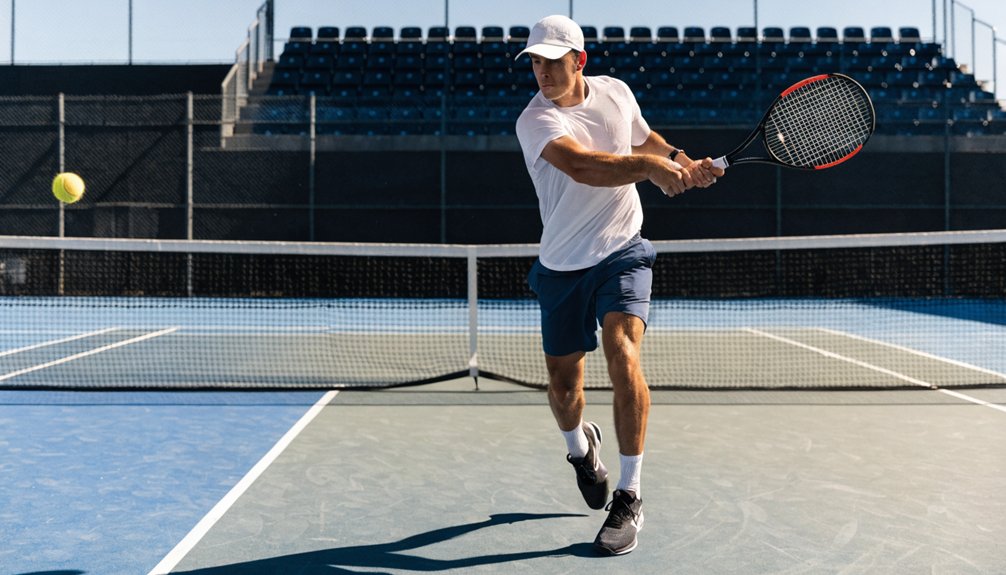
Although it can be tempting to go for winners down the line, you’ll cut unforced errors dramatically by aiming most of your groundstrokes to big, crosscourt margin targets. Use a target about two racquets inside the sideline and three racquets inside the baseline. This gives you net clearance, court length, and a wider court to land in.
Technically, shape the ball higher over the net when you go crosscourt. Aim to contact the ball slightly in front, then swing low-to-high with a relaxed wrist so spin pulls the ball down safely. Strategically, repeat this crosscourt pattern until you earn a short ball. Only then should you change direction. You’re trading low-percentage highlight shots for sustainable, reliable patterns.
Deep Middle Patterns
When you’re trying to cut unforced errors, building your rallies around deep middle patterns is one of the safest, most efficient options you have. By aiming two to three feet inside the baseline and close to the center hash, you maximize court length and shrink the angles your opponent can use.
On your forehand and backhand, use a heavy, net‑clearing trajectory—about three to four feet over the tape—while locking your body line through the middle. Think “big targets, big margins.” Prioritize spin and depth over pace.
Tactically, use deep middle as your default rally ball, especially when you’re out of position. Only change direction when you’re balanced and see a short ball. This pattern stabilizes your rally tolerance and forces opponents to press.
Safe Serve and Return Targets
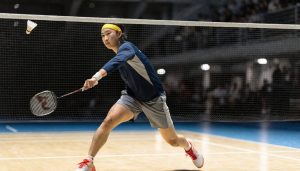
Instead of flirting with the lines on every serve and return, you should establish “safe targets” that give you margin over the net and away from the sidelines while still applying pressure to your opponent. On first serves, aim roughly a racket-length inside the sideline and two feet inside the service line, focusing on height and spin for net clearance. This reduces double faults and short, attackable serves. Just as top badminton players use safe targets under pressure to limit errors and stay mentally composed, you can rely on these margins to reduce costly mistakes in tight moments.
On second serves, shift your target even safer: deeper middle, using shape and kick to push the returner back. For returns, aim heavy, crosscourt, deep middle—again, a racket-length inside each line. Prioritize height, spin, and depth over pace. You’re trading low-percentage “winners” for reliable, neutral-or-better starts to each point.
Safe Targets for Common Rally Patterns
Once the ball is in play, you’ll cut unforced errors by using safe rally patterns built around crosscourt margin priorities, deep middle targets, and smart net clearance. You should learn exactly where to aim your crosscourt shots, when to rally deep through the middle, and how high over the net you need to hit to keep the ball safe yet effective. Let’s break these patterns down so you can repeat them under pressure without handing points away.
Crosscourt Margin Priorities
One of the fastest ways to cut unforced errors is to tighten your crosscourt margin priorities, giving every rally ball a clear and conservative target. Think “big window” over the net and “wide lane” inside the lines. Aim 3–5 feet above the tape and at least 4 feet inside the sideline.
From the deuce side, send forehand and backhand crosscourts just inside the singles sideline, past the service line, using your dominant spin. From the ad side, mirror that pattern, still favoring heavy crosscourt shape. Avoid flirting with the last foot of the sideline unless you’re attacking a short ball.
On pressured balls, exaggerate height and spin, keeping the same crosscourt lane but with more net and sideline margin.
Deep Middle Rally Targets
After you’ve tightened your crosscourt margins, the next upgrade is giving yourself a default “safe house” in the deep middle. Any time you’re slightly late, off-balance, or unsure, aim a couple feet inside both sidelines and beyond the service line. You’re trading line-painting for repeatable, low-risk depth that stabilizes rallies and shrinks your opponent’s angles.
Use deep middle as your “autopilot” in these situations:
- Neutral rallies: Reset to deep middle until you earn a clearer offensive ball.
- Defensive scrambles: Roll or block safely to the middle, then recover.
- Return games: On tougher serves, drive deep middle to reclaim control.
- Pattern building: Alternate crosscourt with a deep middle to disguise direction changes.
Net Clearance And Height
Although aim and direction get most of the attention, your real error insurance comes from managing net clearance and ball height over the baseline. For neutral rallies, aim 3–4 feet above the net and landing deep middle. Under pressure, clear 5–6 feet, accept shorter depth, and buy time. When attacking, you can lower clearance slightly, but never flirt with the tape unless you’re inside the baseline.
| Rally Situation | Net Clearance Focus | Height Over Baseline |
|---|---|---|
| Neutral crosscourt | 3–4 ft, heavy topspin | Chest–shoulder high |
| Neutral down-the-line | 4–5 ft, extra safety | Shoulder high |
| Defensive scramble | 5–6 ft, loopier ball | Head high or higher |
| Counter‑attack | 3–4 ft, drive through | Waist–chest high |
| Finishing short ball | 2–3 ft, controlled pace | Waist high, inside court |
Targets Under Pressure and on Defense
Use clear defensive priorities:
- Aim high, deep crosscourt to the biggest part of the court, buying time and pushing the opponent back.
- When pulled wide, target three feet inside the sideline and deep middle to avoid over-aiming lines.
- On the full stretch, float higher to the center T, prioritizing recovery over offense.
- When rushed at net, play safely at the opponent’s feet or high, central lobs.
- Knowing the badminton court dimensions helps you visualize safer crosscourt and deep-middle targets that stay well inside the lines under pressure.
Drills to Groove Safe Targets and Cut Errors
Smart defensive targets only hold up under pressure if you’ve rehearsed them with purpose, so now you’ll build them into specific drills that hard‑wire safe patterns and cut errors. Start with a cross‑court depth drill: rally cross‑court, aiming above net height and three feet inside the sideline and baseline. Count only balls that land in that corridor. To make these patterns even more reliable under stress, pair your drills with focused footwork drills so you can reach defensive positions on balance and execute your safer targets consistently.
Next, run a “bail‑out pattern” drill. Feed a neutral ball, then deliberately hit to your high‑percentage defensive target (deep cross‑court or middle), and recover. Repeat on both wings.
Add a pressure ladder: set a goal of five, then ten consecutive safe‑target balls. If you miss long or wide, reset. You’re training your body to default to margin, not the line.
Match-Day Safe Target Checklist
Before you walk on court, lock in a simple safe‑target checklist so you’re not improvising under pressure. You want clear, automatic decisions for your stock patterns, not guesses at 30‑all. Review this list quickly during warm‑up, then trust it.
- Commit your rally forehand and backhand to big crosscourt windows, landing at least three feet inside the lines and net.
- On neutral or defensive balls, aim higher over the net with extra margin, never flirting with sidelines or the baseline.
- On short balls, define one aggressive—but still crosscourt—put‑away target you’ll use automatically.
- On serves and returns, pick large “zones,” not tiny spots: body or big crosscourt on first serve; heavy, deep crosscourt on most returns.