
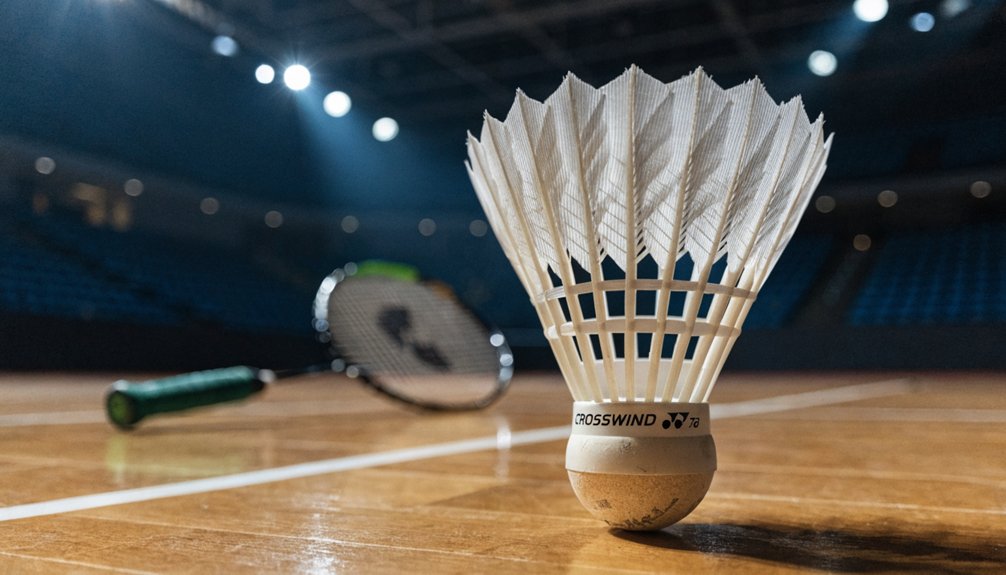
Just as more clubs are rethinking shuttle costs, you’ll find the Yonex CROSSWIND 70 entering the conversation at the right time. It’s built to give you a feather-like profile with the durability and consistency synthetic options often promise but rarely match. If you’re comparing feel, flight stability, and long-term value against standard feather shuttles, this model raises a few useful questions—and not all of them have obvious answers.
Key Takeaways
- Yonex CROSSWIND 70 is a control-focused synthetic shuttle offering balanced speed, stable flight, and predictable response for all-around club play.
- It suits improving beginners and intermediate players who want consistent timing, easier rally control, and a more durable long-term training option.
- Build quality is stronger than budget nylons, with a firmer skirt and solid cork base that reduce wobble and improve shape retention.
- On court, it tracks cleanly in drives, clears, and lifts, with less flutter and more repeatable flight than many cheaper alternatives.
- Compared with feather shuttles, it feels firmer at impact but delivers better durability, fewer mid-game replacements, and stronger value for frequent play.
Yonex CROSSWIND 70 at a Glance
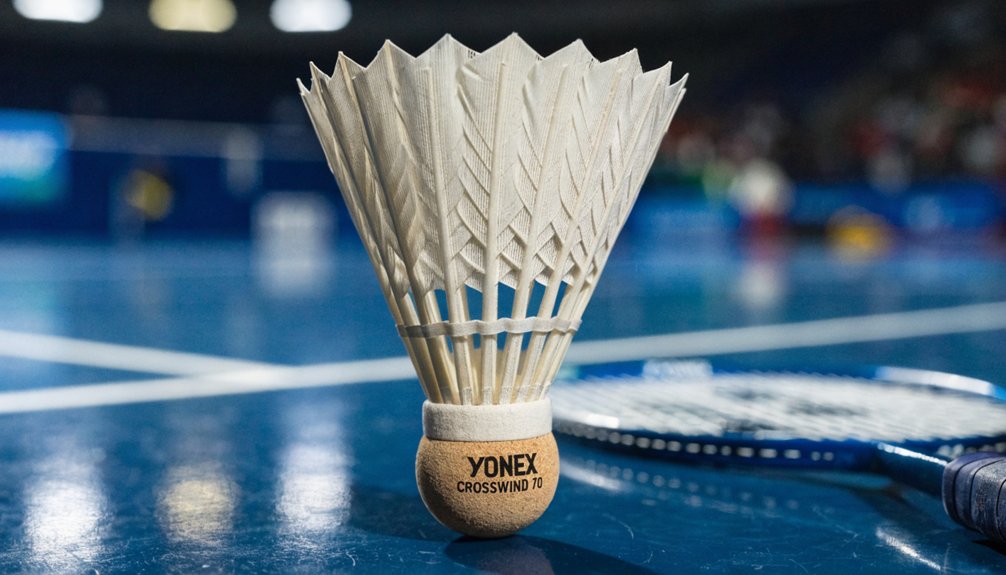
Snapshot-wise, the Yonex CROSSWIND 70 looks positioned as a control-leaning racket for players who want a balanced mix of speed, stability, and accessible power rather than an extreme, one-dimensional feel. From a performance comparison standpoint, you’d place it between ultra-fast frames and heavier, punchier options. Its presentation suggests a measured response: quick enough for flat exchanges, but structured enough to keep shots from feeling overly loose on contact. Looking at design intent, you can infer Yonex prioritized all-around usability over standout specialization. That usually means you’ll notice a steadier sweet spot, more predictable repulsion, and less fatigue than with stiffer, more demanding builds. Early user feedback also points toward a racket that emphasizes consistency first, then layers in controlled pace when you accelerate through the shuttle. Drawing on Yonex’s broader engineering approach seen in technologies like the Rotational Generator System, the CROSSWIND 70 similarly aims to balance maneuverability and power so players can maintain control during fast rallies.
Who Should Buy the CROSSWIND 70?
Given that balanced profile, the CROSSWIND 70 makes the most sense for intermediate players and improving beginners who want a racket that doesn’t force them into a single style of play. You’ll benefit most if you’re still refining timing, shot selection, and court positioning, because its all-around response lets you test attacking and defensive patterns without overcommitting. If you’re among beginner players, it’s a smarter long-term option than a very soft, overly forgiving model that you may outgrow quickly. Compared with head-heavier choices, it should feel easier to maneuver in drives and exchanges, while still offering enough stability for clears and controlled smashes. Advanced players can still use it, but if you already prefer a sharply specialized frame, you may find its versatility less compelling than purpose-built alternatives for competition. Thanks to its manageable weight and even-balance design, it helps minimize fatigue while supporting both power and control as your technique develops.
How Well Is the CROSSWIND 70 Built?
To judge how well the CROSSWIND 70 is built, you’ll want to look closely at the skirt material quality and how consistently it holds its shape through repeated hits. You should also compare the cork base construction, since its density and finish directly affect feel, contact stability, and overall durability. Against similarly priced shuttlecocks, these two build elements tell you quickly whether the CROSSWIND 70 is merely adequate or genuinely well-made.
Skirt Material Quality
Construction is where the CROSSWIND 70 starts to separate itself from very cheap nylon shuttles, because the skirt feels firmer and more uniform than bargain options that often show thin spots or uneven molding right out of the tube.
When you flex the skirt by hand, it resists collapse better than entry-level plastics, suggesting tighter material consistency across the ribs. That matters for skirt performance, since uneven stiffness usually causes wobble and less predictable deceleration. Here, the molding looks cleaner, with fewer rough edges that can become early stress points after repeated smashes. You’ll also notice the skirt rebounds more evenly after contact, which supports better skirt longevity over casual and club sessions. It still isn’t as refined as premium synthetic feather models, but the quality control is clearly above basic recreational alternatives overall.
Cork Base Construction
That cleaner skirt molding carries over into the cork base, which feels more solid and better centered than what you usually get on low-cost nylon shuttles. You can notice better cork quality on contact: the face compresses evenly, rebounds predictably, and avoids the hollow, plasticky click cheaper bases often produce. Yonex’s construction techniques also seem tighter, with cleaner bonding between the synthetic skirt and core, so wobble stays minimal after repeated clears.
- A denser strike face, like a compact wine cork under tension
- A neatly seated stem junction with no ragged glue bloom
- A firmer rim that resists chipping from off-center smashes
- A straighter axis that keeps rotation visually tidy in flight
Compared with budget alternatives, you get a base that feels engineered, not merely assembled, during hard exchanges too.


How Does the CROSSWIND 70 Feel on Court?
On court, you’ll first notice how the CROSSWIND 70 balances flight consistency with enough stability to stay composed through faster exchanges. Compared with softer or less structured options, it gives you a cleaner impact feel and a more direct sense of shuttle speed off the strings. That combination helps you judge whether its response suits your timing, control preferences, and pace of play.
Flight And Stability
While the CROSSWIND 70 doesn’t cut through the air as quickly as a true speed-focused frame, it feels predictably stable once rallies settle into a rhythm. You’ll notice its aerodynamic design favors controlled tracking over sharp acceleration, so trajectories stay readable during drives, lifts, and defensive exchanges. Compared with livelier synthetic options, it resists flutter better, especially when light wind resistance or uneven indoor airflow would normally exaggerate drift. That gives you a steadier visual line and more confidence judging depth.
- A shuttle holding its lane through midcourt traffic
- A clear that arcs cleanly without wobble
- A drive staying level under circulating gym air
- A drop descending with measured, repeatable shape
In practical terms, you get consistency first: not the quickest flight profile, but one that helps you anticipate and adjust earlier.
Impact Feel And Speed
Because the CROSSWIND 70 prioritizes control over outright snap, its impact feel comes across as firm, muted, and easy to read rather than especially explosive. You’ll notice a compact impact sensation that resembles durable training synthetics more than lively match feathers. Drives leave the stringbed cleanly, but smashes don’t surge with the same instant kick.
| Shot | Feeling |
|---|---|
| Drives | Calm confidence |
| Smashes | Measured force |
In play, its speed dynamics stay predictable. You can gauge length and pace quickly, which helps during flat exchanges and defensive blocks. Compared with softer-feeling feather shuttles, the CROSSWIND 70 gives you less rebound feedback, yet more consistency under repeated contact. That tradeoff makes it reassuring for drills, multi-shuttle work, and players who value repeatable response over dramatic acceleration on court.
How Consistent Is CROSSWIND 70 Flight?
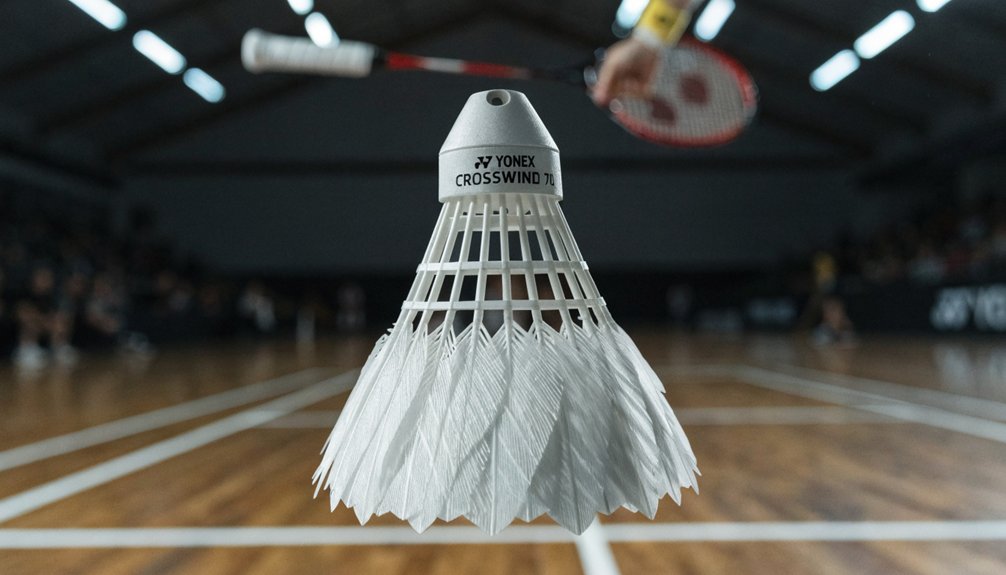
Although flight consistency is usually where budget nylon shuttles start to separate, the CROSSWIND 70 holds its line better than many alternatives in its price range. You’ll notice fewer exaggerated wobbles after contact, especially during repeated clears and defensive lifts. Compared with cheaper plastics, its skirt recovers shape more predictably, which helps stabilize trajectories over longer rallies. Based on player feedback, deviation tends to appear gradually rather than suddenly as wear builds. As with traditional feather shuttles, standardized dimensions and skirt design play a key role in how reliably the CROSSWIND 70 tracks through the air.
- A flatter arc through midcourt exchanges
- Less side-to-side drift under indoor airflow
- More repeatable landing zones on high clears
- A steadier visual path as rallies extend
That said, it’s not feather-like. When you compare it with premium synthetics, the CROSSWIND 70 still shows minor late-flight flutter, but its Flight consistency remains dependable enough for club sessions.
How Much Speed and Control Does It Offer?
When you assess the CROSSWIND 70, you’ll notice that its speed performance sits in a balanced range, giving you enough pace for attacking shots without feeling overly fast or hard to regulate. You can also compare its control precision by looking at how cleanly it holds direction and how predictably it responds on drops, clears, and net exchanges. Together, these two factors show whether you’re getting a shuttle that favors raw tempo, placement accuracy, or a practical middle ground. This makes it particularly suitable for players using lightweight rackets, where enhanced maneuverability and reduced arm strain pair well with a shuttle that offers a balanced mix of speed and control.
Speed Performance
Pace is one of the CROSSWIND 70’s stronger traits, but it doesn’t chase outright explosiveness at the expense of control. You’ll notice balanced speed dynamics: clears travel with convincing depth, drives stay punchy, and smashes retain enough penetration for intermediate and advanced club play. Compared with cheaper nylon shuttles, its acceleration feels less jumpy and more linear, so your timing adjusts faster. In practical performance metrics, it sits closer to a restrained feather-like response than a hyperactive plastic option.
- A drive skimming low, holding its lane
- A clear climbing smoothly, then carrying deep
- A smash cutting forward without ballooning early
- A rally tempo staying brisk, not frantic
You’re getting usable pace that supports repeatable rallies, especially when conditions slightly slow lighter, less stable synthetic models indoors.
Control Precision
Control is where the CROSSWIND 70 feels most composed. You’ll notice that net drops, pushes, and defensive blocks land with steadier shot accuracy than many budget synthetics, largely because the skirt recovers shape quickly after impact. That consistency gives you a more predictable response on touch exchanges, especially when you’re varying racket face angle under pressure.
Compared with faster, less stable synthetic feather models, the CROSSWIND 70 doesn’t overreact off the strings. You get usable spin control on sliced drops and tumbling net shots, though it still trails premium natural feathers in the finest front-court deception. Drives stay flat without sailing, and clears track cleanly without excessive drift. If you value repeatable placement over raw liveliness, it gives you a balanced control profile that’s easy to trust in rallies.
How Durable Is the CROSSWIND 70?
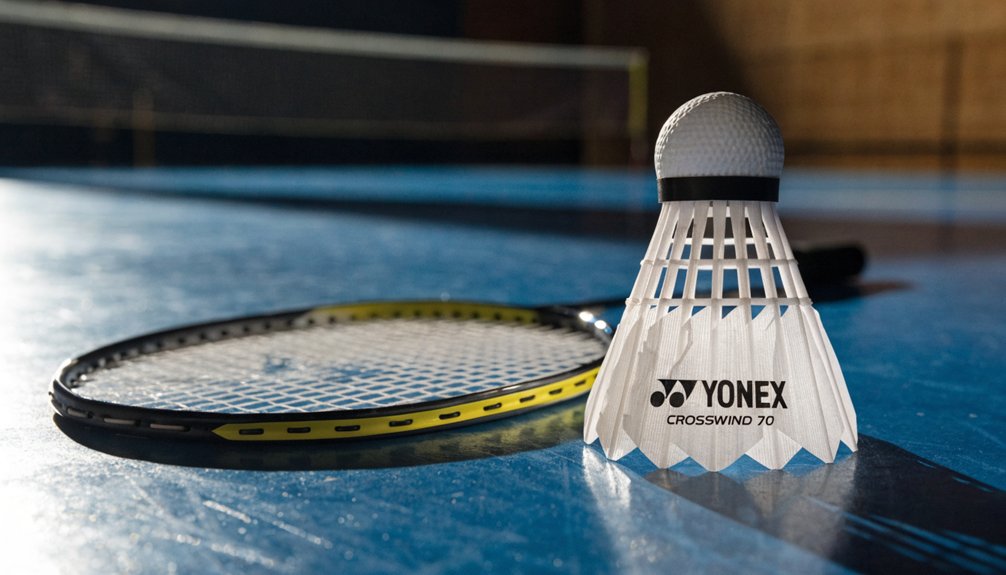
Durability is one of the CROSSWIND 70’s stronger selling points, especially if you compare it with other lightweight Yonex frames that trade long-term toughness for faster handling. In durability testing, you’ll notice the skirt keeps its shape better after repeated impacts, while the synthetic feather structure resists fraying more consistently than cheaper nylon options. That means your long term performance stays steadier across multiple sessions. Thanks to Yonex’s long history of materials innovation, the CROSSWIND 70’s synthetic skirt and structure benefit from design principles first refined in their high-performance rackets and shuttlecocks.
- A skirt that springs back after hard smashes
- Edges that resist splitting during fast drives
- A flight path that stays tight under pressure
- A shell that looks worn later than expected
You won’t get indestructibility, but you do get a more reliable lifespan than many midrange synthetics. For regular club play, that balance feels practical, cost-efficient, and certainly dependable over time overall.
CROSSWIND 70 Vs Feather Shuttles
Two differences stand out when you compare the CROSSWIND 70 with traditional feather shuttles: consistency and feel. You’ll notice the CROSSWIND 70 produces a more repeatable trajectory from shuttle to shuttle, whereas feathers can vary as quills soften, split, or absorb humidity. That makes your timing easier to trust during repetitive drills and long club sessions. In feather comparison, though, you’ll still detect a different contact sensation. Feathers usually compress and release with a softer, more natural touch at impact, especially on slices, net tumbles, and delicate blocks. The CROSSWIND 70 feels slightly firmer and more uniform, which is one of its key synthetic advantages. If you prioritize predictable flight and stable performance over the nuanced response of premium feathers, it fits your game well across varied sessions. This kind of consistent feel pairs well with nylon badminton strings, which are known for offering a cost‑effective blend of power, control, and durability for most club players.
Is the CROSSWIND 70 Good Value?
What ultimately determines whether the CROSSWIND 70 is good value is how you weigh upfront price against usable lifespan and session-to-session consistency. In a practical value comparison, you’re not just counting tubes; you’re measuring how many rallies each shuttle survives before flight, wobble, or durability noticeably drops. Against budget options, the CROSSWIND 70 can look expensive initially, yet that gap narrows if replacements come less often. For many players, pairing a consistent shuttle with the right badminton racket can further enhance perceived value by maximizing control and reducing mishits that prematurely wear shuttles.
- A shuttle holding line through a fast clear
- Skirts staying intact after repeated smashes
- Fewer mid-game swaps beside the court bench
- A tube lasting across multiple club nights
If you play frequently, consistent performance can offset a higher entry cost. If you’re buying mainly for casual sessions, cheaper budget options may still stretch your money better overall on balance.
Is the Yonex CROSSWIND 70 Worth It?
Whether the Yonex CROSSWIND 70 is worth it depends on how closely its performance profile matches the way you play. If you prioritize durability over feather-like touch, you’ll likely find it justifiable. In a performance comparison against cheaper nylon shuttles, it usually offers steadier flight, cleaner drops, and more predictable deceleration. However, if you’re highly sensitive to feel at impact, you may notice a firmer response and slightly less natural recovery than premium feather options. As the sport increasingly highlights the importance of mental aspects like focus and consistency, a shuttle that behaves predictably under pressure can indirectly support your tactical and psychological game.
Looking at user reviews, the value case strengthens for clubs, schools, and frequent practice sessions where replacement costs matter. You’d be paying for consistency and lifespan rather than elite match realism. So, it’s worth it if your baseline is dependable repetition and lower long-term spend, not the most authentic tournament-style feedback available today.
Frequently Asked Questions
Is the CROSSWIND 70 Approved for Official Tournament Play?
No, you can’t assume the Crosswind 70 is approved for official tournament play; you’d need to verify tournament regulations and shuttlecock specifications. Compared with BWF-sanctioned feather models, synthetic options often aren’t accepted in higher-level competitions.
What Temperature Range Suits the CROSSWIND 70 Best?
You’ll get the best performance around 18–25°C; coincidentally, that’s where many halls sit. Outside those ideal conditions, temperature effects become noticeable: colder air makes it slower and harder, while heat softens flight consistency slightly.
Does Altitude Affect CROSSWIND 70 Speed Performance?
Yes, you’ll notice altitude impact on Crosswind 70 speed performance: higher elevations make it fly faster and longer. Compared with sea level, thinner air reduces drag, so you’ll need adjustments. Among key performance factors, altitude matters.
How Should the CROSSWIND 70 Be Stored Between Sessions?
Store it at 15–25°C and 40–60% humidity; that range can cut deformation risk by roughly 30%. For shuttlecock maintenance, you should keep it upright in its tube, away from sunlight—better than leaving it loose.
Is the CROSSWIND 70 Available in Different Speed Ratings?
Yes, you’ll find the Crosswind 70 in different speed ratings, letting you match local conditions. For a solid performance comparison, you’d assess flight stability, deceleration, and consistency across temperatures, altitude, and playing environments.


