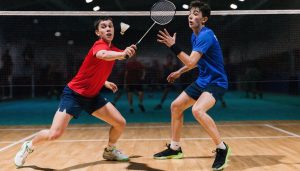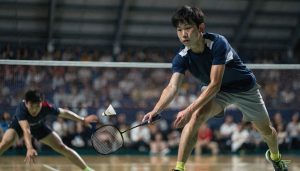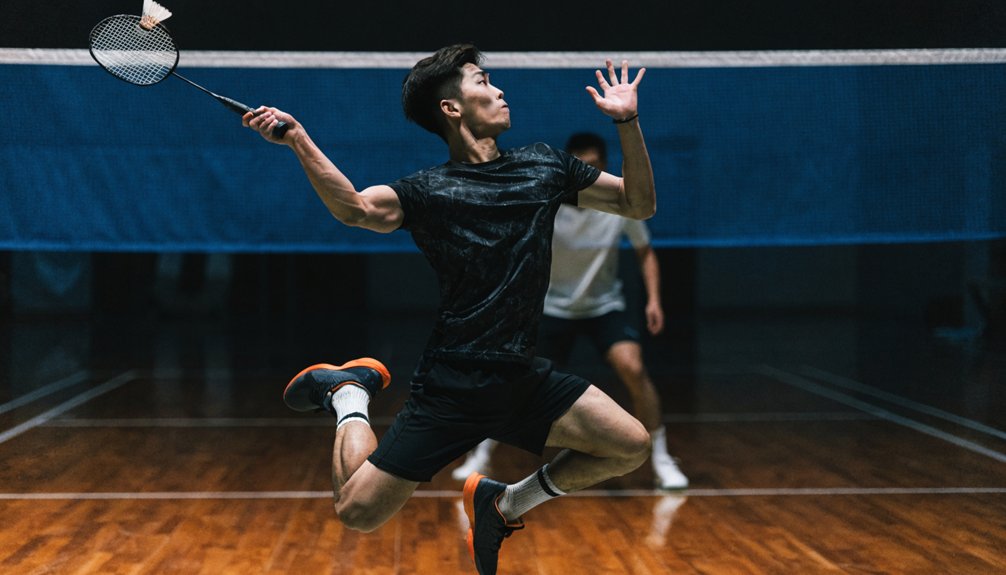
If you want a stronger, more accurate badminton smash, start by tightening your mechanics. You need clean racket preparation, efficient footwork, and contact that happens high and slightly in front of your body. Small timing errors can drain power and send the shuttle off line. The good news is that these problems are usually fixable with a few specific adjustments, and the first one tends to surprise most players.
Key Takeaways
- Prepare compactly, lead with the elbow, and snap forearm pronation for faster racket-head speed and stronger smashes.
- Contact the shuttle slightly in front at your highest comfortable reach to improve both power and clean hitting.
- Use a split step, efficient rear-court footwork, and adjustment steps to get balanced under the shuttle.
- Keep a basic forehand grip loose, tighten only at impact, and control the string bed for accurate placement.
- Practice timing and targets with self-feeds, partner lifts, and multi-shuttle drills to build power, precision, and consistency.
Master the Basics of Badminton Smash Technique
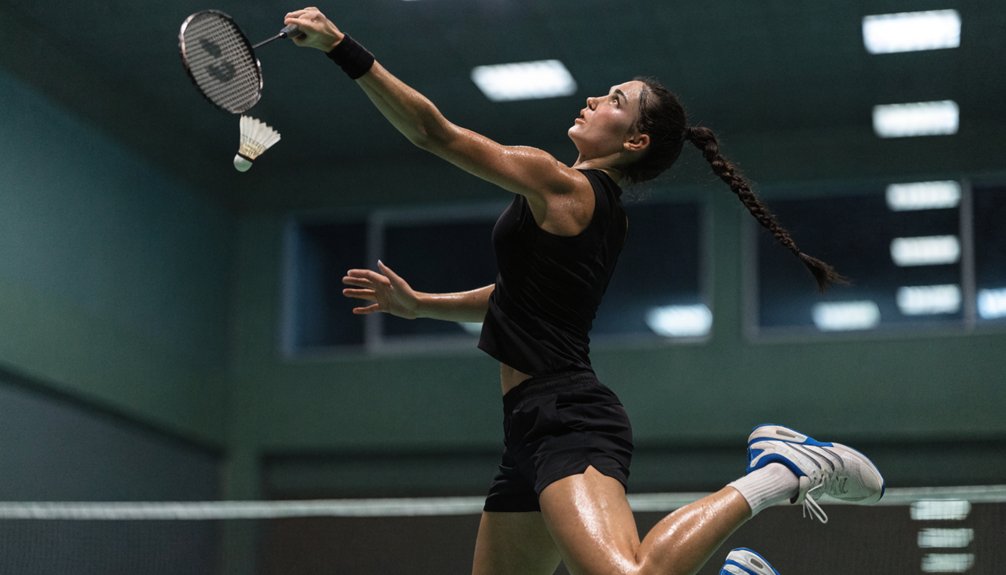
Start by building a technically sound smash, because power comes from efficient mechanics, not just arm strength. You’ll generate more pace when your racket preparation is compact, your elbow leads upward, and your forearm pronates sharply through contact. Keep the shuttle slightly in front of your hitting shoulder, so you can strike at full extension with a downward angle.
Refine your grip techniques to stay relaxed before acceleration. Use a basic forehand grip, tighten only at impact, and avoid squeezing early, which slows racket-head speed. For a secure forehand grip, right-handed players typically place the thumb on the 3rd bevel and the index finger on the 7th bevel of the octagonal handle. Your body positioning should support rotation: non-racket shoulder points toward the shuttle, chest opens as you uncoil, and your core stabilizes the motion. Finish with a controlled follow-through, letting momentum carry naturally across your body while preserving balance and consistency under pressure.
Use Footwork to Get Behind the Shuttle
Clean racket mechanics won’t produce full smash power if you’re contacting the shuttle late or off balance, so your footwork has to place you behind it early. From your base, use a quick split step, then move explosively with chasse steps or a crossover to reach the rear court efficiently. Your goal is precise shuttle positioning, not just speed.
As you arrive, turn your shoulders, plant your rear foot, and keep your chest slightly side on to the net. That body alignment lets you load through the legs and trunk instead of reaching with only the arm. Finish with small adjustment steps so you’re set under the shuttle with stable posture. Dynamic stretching before training can improve mobility and help you reach this setup more efficiently with better flexibility. When your feet organize the shot properly, you create a stronger hitting platform, recover faster, and make your smash mechanics more repeatable under pressure.
Time Your Smash Contact for More Power
Even if your swing is fast, you won’t get maximum smash power unless you meet the shuttle at the right moment: slightly in front of your body and at the highest comfortable contact point. That contact lets you transfer body rotation, forearm pronation, and downward leverage efficiently.
If you hit too early, you’ll crowd the shuttle and lose extension. Too late, and the shuttle drops behind you, forcing a weaker, flatter strike. Train this with timing drills: self-feeds, partner lifts, and multi-shuttle repetitions that vary shuttle height. Focus on recognizing the shuttle’s peak, then initiating your swing so contact happens just after full reach is established. Keep your non-racket arm up to judge spacing and stabilize balance. With repetition, your timing becomes automatic, and your smash feels heavier without extra effort. Using the right racket setup, especially proper string tension, can also improve how cleanly your timed contact translates into power and control.
Place Your Smash With Better Racket Control
While raw power matters, a dangerous smash also depends on where you send it, and that comes from racket control at the moment of contact. Use a subtle grip adjustment before impact to refine direction without slowing your swing. Keep your forearm relaxed, then stabilize the racket angle through contact so the shuttle leaves on your intended line. A Dual Optimum Frame design can further improve forehand and backhand shot effectiveness by enhancing stability and maneuverability. Aim with the string bed, not your shoulder.


| Focus | Effect |
|---|---|
| Neutral grip | Straight, fast placement |
| Slight forehand turn | Sharper cross-court angle |
| Closed racket angle | Steeper downward trajectory |
Practice targeting sidelines, body, and center gaps. As your control improves, you’ll hit tighter zones under pressure and make your smash harder to read. Small changes create precise, repeatable placement. That precision wins rallies consistently.
Fix Common Smash Mistakes Quickly
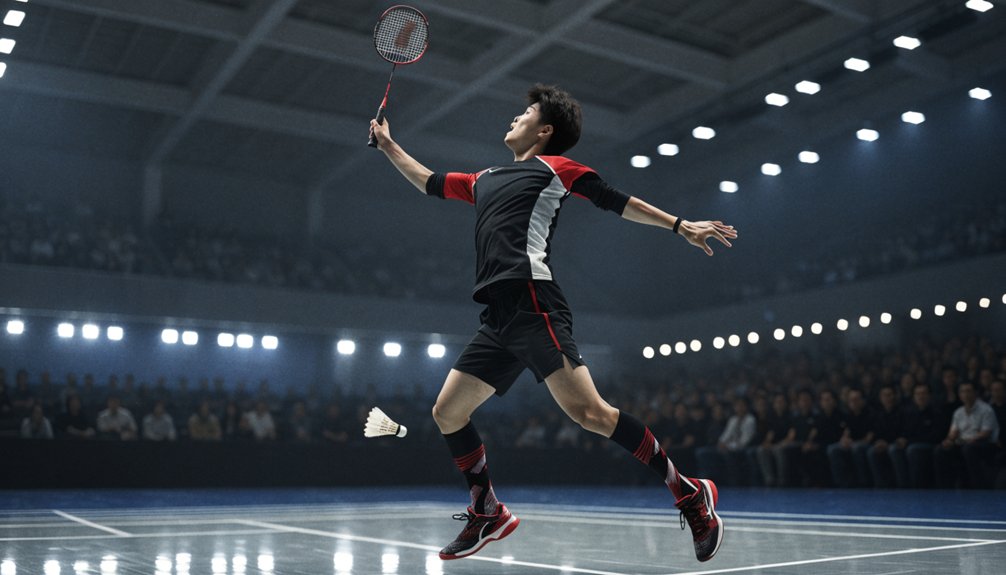
Placement sharpens your smash, but a few technical errors can strip away speed, angle, and consistency no matter where you aim. If your contact point drops behind your head, you’ll lose leverage and send flatter, weaker shots. Reach earlier, fully extend, and strike slightly in front of your body.
Check your grip adjustments next. A panhandle grip limits pronation and reduces racket-head acceleration, so rotate toward a forehand grip before impact. Quick changes between basic grips improve adaptability during fast rallies and help you prepare the racket face for cleaner smash contact. Then correct your body positioning. If your chest stays square too long, your kinetic chain stalls. Turn sideways on preparation, load your rear leg, then uncoil through your hips, shoulder, and forearm. Finally, don’t over-swing. A tense arm slows recovery and harms control. Stay loose until contact, then snap cleanly through the shuttle.
Frequently Asked Questions
What Racket String Tension Helps Improve Smash Power and Control?
Use 24–28 lbs for balanced smash power and control; you’ll get strong repulsion without sacrificing precision. In racket stringing, tension effects, string material, and player preference matter—so test slightly higher or lower setups incrementally.
How Often Should I Train Smashes Without Risking Shoulder Injury?
You should train smashes 2–3 times weekly, limiting high-intensity sets to avoid overload. Prioritize a shoulder warm up, monitor pain and fatigue, and use recovery techniques like mobility work and rest days to protect your shoulder.
Do Wrist Strength Exercises Increase Badminton Smash Speed?
Yes—wrist exercises can increase your smash speed, but only modestly. You’ll gain more by improving grip strength, forearm coordination, and timing. Keep loads controlled, since overtraining your wrist and shoulder can reduce power.
Which Badminton Shoes Best Support Explosive Jumping Smashes?
You’ll want lightweight badminton shoes with responsive midsoles, lateral stability, and durable grip technology. Prioritize shoe features like reinforced uppers, cushioned landings, and non-marking outsoles, so you can generate explosive jumping smashes with better control.
Can Nutrition or Hydration Affect Smash Power During Long Matches?
Absolutely—your smash power can fade unexpectedly if you neglect energy sources and hydration timing. You’ll sustain muscle output, reaction speed, and precision longer by fueling glycogen, electrolytes, and fluids strategically throughout demanding matches.