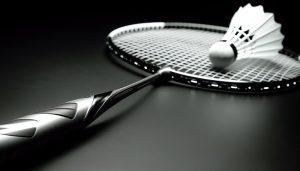
If you’re just starting badminton, your equipment choices will decide how quickly you progress and how safely you move on court. You’ll need a 4U even-balance, medium-flex racket, proper non-marking shoes, moisture-wicking clothing, and durable nylon shuttles as a baseline. Add the right grip size, sweat control, and an organized bag, and you’re set to train with purpose. But if you mis-prioritize your budget, you’ll limit your potential from day one…
Key Takeaways
- Choose a 4U, even-balance, medium-flex racket and string it with 0.68–0.70 mm strings at 20–24 lbs tension.
- Wear indoor, non-marking court shoes with good lateral support, plus moisture-wicking apparel and cushioned performance socks.
- Practice with durable nylon shuttlecocks, medium speed (77 / speed 3) for consistent flight and timing.
- Optimize grip size using underwrap and use tacky or sweat-absorbing overgrips based on playing conditions.
- Carry a multi-compartment kit bag, sweatbands, microfiber towel, and water bottle with electrolytes for organization and hydration.
Essential Badminton Racket Choices for Beginners
Selecting your first badminton racket isn’t about brands or colors; it’s about matching key specifications—weight class (3U/4U), balance (head-heavy, even, head-light), and shaft stiffness—to your current strength, technique, and playing goals. As a beginner, you’ll want a 4U racket (80–84 g) for easier maneuverability and reduced fatigue during long rallies.
Choose an even-balance frame to give you a neutral blend of power and control while you’re still refining timing and swing mechanics. Pair this with a medium-flex shaft; it’s forgiving on off-center hits and helps you generate length without perfect technique.
Avoid overly stiff, head-heavy rackets early on; they demand advanced strength and precision and can slow both your swing speed and skill development. Beginners often benefit from a medium-flex shaft because it aids power generation without requiring perfect technique.
Footwear and Apparel to Keep You Comfortable on Court
Once your racket’s sorted, your next performance variable is what’s on your feet and body. Prioritize indoor court shoes with non-marking gum rubber soles; they deliver grip for explosive lunges and fast recovery while protecting joints. Look for low-to-mid cut designs with lateral support, cushioning in the heel, and a stable, torsion-resistant midsole. Shoes that are too soft or running-style increase rollover and injury risk.
For apparel, choose lightweight, moisture-wicking polyester shirts and shorts to keep skin dry and reduce chafing during repeated rallies. Prioritize breathable mesh zones on the back and underarms. Use performance socks with targeted cushioning under the forefoot and heel plus snug arch support to limit blister risk and enhance court feel during multi-directional movement.
Shuttlecocks, Grips, and Strings You Actually Need
Shuttlecocks, grips, and strings are the three contact points that directly shape how the shuttle leaves your racket, so you should treat them as performance components, not accessories. For shuttles, start with durable nylon for practice; choose a medium speed (often labeled 77 or “speed 3”) to keep timing consistent. Use feather only when you’re ready for sharper control and faster drop-offs.
For grips, size and texture matter. Build grip size with underwrap if your fingers nearly touch your palm when holding the handle. Use tacky grips for control, sweat-absorbing grips for humid halls.


Strings determine feel and power. As a new player, use a thicker gauge (0.68–0.70 mm) at moderate tension (20–24 lbs) for a larger sweet spot and fewer breaks.
Quick grip changes are vital during dynamic rallies, so practice grip adjustments to improve reaction time and versatility.
Must-Have Accessories for Practice and Match Day
Even with the right racket and shuttles, your performance drops fast if you’re missing a few core accessories that keep you prepared, protected, and efficient. You’ll need a structured kit: grip towel, sweatbands, court shoes, and a well-organized bag to control variables that disrupt play.
Use this table to link each item to its performance function:
| Accessory | Primary Performance Function |
|---|---|
| Non-marking court shoes | Traction, injury reduction, explosive footwork |
| Wrist/head sweatbands | Grip dryness, sweat management, focus |
| Microfiber towel | Rapid drying, prevents grip saturation |
| Multi-compartment kit bag | Gear protection, fast access, match readiness |
Add a water bottle and electrolyte mix to stabilize hydration and reaction time. Carry athletic tape, spare grips, and a compact first-aid kit so minor issues don’t force you to stop training or default a match. A good kit also supports aerobic stamina during long practice sessions.
Budgeting and Prioritizing Your First Badminton Gear Set
Although it’s tempting to buy everything at once, your first badminton gear set should be built by prioritizing performance-per-dollar: a correctly weighted, well-balanced racket and high-traction non-marking shoes sit at the top of the list, followed by practice-grade shuttles, basic grips, and a simple but functional bag.
Allocate roughly 40–45% of your budget to the racket, 30–35% to shoes, and the remainder to shuttles and accessories. Choose one racket matched to your current strength and technique; it’s better than owning multiple mismatched frames. Invest in shoes with solid lateral support and cushioning to reduce injury risk.
Buy training-grade plastic or lower-tier feather shuttles in bulk, then add overgrips and a durable bag as your final purchases. Newer rackets often include advanced frame or shaft technologies that affect feel and performance, so consider the racket’s balance and design when choosing your primary racquet.