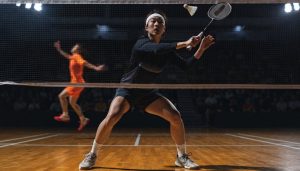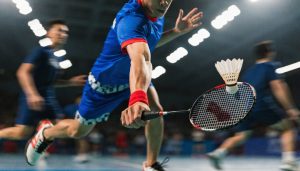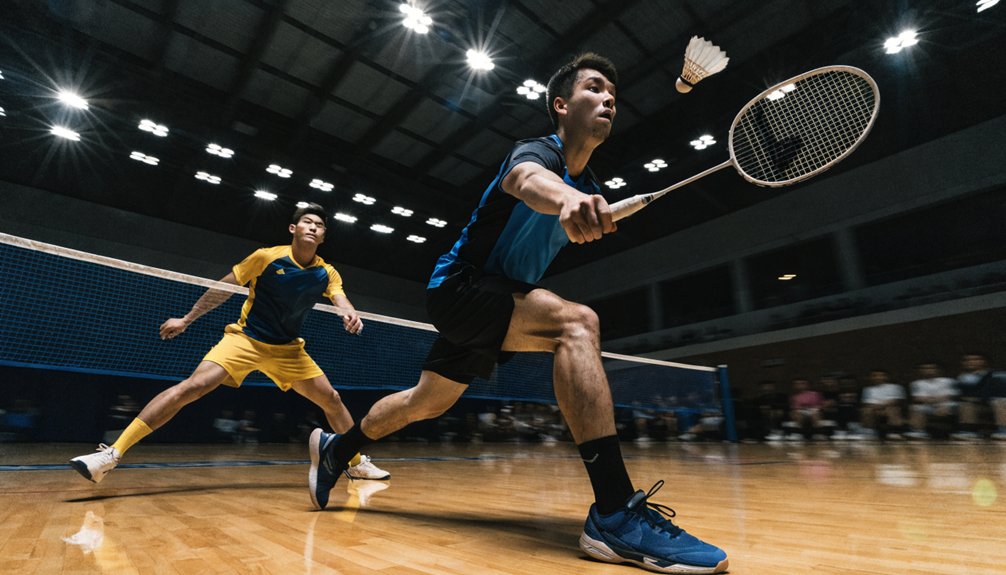
If you’re serious about winning more rallies, you need to treat your serve return and the very next shot as a single, controlled sequence. Your stance, grip, and racket preparation decide whether you’re forced into defense or step straight into attack. But it’s not just mechanics; it’s how you read the server, time your split step, and choose the right third shot option under pressure—exactly what you’re about to refine.
Key Takeaways
- Adopt a low, forward-weighted ready position with a neutral grip and racket above tape height for explosive movement to any serve.
- Time your split step exactly with the server’s contact to gain a faster first step toward short, flick, or high serves.
- Use compact, controlled swings powered by fingers and forearm to return serves flat, tight, and early, reducing opponent reaction time.
- Read the server’s grip and stance to anticipate serve type, pre-plan your return, and immediately set up your attacking or neutral third shot.
- Practice multi-serve and pressure drills (e.g., rapid fire, scoreboard pressure) to automate patterns, improve decision speed, and increase return consistency.
Why the First Two Shots Matter in Badminton
Although rallies can last dozens of shots, the first two—the serve and the return—usually dictate the tactical pattern of the point. When you receive serve, your shot selection fixes three variables immediately: shuttle height, distance, and direction. Those variables determine whether the rally becomes attacking, neutral, or defensive for you. Solid knowledge of basic grips helps you execute these returns more accurately and adapt your racket angle quickly under pressure. If you return with a tight net shot, you force the server to lift or play predictably upwards, giving you a clear attacking framework. If you drive flat, you lock both players into a fast, lateral exchange. A controlled lift concedes initiative but can reset positioning if you’re under pressure. By understanding how each return alters time, angle, and pressure, you deliberately script patterns instead of reacting randomly.
Fix Your Ready Position for Faster Serve Returns
To sharpen your serve return, you’ll first need to standardize your ready position with ideal feet placement that supports explosive movement in any direction. Next, you must set your racket at the correct height, angle, and distance from your body so you can shorten reaction time and contact the shuttle in front. Finally, train your eyes to read the server’s grip, stance, and shuttle contact so you’re already shifting weight and preparing the correct return before the shuttle leaves their strings. Paying attention to whether the server uses a forehand grip or backhand grip can give you early clues about the likely direction, height, and spin of the serve.
Optimal Feet Placement
One of the fastest ways to upgrade your serve return is to fix where and how your feet are planted before the shuttle’s struck. Stand with your lead foot slightly inside the singles side line (or doubles side line) and just behind the short service line extension, rear foot about shoulder‑width back and diagonally offset.
Distribute your weight about 55–60% on the front foot, heels light, so you’re preloaded to move forward yet can push back. Toes point slightly outward, never straight ahead, giving you cleaner lateral pushes.
Keep your hips and chest squared toward the server’s racket, not the net, so both forehand and backhand corners are equally accessible. Micro‑bounce on your toes as the server starts, then explode on the shuttle’s release.
Racket Positioning Basics
Use a neutral grip that lets you rotate quickly between forehand and backhand with minimal finger adjustment. Don’t lock your wrist; hold it relaxed but slightly extended so you can snap forward instantly.
Angle the racket face very slightly closed, prepared to move down and forward through the shuttle, not up and around it. Elbow stays away from your ribs, roughly in line with your hip, forming a compact triangle that lets you cut, push, or drive in one motion.


Reading Opponent’s Serve
Most players think “reading the serve” happens after the shuttle leaves the strings, but your real advantage comes from how you build your ready position around the server’s patterns. You’re not guessing; you’re coding visual cues into specific body positions and racket angles.
Focus on pre-contact information and lock it into a repeatable stance:
- Track racket preparation: grip, face angle, and backswing size before the motion starts.
- Read server’s stance: foot angle and distance from the line hint at short vs flick.
- Adjust base height: lower for aggressive net pounce, taller for ready-to-lunge flick coverage.
- Pre-load the non-racket leg to explode toward your most likely target zone.
- Set racket head slightly above tape height, neutral grip, ready to rotate instantly.
Read the Server’s Cues to Anticipate the Return
While the shuttle’s still in the server’s hand, you should already be reading cues that reveal where and how they’ll strike. Track grip: a forehand grip near the finger base usually signals a flatter, more driven serve; a backhand grip with the thumb high often indicates a tighter, shorter serve. Note racket preparation height and angle—higher, more open faces suggest lift or flick, closed faces hint at tight trajectory. Scan the server’s stance: front foot angle, hip rotation, and shoulder alignment all telegraph likely serve direction. A more open chest often means wide; a squarer body points straight. Finally, read rhythm. Any tempo change in their routine—slower, quicker, or extra feints—often precedes variation in depth, speed, or placement. Staying alert to these patterns also helps you brace for subtle mind games from the server, who may use exaggerated routines or delays to disrupt your anticipation.
Core Technique for Strong Badminton Serve Returns
To build a reliably strong serve return, you need an ideal ready stance that keeps your center of gravity low, balanced, and primed for multi-directional movement. You’ll then synchronize an efficient split step with the server’s contact, so your first step explodes directly toward the shuttle rather than wasting time adjusting. Finally, you’ll use compact swing mechanics that shorten your racket path, tighten your contact point, and convert early shuttle interception into controlled, attacking replies. Developing a stable stance and compact swing also helps you make cleaner contact within the racket’s Sweet Spot, increasing both control and power on your serve returns.
Optimal Ready Stance
Anyone serious about punishing weak serves starts with a precise ready stance that balances stability, explosiveness, and racket readiness. Your feet should be slightly wider than shoulder-width, dominant foot half a step back, toes angled forward, weight on the balls of your feet. Keep your hips square to the server, knees flexed, and torso leaning slightly forward for aggressive intent.
- Place your non-racket foot marginally closer to the service line for faster forward drive.
- Keep your racket head above tape height, slightly in front of your body.
- Maintain a neutral grip so you can rotate quickly to forehand or backhand.
- Relax your shoulders and forearm to minimize reaction lag.
- Fix your gaze on the server’s racket, not the shuttle.
Efficient Split Step
Your ready stance sets the platform, but the split step is what actually initiates rapid movement into the shuttle the instant the serve leaves your opponent’s strings. Time your jump so your feet land just as their racket contacts the shuttle, never before. You’re seeking zero dead time.
Keep your split small and efficient: feet slightly wider than shoulders, landing on the balls of your feet with knees flexed and hips loaded forward. Avoid vertical bounce; think “low, sharp shock” into the floor.
Adjust the split width and depth to the server’s tendencies. Against flick-prone servers, bias slightly backward; against tight short serves, bias forward. Train rhythm with multi-serve drills, focusing purely on timing, landing posture, and first step direction.
Compact Swing Mechanics
Drive through the shuttle with a compact, efficient swing that matches the serve’s low, fast trajectory. Keep your racket path short and linear, minimizing backswing so you’re striking in front of your body, not beside or behind it. Use the fingers and thumb to accelerate the racket head at the last moment, instead of relying on a big arm swing that opens timing errors.
- Position the racket head slightly above tape height before contact to reduce swing distance.
- Align the racket face early, eliminating last‑second wrist twisting.
- Engage the forearm and fingers, not the shoulder, for primary power.
- Stop the follow‑through quickly to recover balance and readiness.
- Standardize one compact motion, then vary only angle and contact point.
Smart Third Shot Choices After Your Serve Return
Although the serve return often gets most of the attention, the third shot usually decides who seizes or loses initiative in the rally. You must already anticipate this shot while moving out of your return, reading server position, partner base, and shuttle height. If you forced a lift, prioritize a steep, safe attacking clear or controlled half-smash into the body, then recover forward. When your return is flat, play a fast, directed push to space, targeting the weaker defender or backhand hip. After a neutral reply, reset with a deep, high clear to corners, buying time to re-establish base. Link your third shot to footwork: hit as you’re still gaining balance, choose higher-percentage trajectories, and avoid heroic winners from compromised positions. Using a racket with enhanced stability features like the Dual Optimum system can help you control these third-shot choices more precisely under pressure.
Aggressive Net Serve Returns vs Short Serves
When you face a short serve, your first task is to read early cues—racket preparation, shuttle trajectory, and server’s base position—to decide if you can attack it off the tape. If the serve sits even slightly too high, you’ll step in explosively and execute a tight net kill with a steep, compact racket path that minimizes lift. Your goal is to punish loose short serves immediately while still keeping your body balanced enough to recover for any counter-block. Choosing a racket that supports quick handling—such as a lighter, head light frame—can help you step in faster and control these aggressive net returns more consistently.
Reading Short Serve Cues
Because a high-level rally often hinges on the very first exchange, you need to read short-serve cues quickly and commit to either an aggressive net return or a controlled short reply. You’re decoding micro-signals before the shuttle leaves the strings. Focus on prediction, not reaction.
Key visual cues to track:
- Grip softness: relaxed fingers usually indicate a tight, spinning short serve.
- Racket preparation: a compact, low backswing often signals a flatter, more dangerous short serve.
- Contact point: striking closer to the tape suggests extreme tightness; prepare to lunge explosively.
- Server’s stance: square, stable feet often precede a precise, practiced short serve pattern.
- Rhythm and tempo: any slowdown or “pause” frequently precedes a deceptive short serve variation.
Executing Tight Net Kills
Once you’ve read the short-serve cues and committed forward, a tight net kill is about converting that early read into a flat, decisive strike that denies your opponent any chance to lift. Your priority is minimal racket preparation and a compact, forward-snapping motion.
Stay low, with your racket head already above tape height. As you lunge, contact the shuttle in front of your body, taking it at or just above net level. Slice slightly downward, not chopping, so the shuttle travels flat and tight over the tape.
Aim into the server’s racket shoulder or hip, not the open court, to jam their reaction. Recover your lunge immediately, pushing back to base so you’re ready for any emergency block or flicked counter.
Handle Flick and High Serves With Balanced Returns
Although flick and high serves might seem like simple lifts, you must treat them as structured opportunities to apply a balanced, pre-planned return pattern. You’re deciding, before the serve is struck, which zones you’ll target and who takes the next shot. Your goal is to neutralize the opponent’s initiative while keeping your base position stable and predictable. Using a lightweight racket’s enhanced maneuverability can help you execute these patterns quickly while reducing arm fatigue over long rallies.
- Use a compact chasse or cross-step to move back, never a full turn, so you’re always half-facing the net.
- Contact the shuttle slightly in front of your body line to maintain forward momentum.
- Direct clears deep to the defender’s backhand corner to restrict angles.
- Drive straight or at the body to force late racket preparation.
- After impact, recover to an agreed central base, not the tramlines.
Common Serve Return Mistakes and How to Fix Them
Even with sound technique on isolated drills, your serve returns will break down if you repeat a few predictable errors under pressure, so it’s essential to identify and correct them systematically. First, you often stand too upright or flat‑footed. Lower your center of gravity, bias weight slightly forward, and keep your split step timed with the server’s hit. Second, you may over‑swing. Shorten your preparation, use compact grips, and prioritize early shuttle contact over power. Third, misreading serve height is common. Fix your eye focus at net‑tape level, then adjust the racket face micro‑angles, not your whole arm. Because serve return is so sensitive to touch and control, checking that your grip and racket handle size match BWF‑compliant designs can reduce tension and improve consistency.
| Mistake | On‑Court Symptom | Key Fix |
|---|---|---|
| Upright stance | Late, reaching returns | Lower base, earlier split step |
| Flat‑footed start | Poor push‑off to shuttle | Heel‑up ready position |
| Over‑swinging | Mishits, slow recovery | Compact stroke, short follow‑through |
| Rigid grip | No touch at net | Relax fingers, grip change readiness |
| Watching opponent only | Late shuttle recognition | Fix gaze on shuttle off the strings |
Serve Return Patterns to Practice in Singles and Doubles
Correcting individual mistakes is only half the job; you now need repeatable serve‑return patterns that hold up under match tempo in both singles and doubles. Build patterns around the server’s most common options, so you’re not improvising every rally. Each pattern links your return and your immediate movement into the next shot. Since points can be won by either side under the rally scoring system, sharpening these first two shots has an outsized impact on the match outcome.
- Singles: neutral pattern – fast, flat return to backhand rear corner, recover to base, prepare for clear or punch‑clear reply.
- Singles: attacking pattern – straight net return off low serve, hunt lift with forehand kill.
- Doubles: front‑court pressure – tight net return, step in, racket up to intercept.
- Doubles: channel attack – flat drive at server’s hip, partner shifts forward.
- Mixed: female presses net; male prepares mid‑court interception after flat return.
Drills to Train Your First Two Shots Under Pressure
Anchor your serve‑return patterns with drills that hard‑wire your first two shots under real match stress. Design drills that overload decision speed, not just stroke mechanics. Always pre‑define: serve type, intended return, and third‑shot objective, then track execution percentage. Racket sports like tennis, squash, and table tennis show how consistent serve‑return patterns can decide matches across different disciplines.
| Drill | Focus | Key Constraint |
|---|---|---|
| Rapid Fire Returns | Reaction, split‑step timing | Coach varies serves every 3–4 seconds; no pauses |
| Shadow + Callout | Pattern recognition | Partner shouts “body/forehand/backhand”; you shadow first two shots |
| Scoreboard Pressure | Clutch execution | Start every rally at 18–18; must win 3 of 5 sequences |
For each drill, fix footwork patterns, racket preparation height, and contact point. Use video to verify neutral recovery after the second shot so you’re never stranded after a quality return.