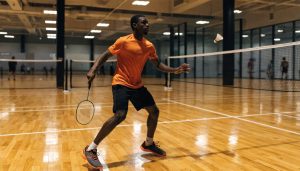
Mastering footwork in badminton is all about agility and balance. Focus on techniques like the split step to stay ready to move in any direction and keep your knees bent for swift lateral agility. Perfect lunge and backhand footwork to reach tricky shots efficiently while maintaining balance. Prioritize positioning and quick recovery steps to dominate the court. Build endurance to maintain your energy, and as you master these steps, a whole new level of play awaits you.
Key Takeaways
- Master the split step to prepare for swift, multi-directional movement during play.
- Practice efficient side-to-side movement to enhance lateral agility and court coverage.
- Focus on proper positioning to maintain balance and anticipate opponent's shots effectively.
- Develop quick recovery steps to reduce reaction time and improve agility.
- Engage in aerobic conditioning to build endurance and sustain agility throughout matches.
Mastering the Split Step
When you're ready to elevate your badminton game, mastering the split step is a game-changer. It's all about preparing to move swiftly and efficiently on the court.
Imagine this: you're in the middle of an intense rally, and your opponent fires a shot. Your split step preparation is your secret weapon. By slightly bending your knees, staying on the balls of your feet, and keeping your weight balanced, you're primed to react instantly.
Now, let's talk split step timing. The key is to synchronize your jump with your opponent's shot. As they make contact with the shuttle, you execute your split step.
This timing guarantees you're ready to dart in any direction, giving you the best chance to reach the shuttle and stay in control of the rally.
Understanding the Lunge Technique
To truly excel on the badminton court, mastering the lunge technique is crucial. The lunge helps you reach those tricky shots and maintain balance. You'll find different lunge variations to suit various situations, enhancing your flexibility and agility.
Practicing lunge drills is a great way to improve your footwork and reaction time, making you a more formidable opponent.
Here are some tips to get you started:


- Engage your core: This stabilizes your movement, keeping you balanced as you lunge.
- Keep your back straight: Maintaining good posture prevents injuries and improves efficiency.
- Start small: Begin with short lunges, then gradually increase your range.
- Focus on your lead foot: Confirm it's pointing in the direction you want to move.
- Practice regularly: Consistency is key to mastering any technique.
With dedication, these lunge techniques will boost your game to new heights!
Efficient Side-to-Side Movement
Now that you've got a handle on lunging, let's set our sights on efficient side-to-side movement. Mastering lateral agility is essential for covering the court swiftly and responding to your opponent's shots. Focus on keeping your knees slightly bent and your body relaxed. This stance helps you spring into action without delay.
One effective footwork drill to enhance your lateral movement is the "shuttle shuffle." Place a few shuttles in a line and practice shuffling side to side, picking up each shuttle as you go. This drill boosts your speed and coordination while refining your balance.
Incorporate ladder drills into your routine as well. They enhance foot speed and precision, which are critical for smooth shifts between shots.
The Importance of Proper Positioning
Although mastering your footwork can make you fast and agile, proper positioning on the court often determines your success in a badminton match. Court awareness and spatial positioning are your secret weapons. When you know exactly where you need to be, you can anticipate your opponent's moves and respond effectively.
Here are some tips to enhance your positioning:
- Stay centered: Always return to the center after a shot, giving you a balanced stance to move in any direction.
- Watch your opponent: Keep an eye on their racket and body, predicting their next move.
- Use peripheral vision: This helps you gauge the entire court and not miss any shuttlecock action.
- Bend your knees: A slight bend keeps you grounded and ready to spring into action.
- Stay light on your feet: This allows quick adjustments and helps you cover more ground effortlessly.
These strategies will boost your confidence and court presence!
Developing Quick Recovery Steps
Building quick recovery steps can transform your game, helping you stay one step ahead of your opponent.
Focus on mastering the split step, which sets the foundation for efficient foot placement and keeps you ready for any shot.
Mastering Split Step
When you're looking to elevate your badminton game, mastering the split step is essential for developing quick recovery steps. This fundamental move offers numerous split step advantages, like improved balance and faster reaction times.
By integrating precise split step timing, you'll find yourself better prepared for any shot your opponent throws your way. Here's how you can master this crucial skill:
- Stay on your toes: Keep your feet light and ready to move.
- Watch your opponent: Anticipate their next move to time your split step perfectly.
- Practice regularly: Consistency is key to mastering any skill.
- Engage your core: It helps maintain balance and agility.
- React quickly: Your split step should be swift and responsive.
With practice, you'll see your footwork soar!
Efficient Foot Placement
To truly excel in badminton, mastering efficient foot placement is a game-changer, allowing you to develop quick recovery steps with ease.
Picture yourself gliding across the court with dynamic agility, your feet naturally finding the right spots. It's not just about speed; it's about effective footwork that keeps you ready for any shot. When you place your feet correctly, you're always prepared to spring into action, reducing the time needed to react.
Start by focusing on where your feet land after each stroke. A well-placed foot can make the difference between a smooth shift and a missed opportunity.
Practice maintaining a low center of gravity, which helps in executing those recovery steps effortlessly. With dedication, you'll notice significant improvements in your gameplay.
Keep moving, keep improving!
Balance and Stability
As you focus on efficient foot placement, let's explore how balance and stability play a vital role in developing quick recovery steps.
Maintaining your center of gravity is essential for fast movements on the court. By enhancing your core strength, you'll support better weight distribution, allowing you to spring back into position effortlessly.
Here are some tips to stay balanced and stable:
- Engage your core: A strong core supports your entire body.
- Distribute your weight evenly: Keep your feet grounded for swift direction changes.
- Practice recovery steps: This helps you return to a ready position quickly.
- Stay light on your feet: Avoid being flat-footed to move fluidly.
- Incorporate balance exercises: Consistent practice builds stability over time.
Keep believing in your progress!
Enhancing Your Diagonal Movement
Mastering diagonal movement can greatly enhance your badminton game, allowing you to reach shots with greater ease and agility.
You'll find that focusing on diagonal drills and footwork patterns is key to improving this aspect of your play. Start by practicing quick, light steps in a diagonal direction, ensuring you stay balanced and controlled. Repetition helps muscle memory, so make these drills a regular part of your routine.
Incorporate zig-zag patterns into your training to simulate real-game scenarios. This not only boosts your reaction time but also enhances your ability to shift smoothly between shots. Remember, it's not just about speed; precision is equally important. Keep your movements sharp and your focus sharp.
Lightweight rackets enhance speed and maneuverability, making it easier to execute quick footwork on the court. Don't get discouraged if it feels challenging at first. Every step you take is progress. With practice and determination, you'll soon notice how much more fluidly you move across the court, ready to tackle any shot with confidence.
Utilizing the Jumping Step
Incorporating the jumping step into your footwork can give you that extra edge on the court.
Focus on mastering efficient jump techniques to guarantee you move swiftly and maintain balance.
With practice, you'll time your jumps perfectly, allowing you to reach shots with ease and confidence.
Mastering Efficient Jump Technique
Even if you're new to badminton, developing an efficient jump technique can really elevate your game. By mastering your jump height and foot coordination, you'll move more confidently around the court.
Don't worry, it's simpler than it sounds! Here are some practical tips to help you:
- Focus on jump height: Practice jumps to improve your reach and power.
- Enhance foot coordination: Work on drills that sync your feet and body movements.
- Start with small jumps: Build a strong foundation before going higher.
- Use your arms: Swing them up to add momentum and balance.
- Stay relaxed: Tension can hinder your performance, so keep it light and fun.
Timing for Perfect Execution
When it comes to badminton, timing is everything, especially when executing the jumping step. Nailing this can make all the difference in your game.
Start with timing drills to sharpen your response. These exercises help you anticipate the shuttle's trajectory, allowing you to leap at just the right moment. It's not just about strength; it's about knowing when to spring into action.
Incorporate rhythm practice into your routine to sync your footwork with the shuttle's speed. Feel the rhythm of each rally, letting it guide your movements naturally.
Remember, practice makes perfect. With consistent effort, you'll find yourself moving more instinctively on the court, executing each jump with precision.
Perfecting the Backhand Footwork
Mastering the backhand footwork in badminton can greatly elevate your game, allowing you to move with agility and confidence on the court. Your journey begins with adopting the right backhand grip, ensuring you're both comfortable and ready to hit with precision.
Focus on shot placement, as it's a crucial skill for catching your opponent off guard. Here's how you can refine your backhand footwork:
- Stay balanced: Keep your feet shoulder-width apart to maintain stability.
- Use quick steps: Swift, short steps help you reach the shuttle quickly.
- Practice lunging: Strengthen your lunge technique to cover more ground efficiently.
- Return to base position: Always come back to your ready stance after each shot.
- Focus on foot angles: Align your feet correctly to optimize movement and energy use.
Consider using oval-shaped rackets for improved shot accuracy and control, as they offer a larger sweet spot which can enhance your performance on the court.
Embrace these strategies with enthusiasm and watch your backhand skills transform, giving you an edge in every match.
Keep practicing!
Building Endurance for Sustained Agility
Having honed your backhand footwork, it's time to focus on building the endurance needed to maintain that agility throughout an entire match.
Endurance training is your secret weapon to keep your energy high and your movements sharp. Immerse yourself in aerobic conditioning to boost your stamina, ensuring you stay quick on your feet no matter how long the rally lasts.
Start with activities like jogging or cycling, which enhance cardiovascular health and build a solid foundation.
Mix in interval training to mimic the bursts of energy required in badminton.
And don't forget about agility drills—these not only improve foot speed but also train your body to recover quickly during intense play.
Frequently Asked Questions
How Can I Improve My Footwork on Slippery Courts?
You can improve your footwork on slippery surfaces by focusing on enhancing court grip. Practice using wider stances and shorter steps. Stay light on your feet, and don't forget to keep practicing—you're on the right track!
What Shoes Are Best for Optimal Badminton Footwork?
You'll want shoes with excellent court traction and great flexibility. They'll help you move swiftly and confidently. Don't worry, with the right pair, your footwork will improve, and you'll feel more stable and agile on the court.
How Does Footwork Differ in Singles Versus Doubles?
Imagine you're dancing solo versus in a crowded conga line. In singles, you master strategic movements. In doubles, you embrace synchronized coordination. Keep practicing, and you'll glide effortlessly across the court, impressing teammates and opponents alike!
Are There Specific Drills for Left-Handed Players?
Yes, you've got specific drills for left-handed players! Focus on left handed techniques and adjust footwork strategies to enhance agility. Embrace your unique advantage, and practice consistently to improve your game. You've got this, keep pushing!
How Can I Prevent Foot Injuries While Practicing Footwork?
Imagine a tree with firm roots, it thrives. You can prevent foot injuries by using proper stretching techniques and ensuring ankle support. Embrace these practices, and you'll feel more grounded and confident on the court.
Conclusion
You've got this! Imagine yourself as a nimble jazz dancer from the roaring '20s, gracefully moving across the court with confidence and flair. With these footwork tips, you'll glide through matches like a pro. Keep practicing those split steps, lunges, and recovery moves; they'll become second nature. Remember, each step brings you closer to mastering the game. Stay patient and persistent, and soon, you'll be dancing across the court with unmatched agility. Keep up the great work!