Most players don’t realize you can predict over half of an opponent’s shots before contact just by watching their body language. If you train your eye, stance width, grip tension, and upper‑body angle start to signal what’s coming next. You’ll notice when a smash is disguised as a drop, or when fatigue makes their base late. The key is knowing exactly which cues to trust and how to turn them into tactical choices mid‑rally.
Key Takeaways
- Watch stance, weight distribution, and hip/shoulder alignment to predict whether your opponent is preparing for power shots, quick changes, or defensive lifts.
- Track grip changes on the racket handle; shifts toward panhandle, thumb, or butt often reveal upcoming net kills, drives, or clears.
- Read upper-body motion—shoulder rotation, elbow height, and chest angle—to anticipate smashes, drops, or softer control shots early.
- Notice recovery position and movement sharpness; slow returns to base, over-rotation, or narrow stance expose vulnerable corners and ideal attack patterns.
- Monitor fatigue and stress signals—heavy landings, flat-footed posture, fidgeting, or avoiding eye contact—to decide when to increase pace, pressure, or variation.
Why Badminton Body Language Matters
Even before the shuttle leaves your opponent’s strings, their body language’s already revealing what they intend to do, how confident they feel, and where they’re most vulnerable. When you train yourself to read these signals, you convert “soft” information into tactical advantage on every rally. Body language matters because it reduces decision time. If you can infer likely shot type or direction early, you can cheat half a step, reach the shuttle higher, and increase your options. Over a match, those small positional wins translate to forcing weak lifts, attacking shorter clears, and punishing loose net shots. It also exposes mental states—fatigue, frustration, hesitation—which tells you when to increase pace, change patterns, or apply sustained pressure. Recognizing shifts in posture, tension, or eye contact also helps you anticipate when opponents might resort to mind games and psychological tactics, so you can stay composed and stick to your strategy.
Spot Pre‑Shot Body Language Cues in Stance
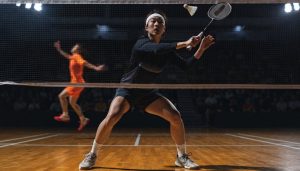
Once you accept that body language shortens your decision time, the next step is knowing exactly what to look at before the racket moves. Start with base stance: are their feet parallel, staggered, or heavily loaded on one leg? A wider, lower base usually signals preparation for powerful, longer shots; a narrower, neutral base favors quicker, shorter movements.
Track weight distribution. If they’re clearly sitting on the rear foot, they’re primed to push forward; if they’re leaning forward, they can retreat or jump less explosively. Check hip and shoulder alignment relative to the shuttle. Closed hips and shoulders limit straight options; open alignment expands the angle range. Finally, note knee flexion—deeper flex gives access to faster directional changes and higher vertical push. Reading these cues alongside whether they’re using a lightweight racket or a heavier frame can further refine your expectations about their likely power, swing speed, and shot options.
Read Grip Changes to Predict Shot Choices
- Note a forehand grip sliding toward the racket butt: expect clear or fast lift.
- Watch for a panhandle grip on forecourt: anticipate net kill or push.
- See the thumb press higher on the backhand side: prepare for drive or block.
- Spot a relaxed, neutral grip: be ready for deception.
- Track late grip changes: delay your own commitment.
- As you observe these shifts, remember that quick grip changes are a core skill that lets players disguise intentions and adapt under pressure.
Use Upper‑Body Motion to Spot Smashes and Drops
To read smashes and drops early, you’ll focus on how your opponent’s upper body loads and aligns before contact. Shoulder rotation is your primary indicator for a full‑power smash, while elbow height offers a fast cue for whether they’re preparing to hit steep or soft. At the same time, the angle of the chest—either opening up for a harder hit or staying more closed for control—helps you anticipate when a disguised drop is coming.
Shoulder Rotation For Smashes
Focus on:
- How fast the shoulder initiates rotation from the preparation phase.
- How far the non‑racket shoulder turns away from the net.
- Whether the chest quickly opens toward you just before contact.
- Sudden acceleration of rotation compared with earlier, softer shots.
- Consistency: map each opponent’s typical smash rotation against their softer strokes.
Elbow Height As Cue
Once you’ve mapped how your opponent’s shoulders behave before a smash, start tracking what their elbow does relative to their head and shoulder line. A true attacking preparation usually puts the elbow high and outside the shoulder, with the upper arm nearly parallel to the court surface and the forearm forming a sharp “loaded” angle. This positioning lets them accelerate the racket head steeply.
Watch for three cues: peak elbow height, distance from the body, and timing. A fast rise to a high, wide elbow typically precedes a full smash. A delayed or partially raised elbow often indicates reduced racket speed and a softer shot. Train yourself to call “high elbow, prepare deep defense” the moment you recognize that loaded position.


Chest Angle Signals Drop
Although most players track the racket first, your opponent’s chest angle often reveals smash vs. drop even earlier. When they rotate the chest fully toward the shuttle and “close” the torso, they’re loading for a powerful forward whip—usually a smash or fast clear. For a disguised drop, the chest often stays more side‑on or even slightly open, minimizing torso rotation and power transfer.
Use this as a fast decision trigger:
- Watch how quickly the chest turns toward the net after the preparation phase.
- Note if the sternum points sharply forward (smash) or stays angled sideways (drop).
- Track whether the shoulders unwind explosively or smoothly.
- Combine chest angle with elbow height for earlier reads.
- Train by shadow‑drills: freeze, read chest angle, then move.
Read Footwork and Weight Shifts for Shot Direction
One of the most reliable early cues for shot direction is your opponent’s footwork pattern and where their weight is loaded just before impact. Track which leg becomes the “anchor” as they set up: back leg loaded usually indicates a powerful clear or smash, while balanced or slightly forward weight often precedes a drop, drive, or soft block.
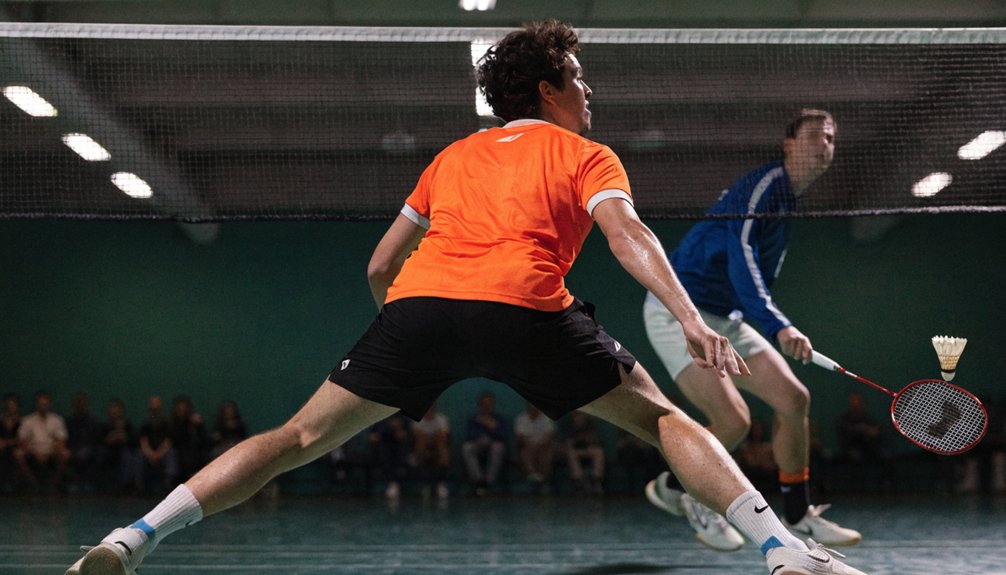
Watch the last two steps. A wide, aggressive lunge with the non-racket leg commonly supports cross-court angles, because it frees the racket shoulder to swing across the body. A neutral or narrow stance tends to favor straighter shots. Also note heel–toe timing: a late, rushed plant often forces a safer straight shot, while a clean, early plant lets them confidently access wider angles.
Use Recovery Position to Expose Positional Weaknesses
Reading footwork at impact is only half the picture; what really punishes opponents is understanding how they recover after the shot. Watch where their hips and chest face as they move back to base; this reveals which corners they can’t cover in time. A “correct” base is centered, balanced, and slightly split-stepped. Any deviation is a target. By forcing awkward recoveries, you shrink their effective sweet spot, making mishits and weak replies more likely.
Track:
- Over-rotated torso: attack the opposite rear corner; they’ll struggle to turn.
- Narrow stance: use fast pushes to either side of their body.
- Leaning forward: lift to the rear court; their first step back will be slow.
- Late split-step: play fast drives that arrive before they plant.
- Offset base (too left/right): hit crisply to the longer diagonal.
Spot Fatigue, Stress, and Low Confidence in Opponents
To exploit body language fully, you must identify when your opponent’s physical resources and mental composure are breaking down. You’ll look for concrete fatigue markers—slower recovery steps, heavier breathing, reduced split-step sharpness—alongside stress and confidence cues such as rushed serves, fidgeting, and avoiding eye contact. Once you can read these indicators in real time, you’ll adjust your shot selection and tempo to intensify pressure exactly when they’re most vulnerable.
Recognizing Physical Fatigue Signs
A crucial edge in badminton comes from detecting when an opponent’s body is breaking down—physically, mentally, or both. Physical fatigue first appears in movement patterns. You’re looking for slower first steps, heavier recovery, and inefficient footwork that open spaces you can exploit with targeted placement and tempo changes.
Key physical fatigue markers to track:
- Heavier landings: Louder, flat-footed stomps on lunges and jumps, indicating poor shock absorption.
- Slower recovery to base: Opponent lingers near corners, giving you time to redirect.
- Shortened lunge distance: They can’t reach front-court shuttles cleanly; use tight net shots.
- Reduced jump height: Smashes lose angle and power; counter with fast blocks.
- More upper-body swinging: Arm compensates for tired legs, increasing error rates under pressure.
Reading Confidence and Stress
Although fatigue shows up first in footwork, the biggest momentum swings often come from shifts in confidence and stress that you can read just as clearly. Confident opponents stand taller, return quickly to base, and hold their racket high and stable between rallies. Their gaze is direct, and they bounce lightly on their toes, ready to pounce.
When stress rises, posture narrows and shoulders roll forward. You’ll see rushed preparation, extra fidgeting with strings or grip, and longer towel or shuttle-adjusting routines. Eye contact drops; they glance more at the coach or scoreboard. Use these cues to increase pressure: tighten your length, vary tempo, and target lines. Exploit hesitation by playing fast to their backhand or deep corners.
Body Language Patterns for Different Badminton Playing Styles
Because each playing style produces its own movement “signature,” you can often infer an opponent’s intentions before they hit simply by recognizing these patterns. You’re not guessing; you’re profiling how footwork tempo, posture, and racket preparation cluster together for distinct styles.
Key style-linked body language patterns to watch:
- Attacking smasher – forward‑tilted torso, wide stance, fast split‑step, racket already high behind head.
- Control rallyer – upright posture, compact steps, early, relaxed racket set in front of body.
- Counter‑attacker – slightly deeper base, weight on heels, delayed racket preparation, sudden explosive lunge.
- Deceptive stroke‑maker – loose shoulders, exaggerated wind‑ups, late racket acceleration, frequent mid‑air adjustments.
- Front‑court predator – toes over service line, crouched ready position, short choppy steps, racket head consistently above tape height.
Turn Body Language Cues Into Smart Tactical Decisions
Once you can recognize these style‑linked movement signatures, the next step is converting them into concrete choices: where you hit, how much you risk, and when you change pace. If you read slow, weight‑back recoveries, drive the shuttle early and flat to rush their preparation. When you see a speed‑based player landing heavily or straightening up late, inject sudden height and delay: high clears, sliced drops, and holds that exploit their slower second step. Because many opponents’ movement patterns are shaped by their racket’s weight distribution, noticing whether they favor power or quick exchanges can hint at when to drag them into fast drives or high, slow rallies. Use shoulder tension and racket grip as risk indicators. A tight, choked‑up grip invites deep, fast pushes to the rear corners. A relaxed, loose grip lets you test tighter net shots. Continuously loop: observe cue → choose pattern (fast/slow, straight/cross) → verify outcome → refine your next decision.