If you’re late to a deep backhand corner and still lift the shuttle cleanly, your technique is doing the work, not luck. You’ll improve that shot by refining your grip, getting behind the shuttle sooner, and keeping your swing compact and timed. Small changes in thumb pressure, shoulder preparation, and finger power can turn a weak reply into a controlled weapon—if you know where to start.
Key Takeaways
- Use a proper backhand grip with the thumb on the wider bevel, keeping the grip relaxed until tightening at impact.
- Move behind the shuttle early with quick chasse or crossover steps, and stay low for balance and cleaner contact.
- Prepare early by turning your shoulders, lifting the racket, and setting the racket angle before the shuttle arrives.
- Keep the backhand swing compact and aligned with the shuttle, using finger squeeze and wrist snap to generate power.
- Practice backhand clears and drives separately, and fix one mistake at a time, such as late contact or a misaligned racket face.
Fix Your Backhand Grip
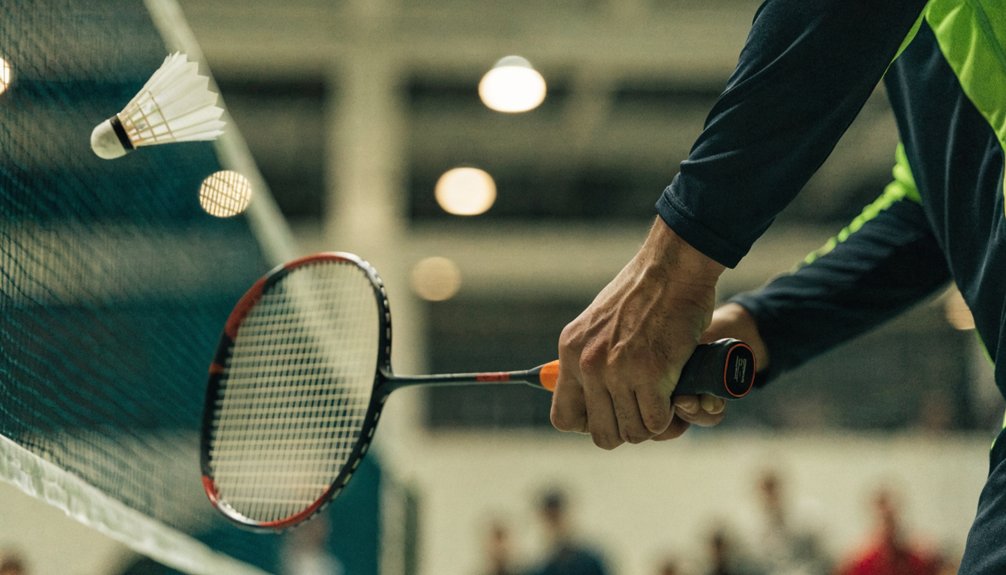
A proper backhand grip starts with shifting from your forehand hold so the thumb sits flat and firm along the wider bevel, giving you direct leverage behind the shuttle. This thumb placement stabilizes the handle and lets you control the racket face without over-rotating your wrist during contact.
Keep your index finger relaxed around the shaft side, not stretched or squeezed. Your grip pressure should stay light before the swing, then tighten briefly at impact for crisp transfer. If you clamp too early, you’ll lose touch and restrict acceleration. Check your racket angle as you prepare: the face should stay slightly open so you can guide clears, drives, and blocks cleanly. Practice changing smoothly between forehand and backhand grips until the adjustment becomes automatic under pressure in rallies. Learning quick grip changes also helps you react faster and adapt your backhand during dynamic exchanges.
Improve Your Backhand Footwork
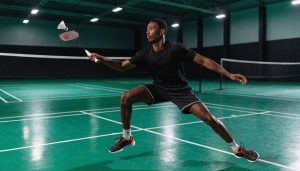
Once your grip is set, efficient backhand footwork starts with getting behind the shuttle early so you don’t end up reaching across your body. Use quick chasse steps or a crossover to move laterally, then plant your outside foot to stabilize your base. Keep your center of gravity low, hips aligned, and weight balanced so you can stop sharply without drifting.
Strong backhand positioning depends on recovering with small adjustment steps rather than one long lunge. You’ll create cleaner angles and maintain control if your racket-side shoulder stays free to rotate. Practice footwork drills that emphasize split step timing, rear-court movement, and fast recovery back to base. As your movement becomes more economical, you’ll reach the shuttle under control and support a more reliable, repeatable backhand stroke under pressure in matches. For added control on these movements, use a thumb grip so the full bottom of your thumb contacts the 3rd bevel during backhand shots.
Prepare Early for Better Contact
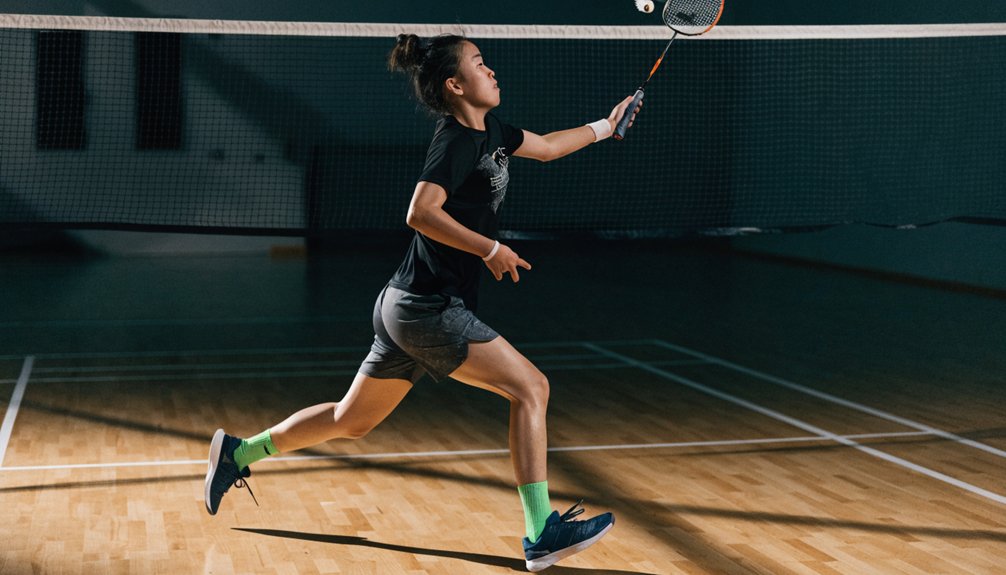
Because the shuttle reaches you fast on the backhand side, early preparation gives you the time and structure needed for solid contact. As soon as you recognize the incoming shot, turn your shoulders, lift your racket, and set your non-racket arm for balance. This organized setup helps you meet the shuttle in front of your body instead of reaching late.
You should also stabilize your grip pressure and confirm the correct racket angle before the shuttle arrives. Small adjustments made early are more reliable than rushed corrections at impact. A stable setup also makes it easier to strike the shuttle on the racket’s Sweet Spot for cleaner, more accurate backhand shots. Use timing drills to train this sequence under pressure: read, move, prepare, contact. When your preparation becomes automatic, your contact point gets cleaner, your control improves, and you’ll feel less cramped on difficult backhand exchanges during faster rallies.
Use the Right Backhand Swing Path
Good preparation sets up the next piece: a backhand swing path that stays compact, efficient, and aligned with the shuttle’s line. In faster rallies, staying composed against mind games also helps you preserve this compact swing path under pressure. From your backhand stance, guide the racket forward on a short track, keeping the head stable and the face controlled. You shouldn’t loop widely or pull across your body too early. Instead, let the path travel toward contact, then extend naturally through the target to preserve direction and backhand rhythm.


| Phase | Action | Focus |
|---|---|---|
| Setup | Elbow relaxed | Face prepared |
| Forward path | Move straight | Contact line |
| Contact | Meet in front | Stable strings |
| Follow-through | Extend briefly | Balanced recovery |
This path improves timing, reduces mishits, and helps you send flatter, cleaner shots under pressure during faster exchanges consistently.
Generate Power With Fingers and Wrist
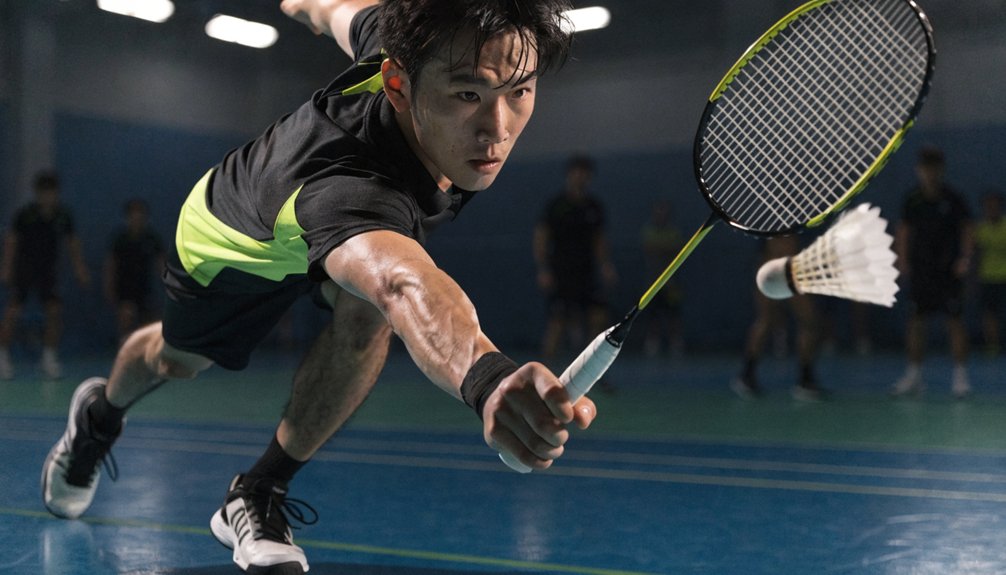
While your arm guides the racket into position, most backhand power doesn’t come from a big swing—it comes from a sharp finger squeeze and a timed wrist action at the moment of contact.
To do this well, keep a relaxed grip during preparation, then tighten your fingers abruptly as you strike. That squeeze accelerates the racket head without forcing your forearm to overwork. Your thumb and index finger play the key role, so build finger strength to improve control and shuttle penetration. At the same time, maintain wrist flexibility so the racket can snap cleanly through contact rather than locking early. The movement should feel compact, fast, and coordinated. Using the correct grip size can also improve backhand control by helping your fingers squeeze efficiently without excess tension. If you stay loose before impact and explosive at impact, you’ll generate more power while preserving accuracy and reducing unnecessary strain overall.
Practice Backhand Clears and Drives
Start by separating clears from drives in your practice so you can groove the correct contact point, racket path, and timing for each shot. For clears, send the shuttle high and deep with a longer follow-through and full finger extension. For drives, keep the trajectory flat, shorten the swing, and prioritize quick racket recovery.
Use structured backhand drills: ten crosscourt clears, ten straight clears, then alternating drive exchanges at increasing pace. Feed consistently so you can measure height, depth, and control. Add grip exercises between sets to reinforce relaxed preparation and sharp tightening at impact. You should also vary shuttle speed and contact height, because adaptability matters under pressure. Keep your stance balanced, recover to base quickly, and track whether each repetition meets your target before increasing intensity or tempo. Using a racket with an isometric head can help during backhand practice by offering a larger sweet spot on off-center contacts.
Fix Common Backhand Mistakes
Once you’ve built consistency with clears and drives, the next step is identifying the errors that break your backhand under speed or pressure. You’ll improve faster by isolating one flaw at a time during backhand drills and reviewing player feedback after each rally. A lightweight racket with good swing speed can make it easier to react earlier and stay controlled on fast backhand exchanges.
| Mistake | Effect | Fix |
|---|---|---|
| Late contact | Weak shuttle speed | Meet shuttle earlier |
| Tight grip | Lost wrist snap | Relax before impact |
| Open racket face | High, short returns | Square the strings |
| Falling backward | Poor balance, timing | Load front foot |
Keep your elbow leading, rotate the forearm cleanly, and recover immediately after contact. If your shot floats, check contact height and racket face angle first. Small corrections, repeated under pressure, will make your backhand more reliable in matches and training.
Frequently Asked Questions
How Long Does It Take to Improve a Weak Badminton Backhand?
You can noticeably improve a weak badminton backhand in 4–8 weeks, if you’re consistent. Your progress depends on practice frequency, stroke mechanics, and targeted backhand drills. Keep sessions deliberate, and you’ll build control, timing, and confidence.
Can a Heavier Racket Make Backhand Shots Easier or Harder?
A heavier racket can make your backhand harder if your timing’s late, but easier if you’ve got strength and technique. More racket weight can boost stability and shot control, though quicker reactions usually benefit from lighter frames.
Should Beginners Learn Backhand Singles and Doubles Tactics Differently?
Yes, you should learn them differently: singles emphasizes controlled placement and recovery, while doubles demands faster interceptions and flatter replies. You’ll benefit from backhand drills tailored to each format’s tactical variations, building adaptable decision-making.
How Do I Prevent Elbow or Wrist Pain During Backhand Practice?
A little tenderness means you’re overloading tissues: you should reduce volume, keep a neutral grip, use wrist support, and add stretching exercises. If pain lingers, don’t push through it; refine mechanics and recover properly.
Is Coaching Necessary to Develop a Reliable Badminton Backhand?
No, you don’t need coaching to build a reliable badminton backhand, but you’ll improve faster with expert feedback. You can use backhand drills and video-based technique analysis to refine mechanics, timing, consistency, and confidence.