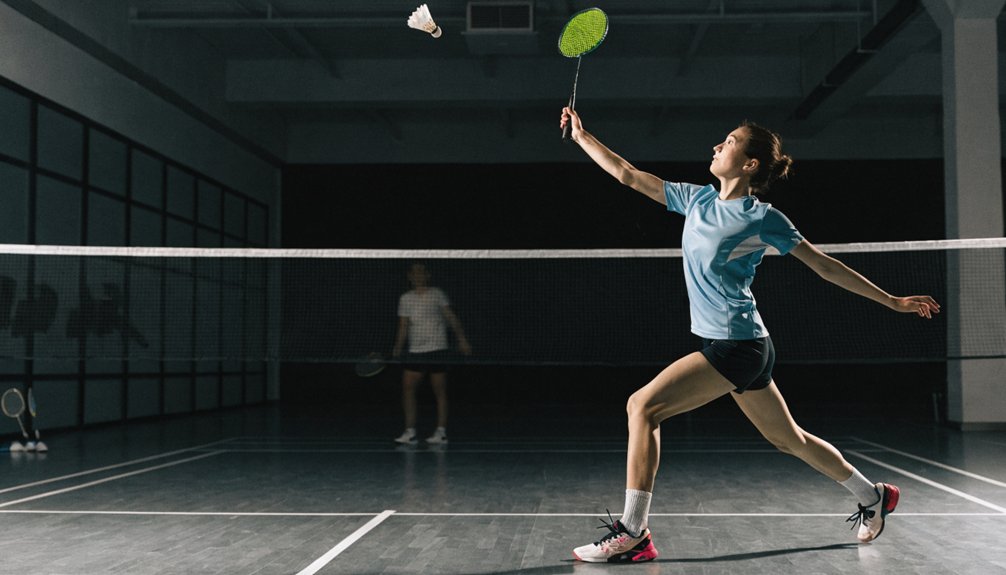
If your clear lacks depth or consistency, you likely need sharper mechanics rather than more effort. You’ll improve faster by refining your grip, getting side-on early, and contacting the shuttle at full reach with coordinated body rotation. Small adjustments in timing, footwork, and recovery can change both power and control. The key is knowing which details matter most and how to train them with purpose.
Key Takeaways
- Stand side-on, keep your elbow up, and contact the shuttle slightly in front at full reach for cleaner, deeper clears.
- Use a basic forehand grip, stay relaxed during preparation, and tighten your fingers at impact for better power and control.
- Generate power from hip, shoulder, and torso rotation, transferring weight from your rear foot to your front foot.
- Reach the shuttle early with efficient footwork, split-step on the opponent’s hit, and recover quickly to a balanced base position.
- Practice shadow swings, fed-shuttle drills, and video analysis to improve timing, consistency, and accurate rear-court placement.
Learn Proper Badminton Clear Form
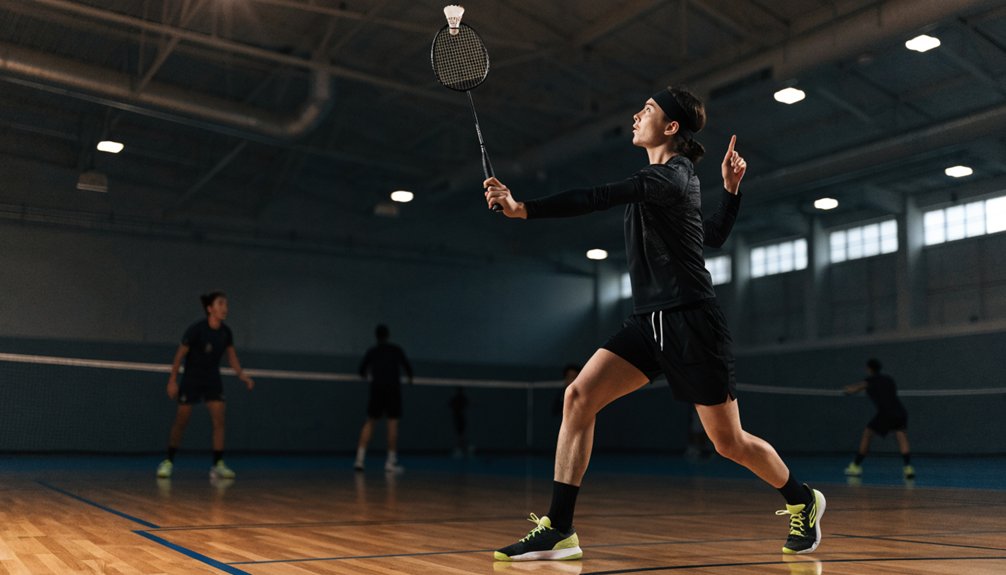
To hit a reliable clear, you need efficient form more than raw strength. Start side-on, with your non-racket shoulder pointing toward the shuttle and your weight balanced on the rear foot. As the shuttle descends, rotate your hips and torso, then transfer weight forward in one smooth sequence. Keep your elbow up so the racket travels on a long, upward path.
For sound clear technique, contact the shuttle slightly in front of your body at full reach. Your arm should extend naturally, with a relaxed forearm accelerating through impact. Using a light forehand grip can reduce wrist and arm strain while helping you generate a smoother overhead action. Finish with a controlled follow-through and recover quickly to base. Focus on shuttle placement as much as distance: aim high, deep, and central when defending, or high and wide to move an opponent back and open space for your next shot.
Use the Right Grip for Clears
Because grip angle controls racket-face alignment, the basic forehand grip is the right default for most overhead clears. Place your hand as if you’re shaking hands with the handle, with the V between thumb and index finger running along the top bevel. This positions the strings squarely at contact and lets you transfer force efficiently.
Keep your fingers relaxed during preparation, then tighten slightly through impact. That controlled grip pressure improves whip, prevents stiffness, and helps you hit deep without overswinging. A properly fitted grip size also improves comfort and control, since grip size significantly influences shot power and precision. Avoid holding the racket in a panhandle grip, because it closes your range and compromises timing. Small grip adjustments are useful when the shuttle sits slightly behind or wider than expected, but keep the forehand grip as your base. If your clear feels weak, check grip first, before changing your swing.
Get Side-On Before You Swing
A sound grip works best when your body sets the racket up from the right angle, and that starts with getting side-on to the shuttle before you swing. Turning your non-racket shoulder toward the net aligns your torso, loads your hips, and organizes efficient swing mechanics for a longer, cleaner clear.
- Set your rear foot behind your lead foot to create stable foot positioning.
- Keep your chest rotated sideways, not facing the net too early.
- Let your weight move from back foot to front as you initiate the stroke.
This position gives your racket arm space to travel freely while your trunk contributes controlled rotation. You’ll feel more balanced, less rushed, and better able to generate power without forcing the shot. Build this habit early, and your clear technique becomes repeatable under pressure consistently. Good body positioning also makes quick grip changes easier during rallies, helping you adapt smoothly when the shuttle arrives at different heights or angles.
Contact the Shuttle at Full Reach
Once you’ve turned side-on, the next priority is meeting the shuttle at full reach, with your racket arm extended high and slightly in front of your body. This contact point gives you cleaner timing, a steeper trajectory, and better length on your clear. If you let the shuttle drop behind or beside you, you’ll lose control and send a weaker shot.


Focus on a disciplined reach technique: track the shuttle early, move your feet quickly, and arrive balanced under it. At impact, your elbow should be straightening into full extension, with your shoulder lifted and your wrist prepared to guide the racket head cleanly through the shuttle. Keep your non-racket arm active for spacing and balance. Done consistently, this higher contact point makes your clear more efficient, repeatable, and technically sound overall. In match play, strong technique also helps you stay composed when mind games or pressure tactics try to disrupt your timing and focus.
Rotate Your Body for More Power
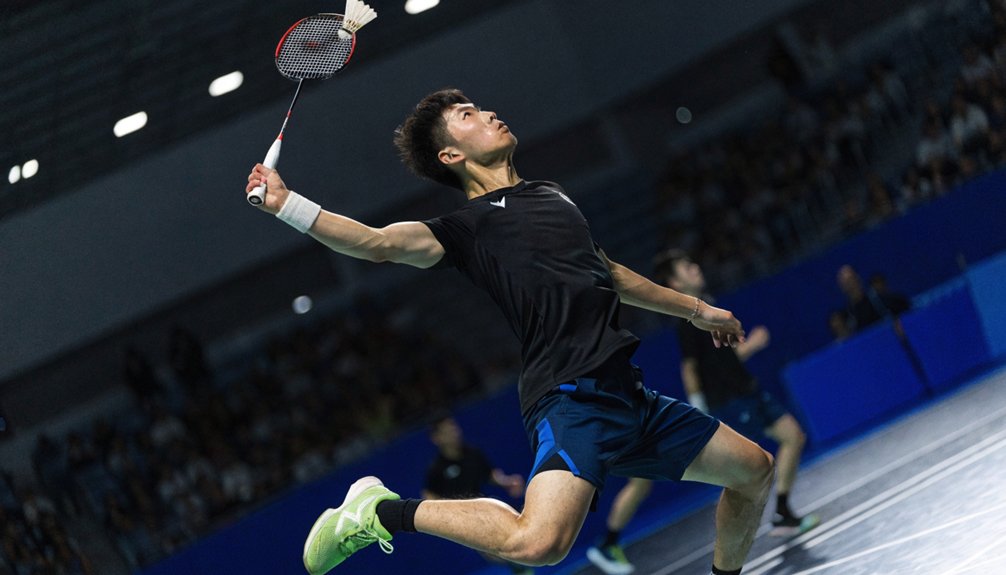
To generate more power in your clear, you need an efficient hip and shoulder turn rather than relying only on your arm. If you time the rotation from your core just before contact, you’ll transfer force more cleanly through the shuttle. After the turn, recover your balance quickly so you’re ready for the next shot without losing court position. Practicing shadow badminton can help you coordinate body rotation and recovery without the pressure of a live rally.
Hip And Shoulder Turn
Drive the clear with your whole torso, not just your arm. As you prepare, turn your hips and shoulders sideways to the shuttle, creating coil through your trunk. This stores elastic energy and lengthens your hitting path without forcing the swing. Good hip mobility lets you rotate smoothly while staying balanced; shoulder flexibility helps you lift the elbow and align the racket behind you efficiently.
- Keep your non-racket shoulder pointing toward the shuttle longer.
- Let your racket-side hip move back during preparation.
- Unwind your shoulders fully so the chest faces forward at contact.
You’ll notice cleaner contact and easier depth when both segments rotate together. Don’t overtwist or lean excessively; aim for controlled range. A compact, coordinated turn gives you power, stability, and repeatable mechanics under pressure in longer rallies.
Core-Led Rotation Timing
Although the arm delivers the racket, most of your clear power should come from the timing of your core rotation. As your non-racket side initiates the turn, your trunk should uncoil just before contact, transferring force efficiently from the ground through your torso into the racket. If you rotate too early, you leak power; too late, and the stroke becomes arm-dominant.
Focus on bracing your midsection so core stability supports a fast, controlled turn. You should feel your ribs and hips working together, not spinning separately. That coordinated sequence improves rotational balance, keeps the racket path cleaner, and sharpens timing at impact. Practice with smooth, progressive acceleration instead of forcing speed. When your core leads the motion, your clear travels deeper with less strain and much more consistency under pressure.
Recovery After Rotation
Recover quickly after the hit by letting your rotation finish into a balanced ready position instead of stopping your body abruptly. That follow-through helps you absorb force efficiently, restore rotational balance, and prepare for the next shot without wasting time. As your racket completes the swing, let your hips and shoulders unwind naturally, then re-center your weight over both feet.
- Land softly with knees flexed to stabilize your recovery posture.
- Bring your non-racket arm back in to control torso alignment.
- Push off the outside leg so you can recover to base faster.
If you freeze after contact, you’ll lose momentum and delay your split step. A smooth recovery keeps your clear technically sound and tactically useful. Train this shift until it feels automatic under pressure in fast rallies.
Time Your Swing for a Deeper Clear
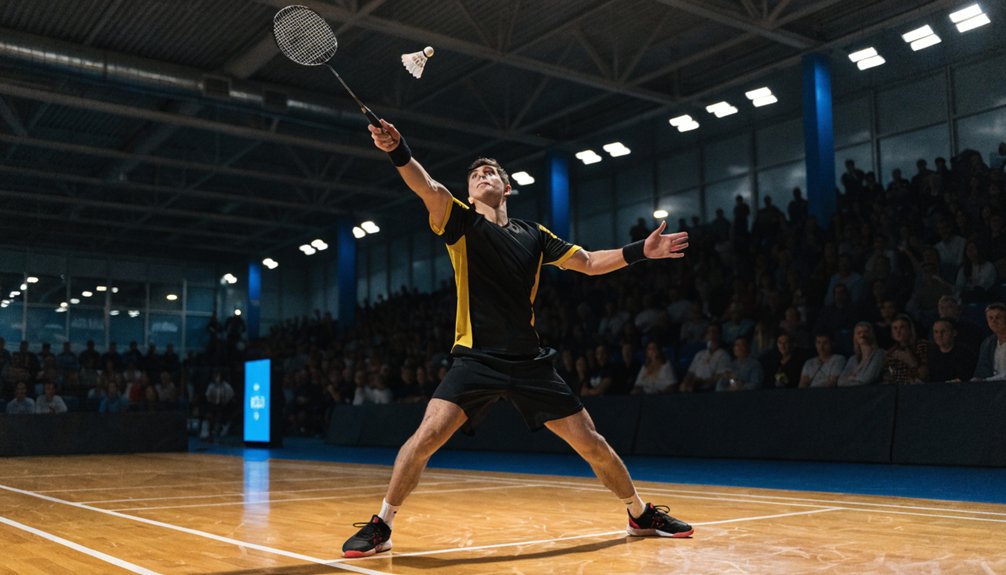
When your swing meets the shuttle at the top of its reachable height, you’ll transfer force more efficiently and send the clear deeper with less strain. That contact point lets you strike through the shuttle trajectory instead of chasing it late. Focus on a consistent swing rhythm: prepare early, accelerate smoothly, and contact just before the shuttle begins to drop. You’ll notice cleaner timing produces a steeper, more penetrating lift with less arm effort.
If you hit too early, you’ll lose leverage and slice under the shuttle. If you wait too long, contact falls behind you, reducing length and control. Train your eyes to read the descent, then match your racket acceleration to that window. A racket with an isometric head can also make clean contact more forgiving by offering a larger sweet spot. With repetition, your timing becomes automatic, and your clears travel deeper, straighter, and more reliably under pressure consistently.
Improve Your Footwork for Better Clears
Good timing won’t help much if your feet don’t put you behind the shuttle early enough to use it. To hit stronger clears, you need efficient recovery, sharp lateral movement, and disciplined foot positioning on every shot. Your goal is to arrive balanced, with space to rotate and transfer force cleanly upward.
- Split-step as your opponent strikes to load both legs and react faster.
- Use chasse steps or a crossover to move back quickly without losing balance.
- Plant your rear foot behind the shuttle, then align your front foot to stabilize contact.
If you’re late, don’t rush the swing; focus on getting into position sooner on the next rally. Consistent footwork training lets you reach the shuttle earlier, stay composed under pressure, and produce deeper clears with less effort overall. Pairing solid movement with the right racket setup, especially suitable string tension, can also help you produce better depth and control on your clears.
Fix Common Clear Technique Mistakes
To fix common clear errors, start by checking your grip position so the racket face stays stable and efficient through the swing. You’ll also need cleaner contact timing, striking the shuttle at full reach and slightly in front of your body for better height and length. Finally, use full shoulder and trunk rotation so you’re generating power with proper mechanics instead of forcing the shot with your arm alone. Choosing a lightweight racket with even balance can improve maneuverability and help you time your clears more consistently.
Correct Grip Position
Start with a relaxed forehand grip, because your clear loses power and control if you squeeze the handle too tightly or hold it like a panhandle. Your thumb and index finger should guide the racket, while the remaining fingers support and tighten only during acceleration. Among basic grip types, this one gives you the best blend of leverage and fluid rotation for a full clear.
- Place the V between thumb and index finger on the top bevel.
- Keep hand positioning slightly diagonal, not flat behind the handle.
- Leave a small gap in your palm for quicker finger action.
Check that the racket can rotate freely in your fingers without wobbling. If your wrist feels locked, reset your hold. Small grip corrections can immediately improve shuttle depth, consistency, and effortless racket speed.
Improve Contact Timing
With your grip set correctly, the next gain comes from contact timing: if you strike the shuttle too late, too low, or beside your body, your clear turns flat, weak, or rushed. Aim to meet it slightly in front of your hitting shoulder, at full reach, with your eyes tracking the cork until impact. That contact point gives you cleaner transfer and a higher, deeper shuttle path.
To sharpen this, use simple timing exercises and timing drills. Ask a feeder to vary height slightly, so you must adjust your preparation without snatching at the shot. Focus on arriving early, setting your base, and letting the shuttle drop into your ideal window. If you’re consistently jammed or reaching backward, you’re late—recover sooner and start your swing a fraction earlier each time.
Use Full Rotation
Rotate through the shot instead of arming it. When you rely only on your shoulder and forearm, your clear loses depth and consistency. You need coordinated trunk and hip rotation to transfer force efficiently from the ground up. Good body alignment lets your non-racket side guide balance, while your racket side unwinds through contact. That sequence increases swing speed without extra tension, so the shuttle travels farther with less effort.
- Turn your shoulders side-on during preparation.
- Drive your hips and chest forward before contact.
- Finish with your torso facing the net.
If you stay square too early, you’ll jam the stroke and reduce leverage. If you over-rotate after contact, you’ll lose recovery speed. Practice smooth rotation, then link it to timing for a more powerful, repeatable clear under pressure.
Use Drills to Build Clear Consistency
A few focused drills can turn an inconsistent clear into a reliable shot because they isolate timing, contact height, and recovery. Use drill variety to train the same mechanics under slightly different demands. Alternate shadow swings, fed-shuttle repetitions, and partner drills so your movement pattern stays stable without becoming robotic.
Keep practice frequency high enough to reinforce rhythm, but short enough to preserve quality. Add consistency tracking by counting clean contacts and balanced recoveries, not outcomes alone. During feedback sessions, use video analysis to confirm racket preparation, elbow position, and contact point. Then apply small adjustment techniques, one at a time, so you don’t overload your coordination. Maintain mental focus by setting one cue per set. Finally, include fun challenges to keep intensity high and repetition engaging during longer sessions. Using a racket with an isometric head can also support clear practice by giving you a larger sweet spot for more forgiving contact.
Hit Deeper, More Accurate Clears
To hit deeper, more accurate clears, you need to meet the shuttle at the ideal contact point—high, slightly in front, and at full reach. You’ll also generate better length and control when your hips, torso, and shoulder rotate in sequence instead of relying only on your arm. From there, aim consistently toward the rear corners so your clears carry with purpose and put your opponent under pressure. A racket with a Dual Optimum Frame can also help by improving forehand and backhand shot effectiveness while maintaining stability and maneuverability.
Contact Point Timing
When your contact point is timed well, the shuttle leaves the strings slightly in front of your hitting shoulder and at full reach, which gives you a cleaner strike, better length, and a steeper, more controlled flight path. If you contact too late, the shuttle drops behind you and your clear loses depth and accuracy. If you rush, you’ll snatch at it and mistime the face angle.
- Track the shuttle early and move so it drops into your ideal contact point.
- Keep your non-racket side balanced to judge spacing and strike at full extension.
- Use timing drills with self-feeds or easy clears to groove consistent interception.
You don’t need extra force. You need precise spacing, calm preparation, and repeatable timing so each clear feels effortless, solid, and reliably deep under pressure.
Full Body Rotation
Because a strong clear is built from the ground up, full body rotation lets you transfer force efficiently from your legs and trunk into the racket instead of relying on your arm alone. As you move behind the shuttle, load your rear leg, coil your hips and shoulders, and keep stable body alignment so your chest can uncoil smoothly through contact.
Drive upward, then rotate your trunk as your non-racket arm lowers and your racket shoulder comes through. This sequence creates racket head speed without excess tension, helping you hit deeper with less effort. If you rotate too early, you’ll lose leverage; too late, and you’ll arm the stroke. Finish with a relaxed follow through, allowing your torso to complete the motion while you recover balance quickly for the next shot.
Targeting Rear Corners
Aim for the rear corners, and your clear instantly becomes more than a defensive lift—it starts controlling space, buying recovery time, and forcing your opponent to move the full length of the court.
To improve shot placement, you should visualize a narrow landing zone inside each back tramline and baseline intersection. That target sharpens racket face control and encourages full extension through contact. In the rear court, depth matters more than height alone.
- Contact the shuttle slightly in front to keep trajectory penetrating.
- Use a relaxed grip tightening at impact for directional accuracy.
- Recover to base immediately after follow-through to exploit weak replies.
When you consistently hit deep, accurate clears, you reduce your opponent’s attacking options. You’re not just sending the shuttle back—you’re dictating positioning, rhythm, and the next exchange.
Frequently Asked Questions
How Often Should I Restring My Racket for Effective Clears?
You should restring every 2–6 months; particularly, tension can drop 10% within weeks. If you play weekly, monitor string tension monthly. Consistent racket maintenance helps you preserve control, power, and effective clears without overcompensating.
Can Shoulder Strength Exercises Improve My Badminton Clear Distance?
Yes, you’ll improve clear distance with targeted shoulder strength exercises, especially when combined with shoulder mobility and grip strength training. You’ll generate more racket-head speed, maintain cleaner overhead mechanics, and transfer force more efficiently consistently.
What Shuttle Speed Is Best for Practicing Badminton Clears?
Use a medium-speed shuttle; it’s the sweet spot for practicing clears, letting you refine timing and length. Test shuttlecock types and practice drills, then adjust speed to your hall’s temperature, altitude, and shuttle flight.
Should Beginners Use Lighter or Heavier Rackets for Clears?
You should start with a lighter racket for clears, because you’ll develop timing, swing speed, and control more easily. Choose suitable racket balance and correct grip size, so you don’t strain your wrist and forearm.
How Long Does It Take to Noticeably Improve Clear Technique?
You’ll noticeably improve clear technique in 3–6 weeks with consistent practice frequency; for example, if you train clears three times weekly, you’ll likely gain better timing, contact point, and shuttle depth within a month.