Staying safe on the badminton court, preventing injuries, and maximizing your performance are all within your control. By focusing on warm-up exercises, selecting the right footwear, and honing your skills, you can enjoy the game while minimizing risks. However, understanding the importance of hydration and recovery can make a significant difference too. What other strategies can you implement to create a safer playing environment?
Key Takeaways
- Ensure proper footwear with good grip and arch support to enhance stability and prevent slips during play.
- Maintain a clean and well-maintained court surface to reduce the risk of falls and injuries.
- Warm up with dynamic stretches to prepare muscles and improve flexibility before playing.
- Monitor hydration levels, taking breaks to drink water and replenish electrolytes to prevent fatigue and cramps.
- Focus on mastering techniques and gradually increase competition level to minimize injury risks.
Importance of Warm-Up Exercises
Before you step onto the badminton court, it's crucial to warm up your body. A proper warm-up not only gets your blood flowing but also prepares your muscles for the demands of the game.
Incorporating dynamic stretches into your routine is a fantastic way to enhance flexibility and mobility. Think arm circles, leg swings, and walking lunges—these movements activate your muscles and joints effectively.
Choosing the Right Footwear
When you hit the court, having the right footwear can make all the difference in your game.
Make sure your shoes fit properly and are designed specifically for badminton to give you the support and grip you need.
Trust me, investing in the right pair will keep you safe and enhance your performance!
Importance of Proper Fit
Choosing the right footwear is essential for your performance and safety on the badminton court. A proper fit can prevent injuries and enhance your agility. Start with a fit assessment to guarantee your shoes provide the right support and comfort. Remember, shoe sizing can vary by brand, so always try them on before you buy.
| Feature | Importance | How to Check |
|---|---|---|
| Size | Prevents blisters and discomfort | Measure foot length and width |
| Arch Support | Reduces strain on feet | Check for adequate cushioning |
| Grip | Enhances stability | Test traction on court surface |
Investing in well-fitted shoes can make a world of difference in your game. You deserve footwear that keeps you safe and performing at your best!


Selecting Court-Specific Shoes
Finding the right shoes for badminton goes beyond just size and fit; you need footwear specifically designed for the court.
Choosing the right pair can greatly enhance your performance and keep you safe from injuries. Here are three key features to look for:
- Court Traction: Opt for shoes with rubber soles that provide excellent grip, preventing slips during quick movements.
- Shoe Material: Look for lightweight, breathable materials that support your foot without adding unnecessary weight.
- Cushioning: A shoe with good cushioning helps absorb impact, protecting your joints during those intense rallies.
Understanding Proper Technique
Mastering proper technique is essential for playing badminton safely and effectively. Focusing on your footwork drills and stroke mechanics can greatly enhance your performance and reduce the risk of injury. Here's a quick reference to help you visualize key techniques:
| Technique | Description |
|---|---|
| Footwork Drills | Practice lateral and diagonal movements. |
| Grip and Stance | Maintain a relaxed grip and balanced stance. |
| Stroke Mechanics | Guarantee smooth and controlled swings. |
| Follow-Through | Always complete your swing for fluidity. |
Staying Hydrated During Play
After honing your technique and footwork, it's important to pay attention to another key aspect of your game: staying hydrated. Proper hydration is vital for maintaining your performance and preventing injuries on the court.
Here are some effective hydration strategies to keep your electrolyte balance in check:
- Drink Water Regularly: Sip water before, during, and after your matches to stay ahead of dehydration.
- Electrolyte Drinks: Consider sports drinks, especially during long sessions, to replenish essential minerals lost through sweat.
- Monitor Your Body: Pay attention to signs of dehydration, like fatigue or dizziness, and take breaks to hydrate as needed.
The Role of Stretching
While you're focusing on improving your badminton skills, don't overlook the critical role of stretching in your routine. Stretching isn't just an afterthought; it's an essential part of preventing injuries and enhancing performance.
Start with dynamic stretching before your matches to get your muscles warmed up and ready to move. Exercises like leg swings and arm circles can help increase your range of motion and boost your agility on the court.
After your game, make sure to incorporate static stretching. This helps your muscles cool down and recover, reducing stiffness and soreness.
Target areas like your hamstrings, calves, and shoulders, holding each stretch for about 15-30 seconds.
Recognizing Injury Symptoms
How can you tell if something's not right with your body during a game? Recognizing injury symptoms is vital for injury prevention and staying in the game longer.
Keep an eye out for these common symptoms:
- Pain: If you feel sharp or persistent pain, take it seriously. It might be a sign to stop and reassess.
- Swelling: Noticeable swelling in your joints or muscles can indicate an injury. Don't ignore it!
- Reduced Mobility: If you're struggling to move or your range of motion feels limited, it's time to check in with your body.
Listening to your body is fundamental. If you notice any of these symptoms, don't push through the pain; instead, take a break and evaluate your condition.
Creating a Safe Playing Environment
Creating a safe playing environment is essential for enjoying badminton to the fullest.
Make sure the court surface is smooth, the lighting is bright enough, and that equipment is stored properly to prevent accidents.
Court Surface Quality
When you step onto a badminton court, the surface beneath your feet plays an essential role in your safety and performance.
Ensuring the quality of the court surface is vital. Here are three things to take into account:
- Court Maintenance: Regularly check for any bumps or cracks. A well-maintained court reduces the risk of injuries.
- Surface Materials: Choose materials that provide good traction and cushioning. Wood and synthetic options often work best for players.
- Cleanliness: Keep the court free of debris. A clean surface prevents slips and falls.
Adequate Lighting Levels
Adequate lighting levels not only enhance your visibility on the badminton court but also contribute considerably to your overall safety.
Good lighting helps you track the shuttlecock better, reducing the risk of collisions and missteps. Make certain to perform regular visibility assessments to identify any dim areas that could impact your game.
If you notice flickering or dark spots, it's crucial to prioritize lighting maintenance to guarantee a consistently bright environment. This not only improves your performance but also keeps you and your fellow players safe from potential injuries.
Proper Equipment Storage
One key aspect of maintaining a safe badminton court is proper equipment storage.
Making certain your gear is stored correctly not only promotes safety but also aids in equipment maintenance.
Here are three storage solutions to take into account:
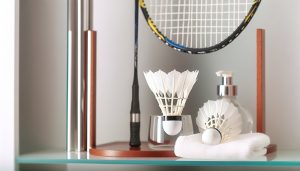
- Racket Racks: Use wall-mounted or freestanding racks to keep your rackets organized, preventing accidental damage or injury.
- Shuttlecock Containers: Store shuttlecocks in a designated, secure container to avoid tripping hazards and make certain they stay in good condition.
- Net Storage Bags: After games, fold and store your nets in breathable bags to prolong their lifespan and keep the court tidy.
Playing at Your Skill Level
Playing at your skill level is essential for both your safety and enjoyment on the badminton court. Before jumping into a match, consider doing a skill assessment to gauge your current abilities. This will help you understand where you stand and what level of play suits you best.
Engaging with players at a similar skill level creates a competitive balance, making the game more enjoyable and less risky. If you find yourself consistently playing against much stronger opponents, you might expose yourself to injury due to overexertion or frustration.
Remember, it's perfectly okay to take time to improve your skills before tackling higher levels of competition. Focus on developing your technique and building your confidence gradually.
Rest and Recovery Strategies
While you may feel enthusiastic to get back on the court after a game, prioritizing rest and recovery is essential for your long-term performance and injury prevention.
Taking the time to recharge helps your body heal and prepares you for your next match. Here are three effective rest strategies you can incorporate:
- Active Recovery: Engage in low-impact activities like walking or gentle stretching to keep your blood flowing without straining your muscles.
- Hydration and Nutrition: Fuel your body with proper hydration and nutritious meals to support recovery. Think fruits, veggies, and lean proteins!
- Sleep: Don't underestimate the power of a good night's sleep. Aim for 7-9 hours to help your body repair and rejuvenate.
Embracing these rest strategies not only helps prevent injuries but also enhances your overall performance on the court.
Take care of yourself, and you'll be ready to smash it next time!
Conclusion
In summary, prioritizing badminton court safety is essential for preventing injuries and enhancing your game. By warming up, wearing the right shoes, and focusing on technique, you're setting yourself up for success. For instance, a player named Sarah avoided a sprained ankle by investing in supportive footwear and mastering her footwork. Remember, staying hydrated and resting are just as important as practicing. So, gear up, stay safe, and enjoy every match while keeping your body in top shape!