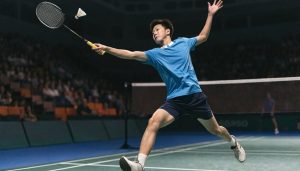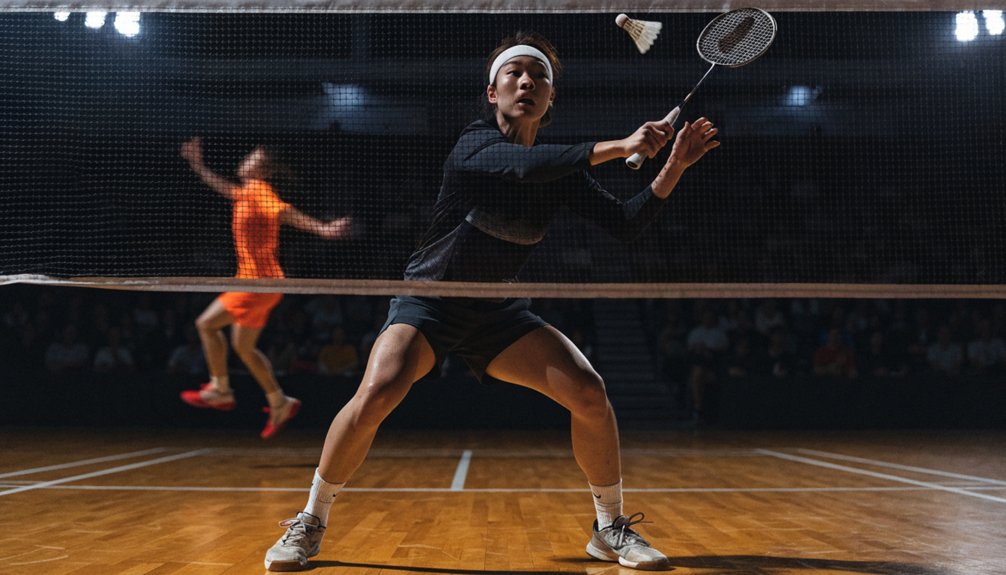
Like a chess player anticipating the next move, you’ll return a badminton smash more effectively when you recognize cues early and set a stable defensive base. Keep your center low, your racket prepared, and your response compact so you can block, lift, or drive with purpose. Placement matters as much as contact, and small errors in grip or recovery can cost you the rally. The key adjustments are often simpler than you think.
Key Takeaways
- Read the smash early by watching the opponent’s body setup, racket preparation, and shuttle angle to react sooner.
- Stay in a low, balanced defensive stance with knees bent, racket up, and weight on the balls of your feet.
- Use a relaxed backhand-oriented grip and keep the racket head in front for quicker, more controlled defensive contact.
- Block steep smashes softly to the forecourt, lifting only when needed to send the shuttle high and deep.
- Drive flatter smashes back with a short, firm swing, then recover immediately to your defensive base.
Read a Badminton Smash Early
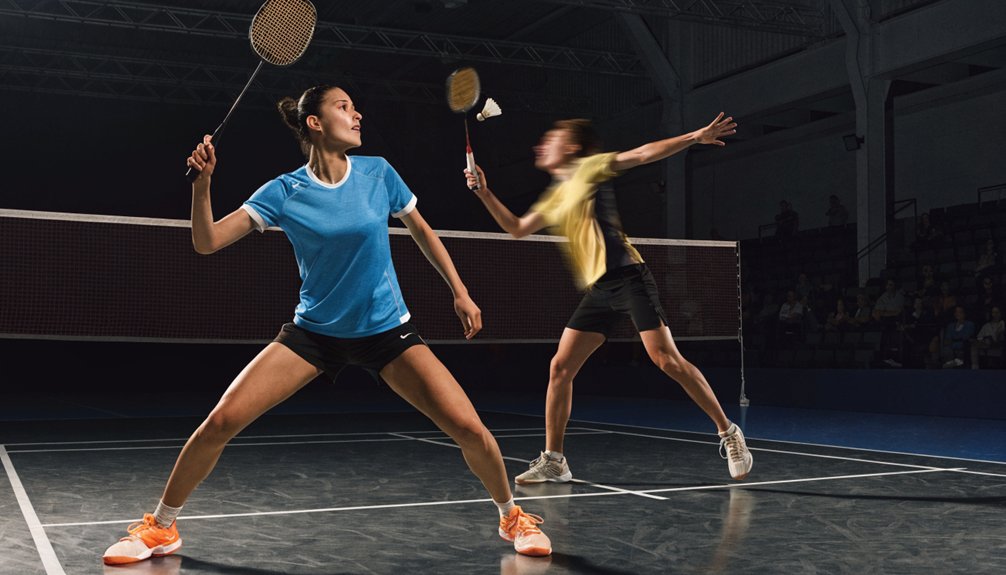
Before the shuttle leaves your opponent’s racket, you can often spot a smash by tracking a few early cues: a quick rear-court setup, a sideways body position, a raised non-racket arm for balance, and a full overhead preparation with the racket drawn back high.
From there, shift your attention to timing and contact quality. If their elbow leads strongly and the racket accelerates steeply downward, you should anticipate trajectory toward your body or sidelines. Watch the shuttle’s initial angle off the strings, not just the swing, because that first fraction tells you whether the smash is straight, crosscourt, or sliced. Training your eyes this way helps you react sooner and improve footwork without rushing. Stay calm, read the pattern, and you’ll turn a fast attack into a manageable first touch under pressure consistently. Coaches often build this skill through drills that improve Sweet Spot hitting consistency and early shuttle recognition.
Set a Strong Defensive Base
To handle a smash, you need a balanced ready stance that keeps your weight centered and your racket prepared. Lower your center of gravity by bending your knees so you can absorb pace and react faster to sharp angles. From there, position your base for recovery, so you can defend the first shot and still be ready for the next one. A racket with good maneuverability and stability can also help you react more cleanly under pressure during fast defensive exchanges.
Balanced Ready Stance
A solid base is your first line of defense against a smash. In a balanced ready stance, you should keep your feet just wider than shoulder width, with your racket foot slightly back. These foot placement strategies help you react cleanly to either side without crossing over. Use body alignment tips by keeping your chest square to the shuttle and your racket centered in front, so your first movement stays efficient and controlled under pressure.
| Cue | Feeling |
|---|---|
| Feet set | You feel grounded |
| Chest square | You stay composed |
| Racket centered | You gain confidence |
When your stance is balanced, you buy yourself fractions of a second that matter. That tiny edge turns panic into poise, letting you absorb pace, track angles, and prepare a precise defensive reply against steep, fast smashes.
Lower Your Center
Once your stance is set, lower your center by bending through the knees and hips so your weight stays loaded and ready to move. This creates a stronger defensive base, helping you absorb pace instead of being pushed upright by the smash. Keep your chest slightly forward, core engaged, and heels light so you can react instantly without losing balance.
Your body positioning should feel compact but mobile, never stiff. A lowered center lets you drive laterally with sharper footwork techniques, especially when the shuttle is aimed at your hips or wider channels. Keep your racket-side shoulder relaxed and avoid locking your legs, since tension slows the first step. If you stay grounded and springy, you’ll read the attack earlier, control your platform better, and meet fast shots with more stability and precision.


Position For Recovery
Because the smash often comes in waves, your recovery position has to reset immediately after every defensive contact. After blocking or lifting, push back to a balanced base with your feet just wider than shoulder width, knees flexed, and racket up in front. Keep your weight on the balls of your feet so you can react without delay.
Don’t admire the save. Recover diagonally toward the center that best covers your opponent’s likely follow-up, not always the exact court middle. Use compact footwork techniques, especially small chasse steps or a sharp split step, to reestablish readiness. Your torso should stay quiet while your hips remain loaded for the next movement. Build this habit through focused recovery drills, and you’ll defend smashes with better structure, faster shifts, and more control under sustained pressure.
Use the Right Grip for Smash Defense
You’ll defend smashes more efficiently when your grip is set for quick, compact racket preparation, starting with solid backhand grip basics. You also need to time your grip changes early, so you’re not adjusting at the last instant and losing control under pressure. Keep your fingers relaxed rather than rigid, because precise finger control helps you absorb pace and redirect the shuttle with accuracy. Using the right grip size can also improve comfort and control during fast defensive exchanges.
Backhand Grip Basics
A solid backhand grip is the fastest way to put your racket face behind a hard smash without losing control. You should place your thumb flat along the wider bevel, creating leverage for compact blocks and drives. This backhand technique keeps the racket stable while letting you absorb pace efficiently. Keep your fingers relaxed, not rigid, so you can make subtle grip adjustments without sacrificing touch.
| Focus | What you do |
|---|---|
| Thumb position | Press it flat on the bevel |
| Finger pressure | Stay relaxed, then tighten at contact |
| Racket face | Keep it slightly open for lift control |
| Wrist support | Hold firm enough to prevent wobble |
When you build this grip correctly, your defense becomes cleaner, quicker, and more reliable under pressure against steep angles and body smashes.
Grip Changes Timing
While a solid backhand grip gives you a reliable base, smash defense improves when your grip changes early enough to match the shuttle’s line and pace. If you wait until contact, your racket face lags and control drops. Instead, read the hitter’s angle, then prepare the appropriate bevel or forehand variation as the smash leaves the strings.
Early grip adjustments help you align the racket face without extra swing. That’s critical against body smashes, sharp cross-courts, and steep straight attacks. You should also monitor grip pressure so the handle stays secure without locking your wrist position. Aim to complete the change during your split step or first reaction move, not after. Better timing gives you cleaner interceptions, more stable blocks, and stronger directional control under pressure in fast rallies and defensive exchanges.
Relaxed Finger Control
Under smash pressure, relaxed finger control lets you hold the racket firmly enough for stability without choking off touch and reaction speed. Instead of squeezing constantly, you should stay neutral through preparation, then apply brief grip pressure adjustment at contact. That sequence improves shuttle absorption, angle control, and recovery for the next shot.
- Keep your thumb and index finger engaged, while the last three fingers stay responsive, not rigid.
- Use finger relaxation techniques between opponents’ hits so your hand resets quickly and avoids forearm tension buildup.
- Tighten only on impact to block, lift, or drive, then release immediately for faster racket repositioning.
If you overgrip, your wrist stiffens and your defensive face opens late. Stay loose, time the squeeze, and you’ll return harder smashes with cleaner, smarter control consistently.
Keep Your Racket Ready for Smashes
Before your opponent hits, hold your racket up in front of your body with the head above your hand so you can react to a smash without wasting time on a big recovery motion. This racket positioning shortens your response path and keeps your forearm, wrist, and fingers prepared for compact defensive actions under pressure.
You should also match your ready position to your opponent’s preparation. Watch their shoulder rotation, elbow lift, and contact point to sharpen anticipation skills and keep your racket aligned with the likely shuttle trajectory. Stay balanced on the balls of your feet, with your non-racket arm helping stabilize your posture. If your racket drops between shots, you’ll lose precious milliseconds. Keep it visible, active, and centered, and you’ll defend smashes earlier and more consistently. Choosing the right racket weight and balance point can also make quick defensive reactions easier during fast smash exchanges.
Block a Badminton Smash With Control
Absorb the smash instead of fighting it. You’ll gain more control by softening your grip slightly and presenting a stable racket face at impact. Keep your elbow relaxed, use compact preparation, and let the shuttle rebound with minimal swing. Smart timing adjustments help you meet the shuttle just in front of your body, where control is strongest. Your body positioning should stay low, balanced, and square enough to recover immediately after contact. Choosing the right grip size can further improve control by helping you stabilize the racket face during fast defensive exchanges.
- Angle the racket face slightly downward to keep the block tight and difficult to attack.
- Cushion contact with your fingers, not a full arm motion, to reduce pop-ups.
- Aim toward the forecourt sidelines or the hitter’s front court to force movement.
Executed well, a controlled block turns their power into your advantage and buys valuable initiative fast.
Lift the Smash Deep to Reset
Choose the deep lift when you need to neutralize pressure and rebuild the rally on your terms. From a low defensive base, absorb the smash with a compact forearm action and a slightly open racket face. Your goal isn’t height alone; it’s length. Send the shuttle high and deep toward the back boundary to force your opponent rearward and interrupt their attacking rhythm.
Prioritize strategic placement over panic. Aim crosscourt or straight depending on their recovery position, but keep the trajectory controlled enough to preserve aerial control and buy time. If your lift lands short, you invite another steep attack, so commit to full court depth with clean contact. In singles, using the full 13.41m court depth makes an effective deep lift especially valuable for pushing your opponent into the rear court. Recover immediately after the shot, reestablish your base, and prepare to shift from defense into a more balanced rally phase with confidence.
Drive the Smash Back Fast
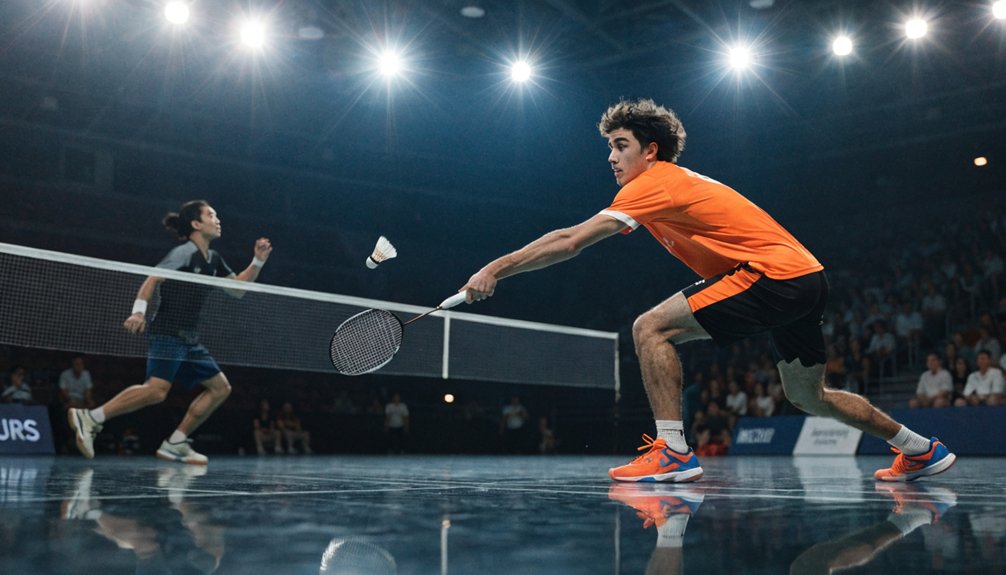
When the smash isn’t steep enough to pin you low, driving it back fast can turn defense into immediate pressure. You’ll need a compact backswing, a firm grip change, and a short punch through the shuttle. Meet it slightly in front, keep the racket face stable, and use the attacker’s pace instead of forcing your own. Read smash angles early so your preparation stays efficient and balanced. A racket with an Isometric head shape can also help by giving you a larger sweet spot for cleaner, more controlled defensive drives.
- Keep your elbow in front and your swing minimal.
- Contact the shuttle early for a flatter, quicker reply.
- Recover instantly after impact to cover the next ball.
Your shot placement should stay purposeful without becoming risky. Aim for a trajectory that stays low and penetrates the forecourt exchange zone. If your timing is clean, you’ll rush the attacker’s recovery and seize the initiative in the rally.
Place Your Return Away From the Attacker
A smart return doesn’t just come back low or deep—it travels away from the smasher’s recovery path. Your goal is shot placement that forces a second movement after landing. Because mental pressure often determines outcomes in tight badminton rallies, making the attacker move again can also disrupt focus and decision-making. If the attacker smashes from the forehand rear corner, guide your block or drive toward the opposite front court or hip-side midcourt. That angle disrupts rhythm and buys time for your strategic positioning.
| Smash Origin | Best Return Target | Tactical Effect |
|---|---|---|
| Forehand rear | Opposite forecourt | Forces diagonal chase |
| Backhand rear | Straight forecourt | Delays net follow-up |
| Center rear | Body-side midcourt | Creates hesitation |
You don’t need maximum pace; you need direction. Read where the smasher will recover, then send the shuttle where their next step becomes awkward, late, and physically inefficient under pressure.
Avoid Common Smash Defense Mistakes
Three defensive errors ruin more smash returns than lack of speed: standing too upright, swinging too big, and recovering too late. Lower your base, keep your racket in front, and use compact blocks instead of full cuts. That shorter motion lets you anticipate opponent contact earlier and improve reaction under pressure. Just as important, split-step before impact so your first move is balanced, not desperate.
- Stay low through the hips and knees, so your center of gravity supports quick lateral pushes.
- Shorten the racket path; absorb pace with the strings instead of forcing a counterhit.
- Recover immediately after contact, resetting to base so the next smash or follow-up net shot doesn’t trap you.
Using a proper backhand grip with the thumb pressing the 3rd bevel can improve control when blocking fast smashes on the backhand side.
When you remove these habits, your defense becomes calmer, earlier, and far more reliable in fast rallies consistently.
Frequently Asked Questions
How Can Doubles Partners Coordinate Against Repeated Smashes?
Coordinate like your lives depend on it: you’ll counter repeated smashes through constant partner communication, calling lanes early, and maintaining strategic positioning. You should stagger defense, rotate smoothly, and trust each other’s coverage to regain initiative.
What Exercises Improve Reaction Time for Smash Defense?
You’ll improve smash-defense reaction time with reaction drills, agility training, multi-shuttle feeds, split-step timing work, and wall rallies. Focus on visual cue recognition, explosive first steps, and consistent defensive posture; you’ll read attacks earlier.
Which Shuttle Speed Affects Smash Return Difficulty Most?
The fastest shuttle speed affects your smash return difficulty most, because smash dynamics compress your reaction window, reduce preparation time, and magnify angle changes. You’ll handle returns better by reading contact earlier and stabilizing your base.
How Should Footwork Change on Slippery Court Surfaces?
On slippery surfaces, you’ll shorten every step, lower your center massively, and plant wider than ever. Prioritize controlled glides, not lunges. Check slippery shoes, refine court positioning, and recover earlier so you won’t overcommit.
When Should Players Switch From Defense to Attack?
You should switch from defense to attack when you’ve forced a weak reply, regained balance, and created space. Trust your attack mindset, apply sharp timing strategies, and shift decisively once you’re controlling tempo and court positioning.