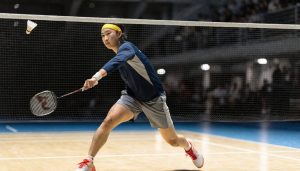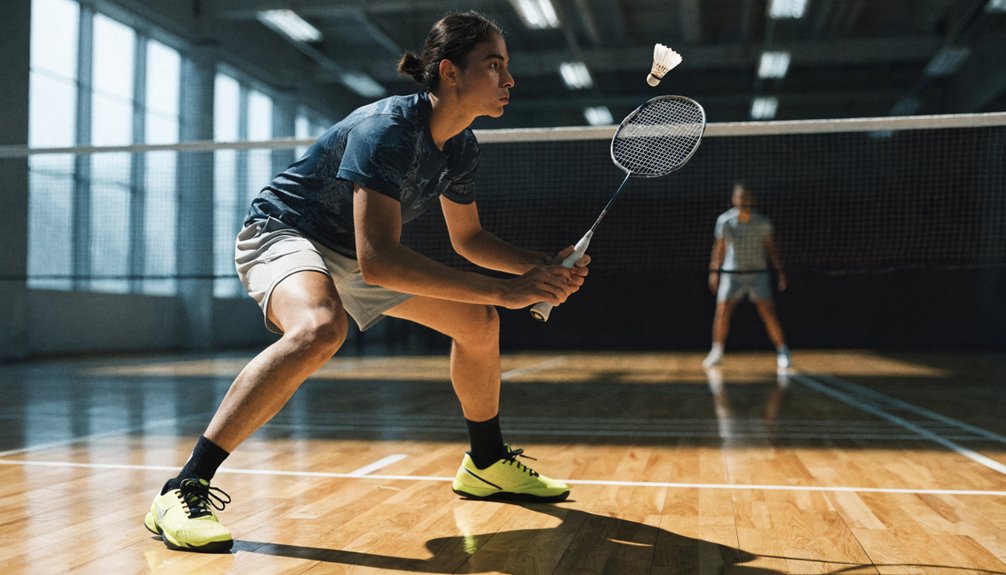
Move earlier, set your base sooner, and contact the shuttle cleaner if you want to cut unforced errors. You don’t need risk first; you need balance, timing, and smarter shot selection under pressure. When you’re late or off balance, safer clears and lifts usually keep you in the rally. Add a calmer breath on big points and a few consistency drills, and your error count can drop fast. The key shift starts with what you do before the shuttle arrives.
Key Takeaways
- Reset to a balanced base after every shot to improve recovery, court coverage, and control on the next contact.
- Hit the shuttle slightly in front at a comfortable height, using small adjustment steps to maintain clean timing.
- Choose safer, high-percentage shots when pressured, aiming away from lines to reduce risky mistakes.
- Use breathing and short mental cues on big points to stay relaxed, composed, and process-focused.
- Build consistency with repetition drills, increasing pace only after achieving multiple clean, controlled contacts in a row.
Fix Your Court Position Before Each Shot
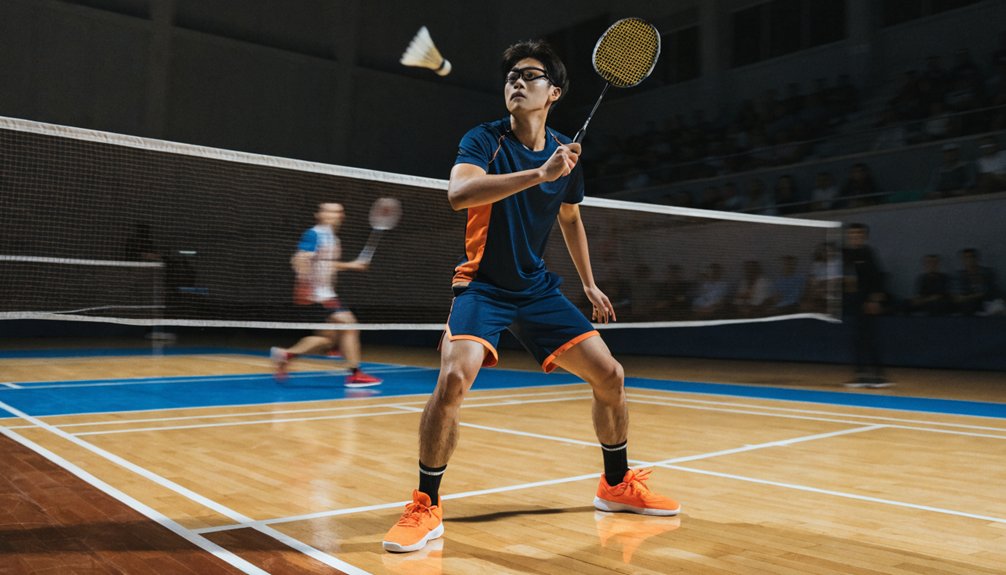
Reset your base before every shot, because your court position dictates how early you can see, reach, and control the next rally ball. If you admire a winner or recover lazily, you’ll invite pressure and force low-percentage replies. Build court awareness by tracking the shuttle, your opponent, and open space as you recover.
Return to a balanced, neutral spot that matches the previous shot’s quality and your opponent’s options. Strong footwork fundamentals help you arrive stable: small adjustment steps, split step readiness, and weight centered on the balls of your feet. After deep clears, recover slightly behind center; after tight net shots, hold a touch forward. Don’t memorize one base for every exchange. Read the rally, reset decisively, and you’ll cut rushed swings, stretching, and simple placement mistakes under pressure. Quick grip changes during recovery also help you meet the next shot with better control and fewer rushed errors.
Improve Timing to Reduce Badminton Errors
Good court position gives you the chance to arrive on time, but timing is what turns that chance into clean contact and fewer errors. You should focus on striking the shuttle at its ideal height, slightly in front of your body, so your racket face stays stable through impact. Small adjustment steps matter because they fine-tune spacing and prevent late swings. Using a light forehand grip like a handshake can also help keep the racket face stable and reduce wrist and arm strain during contact.
Build better timing techniques by syncing your split step with your opponent’s hit, then accelerating only after you read the shuttle’s path. That sequence improves balance, racket preparation, and contact quality. Shot anticipation also helps, since early cues from your opponent’s shoulders, grip, and swing speed let you prepare sooner. When you practice, prioritize rhythm over power. Clean timing gives you more control, tighter margins, and fewer routine mistakes overall.
Choose Safer Shots When You’re Under Pressure
When you’re under pressure, the smartest choice usually isn’t the winner attempt but the shot that restores margin and keeps you in the rally. If you’re late, off balance, or stretched, favor high clears, controlled lifts, or a neutral block instead of forcing a steep attack. Better shot selection reduces risk while buying time to recover your base.
Use tactical awareness to read your position, your opponent’s balance, and the available court space. Aim away from the lines, add height over the net, and choose targets that limit your opponent’s sharpest reply. A safer crosscourt lift or straight clear can reset the exchange and stop errors from snowballing. You don’t lose initiative by playing percentage badminton; you create another chance to attack on your own terms. Practicing shadow badminton can improve your recovery patterns and decision-making when rallies become rushed.
Manage Nerves on Big Points
Smart shot selection helps, but big points still test your composure as much as your technique. When the score tightens, you can’t let urgency speed up your swing or decision-making. Use simple breathing techniques between rallies: inhale deeply, exhale longer, and relax your grip pressure before serving or receiving. That resets muscle tension and steadies timing.


At the same time, recognizing mind games from an opponent can help you stay calm and avoid gifting errors under pressure. You should also use quick visualization exercises before key exchanges. Picture a high-percentage serve, a controlled return, or a clear lifted deep with margin. Keep your tactical objective narrow: move your opponent, protect the sidelines, and favor contact you can repeat under stress. If nerves rise, shorten your internal cues to one phrase, like “early racket” or “smooth tempo.” Staying process-focused keeps emotions from forcing rushed, low-quality shots on vital points.
Practice Drills That Build Consistency
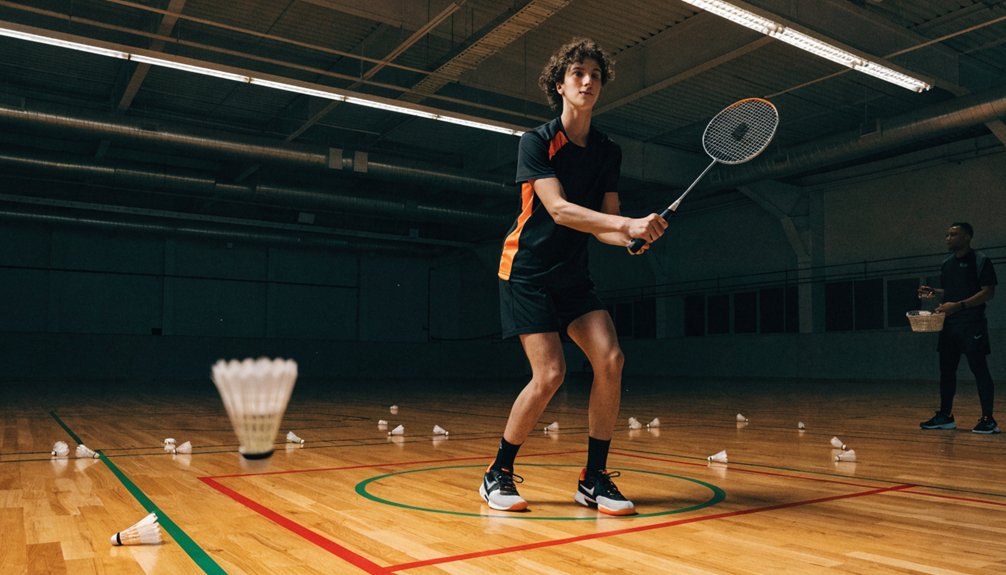
Build consistency with drills that repeat the same decision, contact point, and recovery pattern until they become automatic. You’ll reduce errors fastest when every rep has a purpose: stable base, early preparation, clean contact, balanced recovery. Use consistency exercises and footwork drills that pressure timing without changing technique. Choosing a racket with an isometric head can also support consistency by giving you a larger sweet spot for more forgiving contact.
| Drill | Image |
|---|---|
| Shadow six corners | You glide, plant, recover |
| Straight clear rally | Shuttle climbs, lands deep |
| Net spin repeats | Tape tumbles, fingers relax |
| Drive exchanges | Racket stays high, compact |
| Serve-return patterns | First three shots feel scripted |
Track sequences of ten clean reps before increasing pace. If quality drops, slow down, reset spacing, and rebuild rhythm. That’s how you train reliability under match speed and pressure. Then your choices stay simple, repeatable, and composed.
Frequently Asked Questions
What Racket String Tension Best Helps Reduce Unforced Errors?
Use a medium string tension in the ideal range of 22–26 pounds to reduce unforced errors. You’ll get better shuttle control, a larger sweet spot, and more forgiving response while refining technique and consistency.
How Does Shuttlecock Speed Affect Error Rates in Different Temperatures?
Faster shuttlecocks in heat increase long-hit errors, while colder temperatures slow flight and can cause underpowered shots. You’ll manage error rates better by adjusting timing and swing speed to match shuttlecock aerodynamics and temperature effects.
Can Footwear Choice Influence Balance and Mistake Frequency on Court?
Yes—your shoes can be a quiet game-changer: better footwear stability and court traction help you stay centered, brake cleanly, and recover faster. If they’re lacking, you’ll likely see more balance lapses and a few extra mistakes.
Do Nutrition and Hydration Impact Concentration During Long Badminton Matches?
Yes, they do; you’ll sustain brain function and energy levels better with steady carbohydrates, electrolytes, and fluids. If you underfuel or dehydrate, your reaction time, decision-making, and shot precision decline, so plan intake tactically.
How Often Should Beginners Replace Grips to Maintain Control?
You should replace beginner grips every 2–4 weeks, or sooner if they’re slick, compressed, or uneven. Prioritize grip maintenance by monitoring tack and cushioning. Testing different grip types helps you sustain control, confidence, and cleaner stroke execution.