
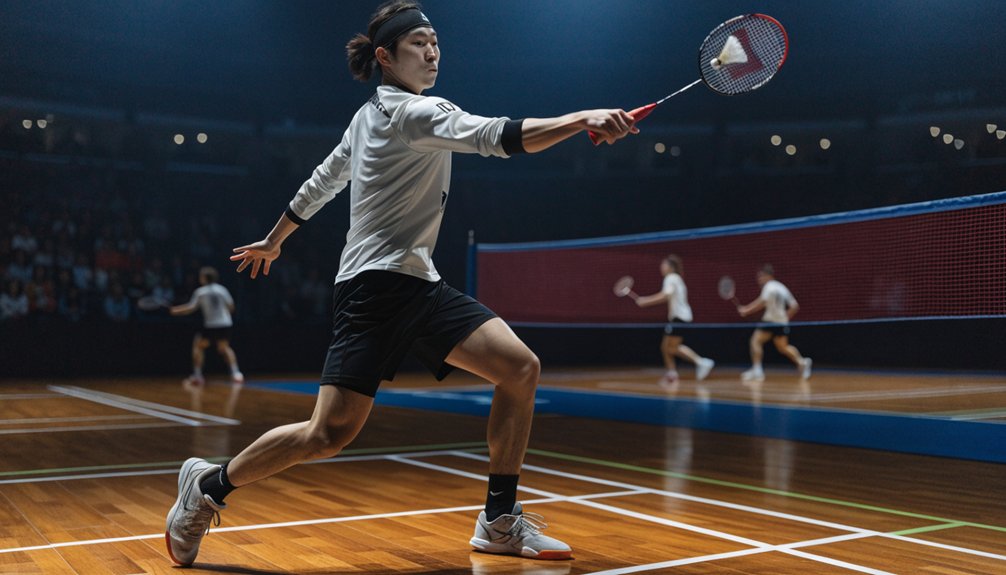
If you want stronger badminton drive shots, you need more than quick hands. You need a compact swing, early contact, and a racket face that stays stable through impact. Small changes in grip, stance, and timing can turn a rushed exchange into controlled pressure. Once you understand what makes a drive flat, fast, and accurate, the next adjustments become much easier to apply.
Key Takeaways
- Use a compact swing and strike the shuttle flat just above net height for faster, more pressuring drives.
- Hold a relaxed forehand or backhand grip, then squeeze thumb and index finger only at impact.
- Stay in a balanced athletic stance with bent knees, weight forward, and contact the shuttle early in front.
- Vary drive direction and height while keeping the trajectory flat to disrupt your opponent’s rhythm and recovery.
- Practice repetitive flat-drive drills with footwork and increasing pace to build consistency, timing, and reaction speed.
Know What Makes a Good Drive
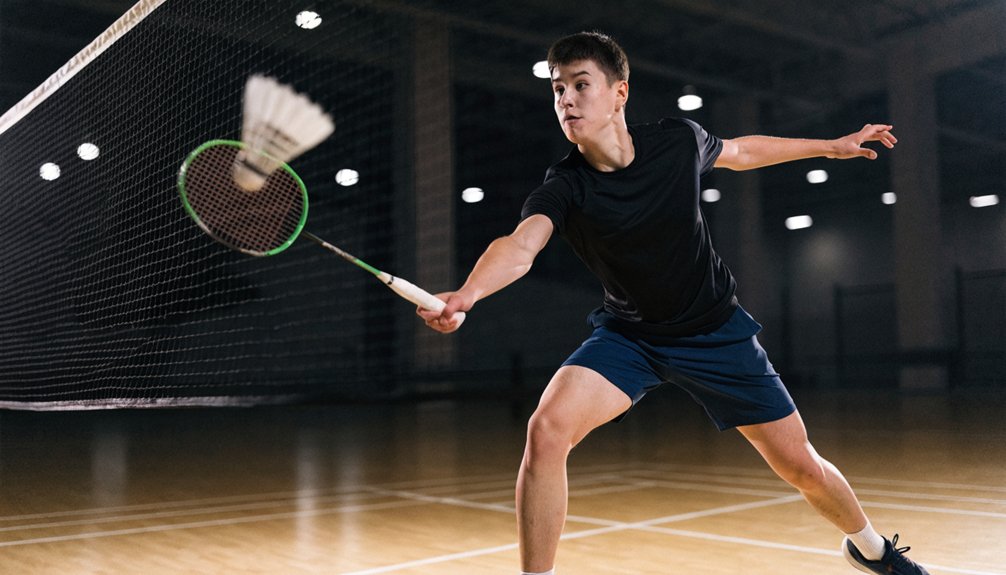
Precision defines a good badminton drive: you want a flat, fast shot that travels just above net height, reaches your opponent quickly, and limits their time to react. To produce that result, focus on a compact swing, clean shuttle contact in front of your body, and a trajectory that stays level rather than lifting.
You should also judge quality by pressure created. Strong drive shot techniques force weak replies, disrupt rhythm, and open attacking space. Use effective positioning so you’re balanced, slightly forward, and ready for the next exchange immediately after contact. If your drive lands deep with pace and remains controlled, you’ve executed well. Practice sending repeated drives crosscourt and straight while maintaining identical preparation. That consistency makes your shot harder to read and much more reliable under match pressure and stress. Consistent contact on the Sweet Spot helps keep your drives fast, accurate, and controlled.
Use the Right Grip for Drive Shots
To hit clean, fast drives, you need a grip that supports both stability and quick racket-face adjustments. Start with solid forehand grip basics so you can keep the shuttle flat and generate efficient forward power. Then refine your backhand grip control, because it lets you react faster and stay precise during rapid exchanges. For many players, a light handshake grip on the racquet helps maintain control while reducing wrist and arm strain during drive rallies.
Forehand Grip Basics
A solid forehand grip gives you the fastest path to a clean, flat drive. Place your hand as if you’re shaking hands with the racket, with the V between thumb and index finger resting along the top bevel. Keep your fingers relaxed, not squeezed, so you can generate speed through quick finger power and a compact swing.
For effective grip adjustments, slide slightly toward a basic forehand hold without turning the racket face too open. Your thumb should stay wrapped lightly around the handle, while the index finger separates a little for control and leverage. These details improve racket stability at contact and help you keep drives low and straight. One of the key forehand benefits is easier transfer of power from your fingers, wrist, and forearm into the shuttle.
Backhand Grip Control
When you switch to the backhand side, use a thumb-supported grip so the racket face stays stable and the shuttle leaves flat. Place your thumb along the wider bevel, not wrapped around the handle, and relax your fingers until impact. That setup lets you guide fast exchanges without opening the face too much.
Keep your wrist compact and drive with finger pressure, especially the thumb and index finger working together. This gives you cleaner timing, sharper backhand angles, and better control under pressure. If your grip is too tight, you’ll lose racket head speed and the shuttle will sit up. Make small grip adjustments between neutral and backhand positions to improve shot variation without telegraphing direction. With practice, you’ll feel the shuttle earlier and hit flatter, faster, more accurately consistently.


Set Your Stance for Faster Drives
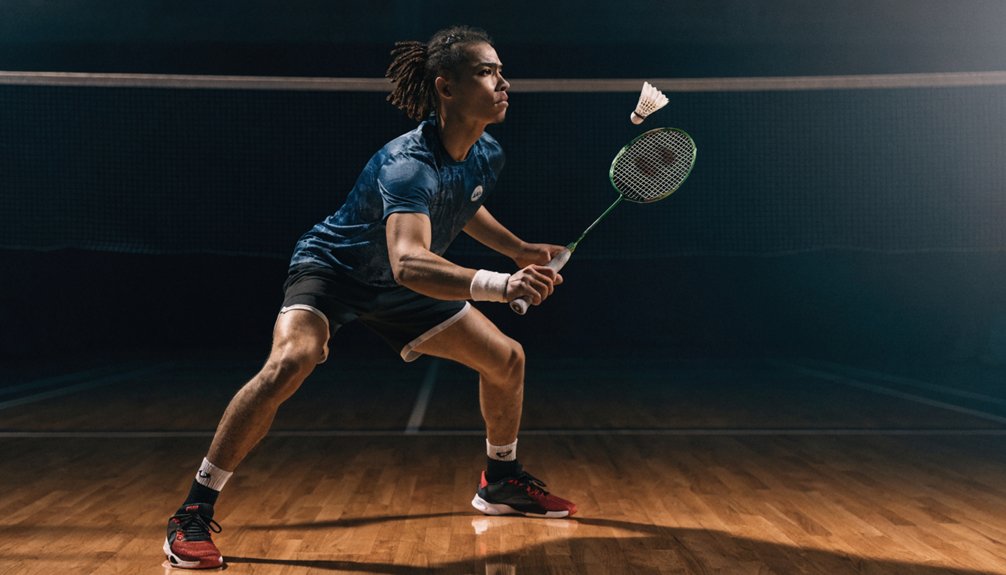
Start with a balanced, athletic stance that lets you drive the shuttle early and recover fast for the next shot. Keep your knees flexed, hips lowered, and chest slightly forward so you stay loaded and reactive. Your balance weight should sit on the balls of your feet, not your heels, allowing instant push-off in either direction.
Refine your foot positioning by setting one foot slightly ahead, with toes angled naturally for lateral movement. Keep your base just wider than shoulder width so you can stabilize without locking your legs. Hold your racket side relaxed but ready, and keep your non-racket arm quiet for stability. As rallies speed up, make small adjustment steps instead of large reaches. That compact stance helps you stay controlled, fast, and efficient through every drive exchange. Using the right grip size also supports quicker racket control and cleaner drive contact from this ready position.
Meet the Shuttle Earlier and in Front
You’ll generate stronger, flatter drives when you take the shuttle at an early contact point instead of letting it drop beside you. Step forward quickly with balanced footwork so you can position your body behind the shot and keep the racket path compact. Strike in front of your body to improve timing, control, and pace on every drive. Just as mental focus matters in high-pressure badminton rallies, meeting the shuttle early helps you stay composed and take time away from your opponent.
Early Contact Point
Because drive exchanges happen fast, taking the shuttle earlier and slightly in front of your body is one of the simplest ways to gain control. You’ll keep the rally flatter, reduce late adjustments, and send the shuttle back before your opponent settles. Focus on presenting the racket head early so your contact angle stays stable instead of opening at the last instant.
When you meet the shuttle in front, your stroke becomes shorter, cleaner, and more repeatable. That improves your timing rhythm, especially during fast, consecutive drives. Keep your elbow comfortably away from your torso, your wrist firm but not rigid, and your eyes fixed on the shuttle cork. Aim to strike at peak reach without overextending. With practice, earlier contact will make your drives sharper, faster, and far more consistent under pressure.
Step Forward Quickly
Drive your base forward the moment you read a flat reply, using a compact first step to close space before the shuttle drops into an awkward contact zone. That quick advance keeps your posture balanced and your options open. Stay light on the balls of your feet, let your split step load both legs, then push decisively with minimal backswing in your movement.
Use efficient footwork techniques: one sharp adjustment step, then a small chasse or lunge if needed. Keep your chest stable, racket leg ready, and non-racket arm quiet so your body doesn’t over-rotate. The goal is simple—arrive sooner, with less reaching. As your reaction speed improves, you’ll intercept drives with cleaner timing, better balance, and more control, while recovering faster for the next exchange under sustained pressure.
Strike In Front
When you meet the shuttle slightly in front of your body, the drive becomes quicker, flatter, and easier to direct with control. You’ll cut reaction time and improve strike accuracy because the racket face stays stable through contact. Keep your elbow relaxed, lead with the racket head, and contact the shuttle before it drifts beside you. That timing supports an aggressive drive strategy and prevents late, lifting replies.
| Position | Result | Adjustment |
|---|---|---|
| In front | Flat pace | Hold line |
| Beside body | Late contact | Step earlier |
| Behind body | Weak lift | Recover faster |
Aim to contact at waist to chest height whenever possible. If you’re reaching across or trailing the shuttle, reset your feet sooner. Small timing gains here create cleaner interceptions and stronger pressure.
Shorten Your Swing for Flatter Drives
To keep your drives flat and fast, shorten the swing so the racket travels only as far as needed to accelerate through the shuttle. A compact action improves timing, reduces recovery delay, and helps you control swing length and shot angle under pressure. Instead of drawing the racket back, set it early and move directly forward. A racket with an isometric head can also help by offering a larger sweet spot on quick drive exchanges.
- Keep your elbow slightly in front of your body to limit unnecessary backswing.
- Use a brief forearm rotation to guide the racket face squarely through contact.
- Stop the follow-through around your target line so the shuttle doesn’t lift.
- Reset the racket quickly after contact to stay ready for the next exchange.
If your drives keep rising, your swing is probably too long. Trim the motion, keep the racket path efficient, and you’ll produce cleaner, flatter rallies.
Add Power Without Losing Control
To add power without sacrificing accuracy, you need to balance grip pressure so the racket stays stable without becoming rigid. You’ll also generate cleaner pace by keeping your swing compact, which helps you transfer force efficiently through the shuttle. When you match that mechanics with precise timing, you can hit stronger drives while keeping them flat and controlled. A racket with a Dual Optimum Frame can also help by improving stability and maximizing forehand and backhand shot effectiveness during fast drive exchanges.
Grip Pressure Balance
Although a drive shot needs speed, squeezing the handle too hard from start to finish usually slows your racket head and dulls your touch. Instead, manage grip tension progressively: stay relaxed during preparation, then tighten briefly at contact. This lets you transfer force efficiently while keeping the shuttle low and accurate. Your hand positioning also matters; hold the handle in your fingers, not buried deep in your palm, so you can adjust pressure quickly.
- Keep your fingers relaxed before contact for faster racket acceleration.
- Squeeze with thumb and index finger at impact to sharpen control.
- Release excess pressure immediately after contact to stay responsive.
- Check that your wrist and forearm remain loose, not rigid.
When you balance pressure correctly, you’ll feel cleaner timing, steadier direction, and more reliable drives under pressure.
Compact Swing Mechanics
Once your grip pressure is timed well, the next gain comes from shortening the swing so the racket travels fast without losing directional control. Keep the racket head in front of your body, use a brief backswing, and drive through with a compact forearm action. This improves swing efficiency because less motion means less recovery time and fewer alignment errors.
You should also connect the stroke to controlled body rotation. Turn your shoulders and hips slightly, then stop the rotation cleanly as you strike, so energy transfers forward instead of pulling the racket off line. Keep your elbow relaxed but stable, and let the wrist support the final acceleration rather than dominate it. Practice this smaller action until powerful contact feels repeatable under pressure and in faster rallies consistently.
Timing For Precision
When your swing is compact, timing becomes the factor that lets you add pace without sacrificing accuracy. You shouldn’t rush contact; instead, meet the shuttle slightly in front, with the racket face stable and your forearm snapping only at impact. That’s where clean power comes from.
- Track the shuttle early so your preparation matches its speed and height.
- Use timing drills to rehearse contact at different tempos and feeding angles.
- Add rhythm exercises so your split step, shoulder turn, and strike stay coordinated.
- Recover immediately after impact, because precise timing also depends on balanced positioning.
If you hit late, control drops and drives float. If you hit too early, you jam your swing. Train for repeatable contact, and you’ll generate faster, flatter drives with confidence under pressure consistently.
Place Your Drive Shots With Purpose
Every drive should have a target, because pace alone won’t pressure a skilled opponent. Focus on precise shot placement so your drives force weak contact, rushed preparation, or awkward footwork. Aim at target areas like your opponent’s racket hip, body line, or the space between partners in doubles. These locations reduce their leverage and limit clean counterattacks.
You should also vary height and direction without sacrificing flat trajectory. Drive straight to pin an opponent, then send the next ball crosscourt to expose movement gaps. This supports both defensive strategies and offensive tactics, depending on the situation. Keep your racket face stable through contact, and align your shoulders with the intended lane. When you practice, assign a clear destination before each swing, so your drives become deliberate, repeatable, and harder to read. Using a racket with suitable string tension can also help you balance control and pace when placing drive shots accurately.
Use Drives More Effectively in Rallies
Good placement gives your drive a purpose; rally awareness determines whether that purpose actually pays off. You should use drives to change tempo, rush recovery, and force flatter exchanges that suit your strengths. Effective drive shot strategies depend on reading your opponent’s balance, racket height, and court coverage before contact. If they’re late or upright, keep the shuttle flat and fast. If they’re scrambling forward, drive behind them and recover into strong rally positioning. Using a racket with an Isometric head shape can also help by giving you a larger sweet spot for flatter, more consistent drives.
- Attack open channels, not just empty space.
- Drive early to steal time from your opponent.
- Recover immediately after contact to protect counters.
- Link each drive to your next movement decision.
When you treat every drive as part of a sequence, you’ll control rallies better and create pressure without needing reckless pace alone.
Fix Common Drive Shot Mistakes
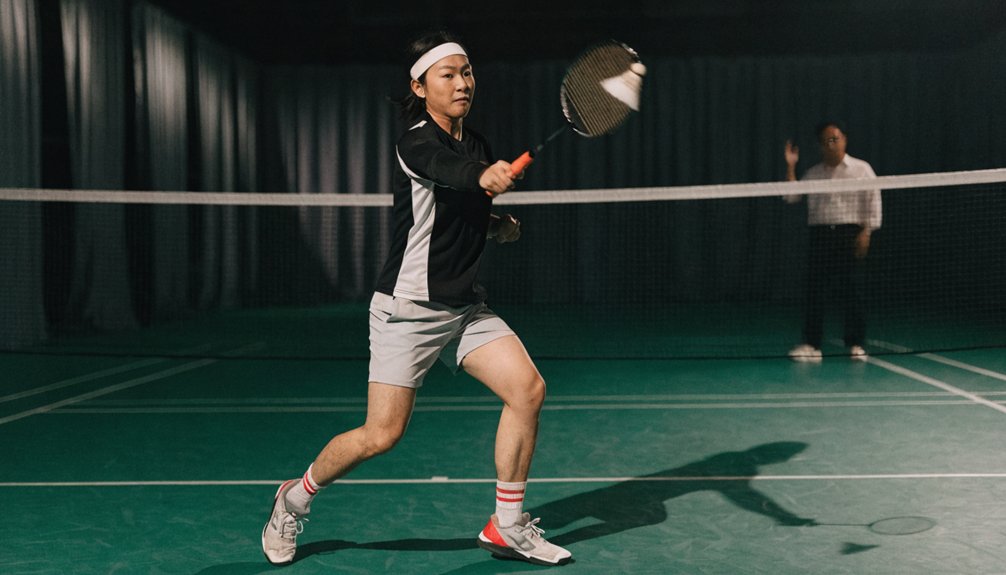
Although drive shots look simple, most errors come from timing, racket preparation, and contact point rather than power. If your shuttle sits up, you’re probably contacting it too late or with an open racket face. Keep the racket head up early, shorten your backswing, and meet the shuttle slightly in front of your body. That improves control and keeps the trajectory flat.
Another of the common errors is overhitting. You don’t need a full arm swing; use compact forearm rotation and finger power instead. If your drives drift wide, check your stance and shoulder alignment, because poor body positioning changes the racket path. Reliable drive shot techniques also depend on recovery: after contact, return the racket to a neutral ready position quickly. Small adjustments here produce cleaner, faster, more consistent drives under pressure. Using the correct basic grips also helps you adjust quickly during fast exchanges and maintain better racket control.
Practice Drive Shots With Drills
Once you’ve cleaned up timing, racket preparation, and contact point, the next step is to groove those mechanics with targeted drive drills. Structured practice routines help you automate technique under pressure while sharpening reaction time and control. Use partner exercises to exchange flat drives crosscourt and straight, then increase pace gradually. Add footwork drills so you’re striking from balanced positions, not reaching late. For faster exchanges, a head light racket can improve maneuverability and help you react more quickly during drive practice.
- Use targeted drills to repeat one pattern until contact becomes automatic.
- Build consistency training with fixed rally counts before adding speed.
- Include shot variation so you can change direction without losing racket-head stability.
- Do rhythm practice with tempo changes to improve reaction time and recovery.
If you train this way, your drives won’t just look cleaner—they’ll stay fast, accurate, and reliable in matches under fatigue too.
Frequently Asked Questions
What Racket String Tension Is Best for Badminton Drive Shots?
You’ll get the best drive shots with medium-high string tension, around 24–28 lbs; coincidentally, that’s where racket dynamics often feel crispest. If you’re developing control, start lower, then increase string tension as your timing improves.
How Do Doubles and Singles Drive Shots Differ Strategically?
In doubles, you’ll prioritize doubles positioning, driving flat to pressure opponents and create interceptions. In singles, you’ll rely on singles timing, using drives more selectively to disrupt rhythm, exploit space, and recover efficiently.
Can Shoe Grip Affect the Quality of Your Drive Shots?
Yes, your shoe grip can directly improve drive-shot quality by stabilizing your base during rapid exchanges. You’ll get better transfer if shoe material matches the court surface, helping you push off cleanly and recover faster.
How Often Should Beginners Train Drive Shots Each Week?
Like tuning an engine, you should train drive shots three to four times weekly. Keep training frequency consistent, using focused practice drills for 20–30 minutes. You’ll build timing, control, and endurance without overloading technique development.
Which Muscles Matter Most for Improving Badminton Drive Shot Speed?
You’ll rely most on your forearm flexors, wrist extensors, deltoids, rotator cuff, and lats for drive shot speed. Build core strength and shoulder stability too—they improve force transfer, control, and rapid racket acceleration considerably.
