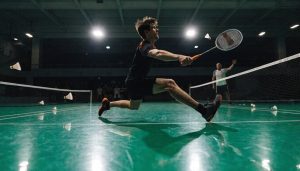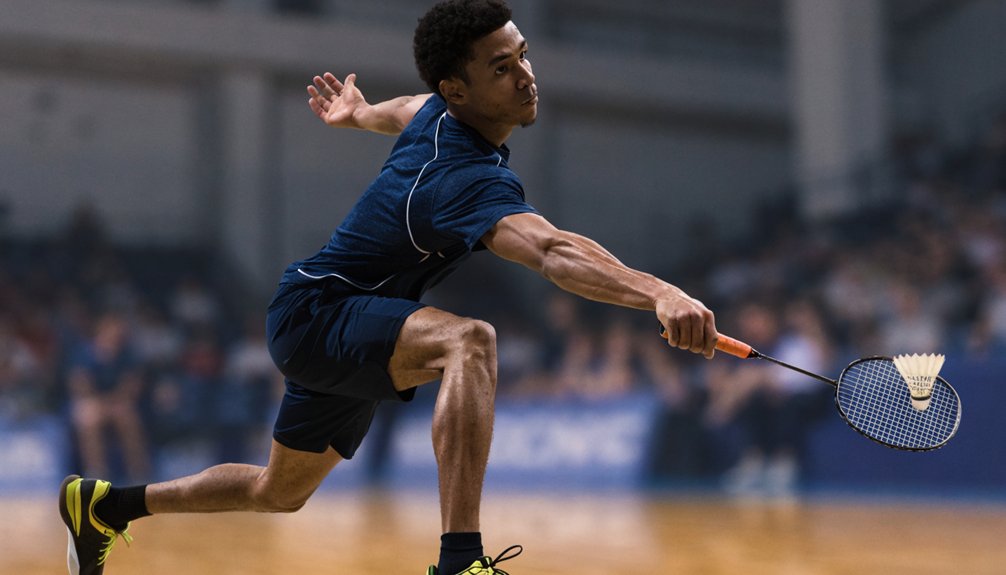
If your timing is late, even solid technique won’t hold up under pressure. You need to contact the shuttle earlier, usually in front of your body and at the highest practical point, while keeping your swing compact and balanced. That starts with seeing the shuttle sooner and moving at the right moment, not faster by default. Small changes in preparation and footwork can sharpen every shot, and the difference is often clearer than you’d expect.
Key Takeaways
- Split-step as your opponent hits, so your first movement starts early and balanced.
- Meet the shuttle slightly in front of your body at the highest useful contact point.
- Track the cork early and judge the first meter of flight to improve anticipation.
- Arrive behind the shuttle with compact footwork, stable posture, and relaxed racket preparation.
- Recover immediately after contact with small balanced steps to stay ready for the next shot.
What Good Timing and Contact Look Like
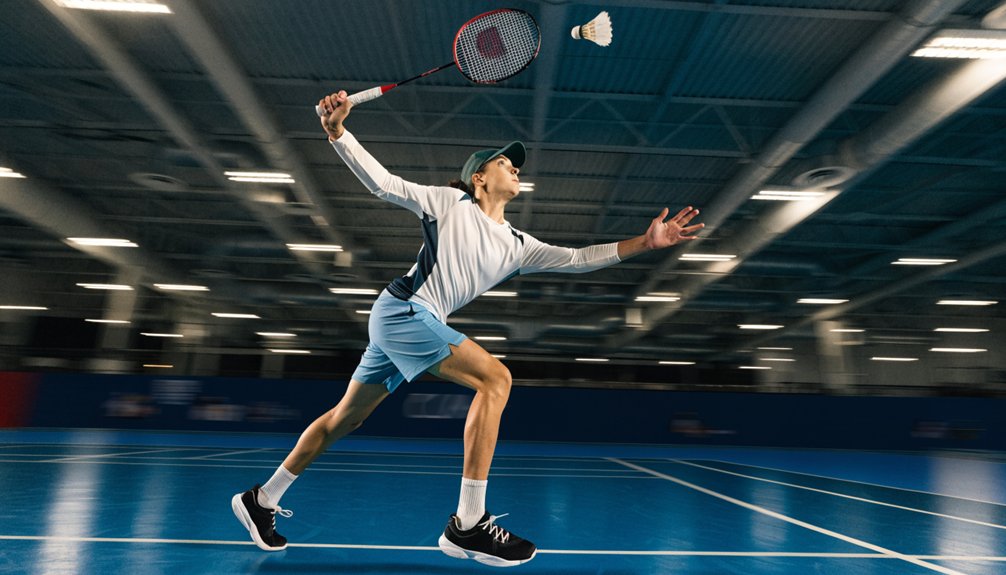
Although timing feels abstract at first, good badminton timing is usually easy to recognize: you reach the shuttle in balance, strike it at the highest useful contact point, and meet it slightly in front of your body so the racket can accelerate cleanly through the shot.
You’ll also notice a quiet, efficient swing: no rushing, no deceleration, and no last-second wrist rescue. Your steps finish before the hit, so your base is stable and your upper body can rotate smoothly. Clean contact sounds crisp and feels centered on the strings, with the shuttle leaving predictably. Hitting near the Sweet Spot also helps produce more powerful and accurate contact when your timing is right. That repeatability is the real marker of contact improvement. Use timing drills that emphasize split step, preparation speed, and recovery, and you’ll start recognizing when your body and racket arrive together under pressure in rallies consistently.
Hit the Shuttle in Front
You’ll improve timing faster when you contact the shuttle slightly in front of your body instead of letting it drift beside or behind you. This early contact position gives you better leverage, cleaner racket acceleration, and more control over direction. As you move, focus on meeting the shuttle ahead of your centerline so your swing stays compact and precise. Using the right basic grips also helps you reach this contact point consistently by keeping the racket stable and adaptable during fast exchanges.
Early Contact Position
A key timing principle in badminton is taking the shuttle slightly in front of your body, not beside or behind it. This early contact position lets you transfer force efficiently, keep the racket path compact, and control direction with less adjustment. You’ll achieve it more consistently through early preparation and sharper anticipation techniques.
- Set your base early so your first step creates space before the shuttle drops.
- Keep your non-racket side balanced; it stabilizes rotation and preserves contact alignment.
- Raise the racket head sooner, so your forearm and wrist can accelerate cleanly at impact.
When you contact early, your stroke stays biomechanically strong, your recovery improves, and your margin for precise placement increases. Train this until it becomes automatic under pressure in fast exchanges.
Meet Shuttle Ahead
Nothing improves stroke timing faster than learning to meet the shuttle in front of your body’s centerline, where leverage, vision, and racket control are strongest. When contact drifts beside or behind you, the swing path lengthens, power leaks, and directional accuracy drops. You should move your feet early so your hitting shoulder stays loaded and the racket face arrives square at impact. Good shuttle placement from a feeder helps you groove this position repeatedly without compensating late. Use timing drills that force split-step, first move, and contact sequencing under pressure. Focus on striking slightly ahead of your lead hip on drives and net shots, and farther forward on overheads. If you consistently take the shuttle early and in front, you’ll create cleaner mechanics, sharper angles, and faster recovery for the next shot.
Read the Badminton Shuttle Earlier
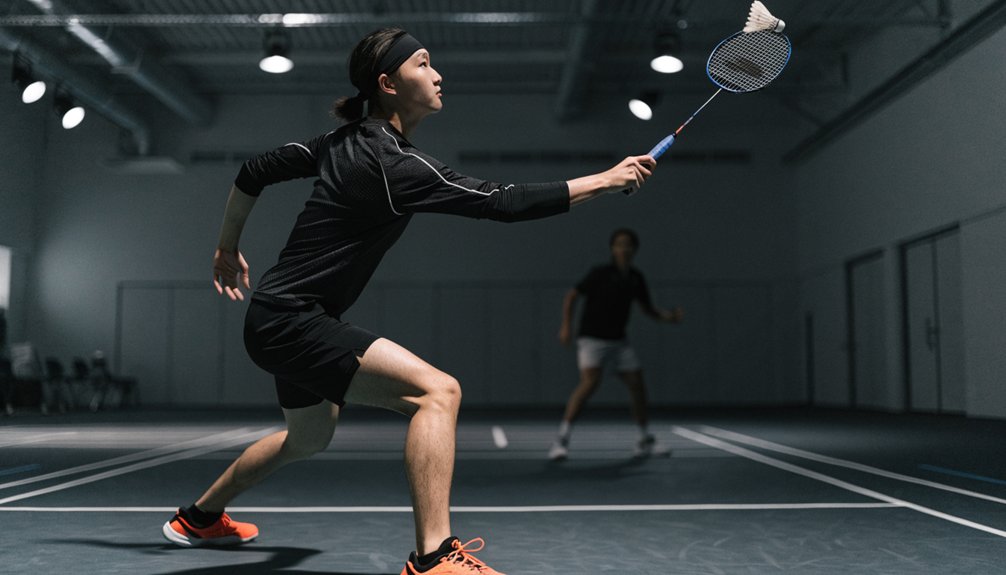
To improve your timing, you need to pick up shuttle cues as early as possible, especially its initial speed, angle, and trajectory off the strings. You should also read your opponent’s stroke by tracking their racket path, body position, and contact point before the shuttle fully develops. When you recognize these signals sooner, you’ll move earlier, prepare faster, and meet the shuttle with better timing. Staying composed against mind games also helps you keep your attention on these early cues instead of getting distracted by an opponent’s behavior.


Early Shuttle Cues
Because timing starts before you move, reading the shuttle early lets you match your footwork and racket preparation to its true path instead of reacting late. Your job is to pick up visual cues immediately after contact, then adjust before the shuttle drops into a rushed strike window.
- Track the cork first, not the feathers, because the cork reveals direction sooner and stabilizes your perception.
- Judge shuttle speed from the first meter of flight; that tells you whether to chasse, cross-step, or hold.
- Notice trajectory height and spin together, since both refine your expected contact point and swing tempo.
When you train these cues deliberately, you’ll move with less hesitation, arrive balanced, and create cleaner interception timing under pressure during fast rallies and slower exchanges alike.
Opponent Stroke Reading
While the shuttle’s first flight gives you confirmation, the earlier advantage comes from reading your opponent’s stroke mechanics before contact. Watch shoulder rotation, racket preparation height, grip changes, elbow lead, and wrist loading. These cues narrow likely shot options before impact, buying you vital milliseconds for movement and balance adjustment.
You should also map opponent tendencies across similar setups. Does a late forehand action usually become a straight drop, punch clear, or sliced crosscourt? Track how posture, contact spacing, and swing tempo relate to stroke variation. Better reading doesn’t mean guessing wildly; it means updating probabilities from observable mechanics. With practice, you’ll recognize repeatable patterns sooner, split-step with more conviction, and reach an earlier, cleaner contact point under pressure during fast rallies too.
Start Moving at the Right Time
Although quick reactions matter, timing your first move is what lets you reach the shuttle in balance instead of rushing from a dead stop. You should begin as your opponent commits, not after the shuttle has clearly traveled. That small difference sharpens contact quality and preserves recovery options. Following top-level events on the BWF World Tour can also help you study how elite players time their first movement under different speeds and patterns.
- Watch the hit moment: key your split-step and first push to racket-shuttle contact, so you move on reliable information.
- Train anticipation windows: use timing drills and reaction exercises that vary pace, disguise, and direction, forcing you to initiate neither early nor late.
- Feel controlled urgency: your first movement should be decisive but measured, keeping your center stable and your upper body quiet.
When you start on time, you don’t chase rallies; you arrive prepared to strike cleanly under pressure consistently.
Use Footwork to Reach the Shuttle Early
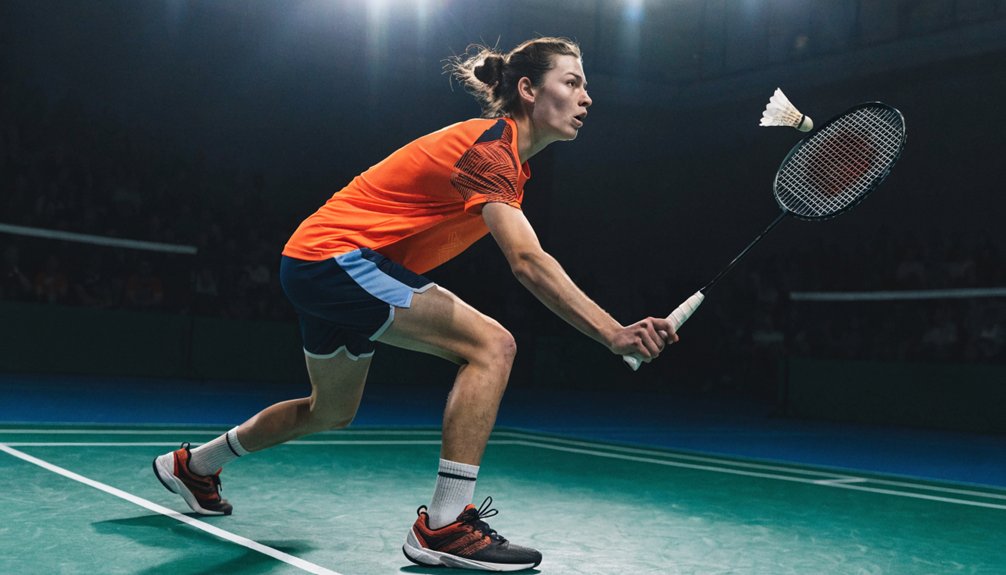
Once your first move is timed well, efficient footwork lets you cover the court without wasting steps or losing balance. You should aim to arrive before shuttle acceleration peaks, so your swing stays compact and your contact point stays high. Practice footwork techniques that link chasse steps, crossovers, and recovery patterns with exact racket preparation. Pair this with a racket set to suitable string tension so you can better balance power and control at contact.
| Situation | Movement | Image |
|---|---|---|
| Deep clear | Crossover | You chase the rear tramline fast |
| Tight net shot | Lunge step | You intercept just above tape |
| Midcourt drive | Chasse | You glide sideways into contact |
Early arrival gives you options. You can hold, push, or cut the shuttle because you’re set sooner. Train with shadow patterns first, then add feeds that vary depth and angle. That progression sharpens timing under real pressure.
Keep Your Balance on Every Shot
To improve your timing, you need a stable base before you swing, with your weight centered and your stance controlled. If you’re balanced at contact, you’ll strike the shuttle more cleanly and adjust faster to small changes in its path. Using a racket with even balance can also help you combine control and precision while staying quick through fast exchanges. Just as important, you can’t stop after the hit—you need to recover immediately so you’re ready for the next shot.
Stable Base First
Building a stable base starts with controlling your center of mass so each shot is supported by balanced foot pressure, not a last-second recovery step. You need a stable stance before the shuttle arrives, with knees flexed, hips loaded, and your chest quiet. That alignment gives you balanced posture and cleaner racket preparation under pressure.
- Keep your feet just wider than shoulder width, so lateral adjustments stay short and efficient.
- Distribute pressure through the balls of both feet, letting you react without rocking backward.
- Match trunk angle to shuttle height; when your torso stacks correctly, timing becomes easier and contact feels earlier.
If your base is organized, you won’t rush the swing. You’ll meet the shuttle from underneath control, with more precision, less drift, and stronger directional intent.
Recover After Contact
Recover immediately after contact, because the shot isn’t finished when the shuttle leaves your strings. Your balance in the next split step depends on how well you decelerate the previous movement. Land softly, keep your center of mass over your base, and let your racket leg absorb force without drifting sideways. After overheads, re-square your hips and shoulders before pushing back to neutral. After net shots, recover with compact steps instead of crossing and reaching.
Good recovery techniques sharpen both timing and court coverage. If you stay tall through the chest and relaxed through the grip, you’ll reset faster for the next interception. Use timing drills that link strike, landing, and first recovery step into one repeatable sequence. Clean contact matters, but controlled recovery lets you reproduce it under pressure.
Improve Timing on Overhead Badminton Shots
Because overhead timing depends on meeting the shuttle at the ideal contact point, your preparation has to start early with a quick split step, immediate shoulder turn, and efficient movement behind the shuttle. You can’t wait for the shuttle to drop; you must arrive balanced, load your rear leg, and coordinate racket preparation with your final adjustment steps.
- Use overhead drills that groove chasse steps, crossover recovery, and early racket lift.
- Add timing exercises with varied feeds so you learn to accelerate only when the shuttle enters your strike window.
- Focus on contacting at full reach with a stable trunk, relaxed grip, and sharp forearm rotation.
A racket with a Dual Optimum Frame can also support cleaner overhead timing by improving stability and helping both forehand and backhand shots feel more effective at contact.
When you train this sequence consistently, your clears, drops, and smashes become cleaner, earlier, and far more repeatable under pressure in matches.
Fix Your Contact Point on Net Shots
When your contact point on net shots drifts too low or too close to your body, control disappears and the shuttle sits up. You need to meet the shuttle slightly in front of your lead foot, with your racket head above your hand and your elbow relaxed. That position lets you brush cleanly and keep the shuttle tumbling.
Focus on reaching early so you don’t compensate with a late poke. Small foot adjustments matter because they determine spacing and contact angle. If you’re cramped, your strings face upward and the shuttle lifts. If you’re too far away, you lose touch and slice inconsistently. Using a light forehand grip can also reduce wrist and arm strain while helping you control delicate net exchanges. Among effective net shot techniques, the priority is stable posture, soft fingers, and a consistent strike point. Hold your balance through contact, and you’ll create tighter, lower net replies under pressure consistently.
Practice Timing With Easy Badminton Drills
Start with simple, repeatable drills that let you feel the shuttle at the right moment instead of rushing the swing. You’ll build cleaner interception habits when each feed is controlled, slow enough to read, and consistent enough to repeat precisely. Focus on compact preparation, steady split-step rhythm, and striking at a fixed height. A racket with an isometric head can also make clean contact easier by providing a larger sweet spot for more consistent timing.
- Self-drop and tap: Drop the shuttle, tap upward, and meet it early every time.
- Partner hand-feed drill: Ask for gentle feeds to one spot, then vary pace slightly.
- Shadow swing with count: Move, pause on count, then accelerate through contact.
These timing techniques sharpen perception without overload. As you improve, add drill variations by changing feed speed, distance, or recovery steps. Keep repetitions short, measurable, and technically exact so your timing transfers smoothly into rallies.
Avoid Common Badminton Timing Mistakes
Once those drills feel consistent, the next step is spotting the habits that throw your contact point off under pressure. The most common mistake is waiting on the shuttle instead of moving early, which forces late swings and cramped technique. You also lose precision when your split step is mistimed, your racket preparation starts too low, or your eyes leave the shuttle before impact.
To correct this, use timing drills that link your split step to your opponent’s hit, then rehearse compact preparation before every feed. Add contact exercises that train you to strike slightly in front of your body at full reach. If you’re frequently off-balance, check your recovery after each shot. Cleaner footwork, earlier preparation, and stable posture will restore reliable, repeatable timing fast. Practicing under service rules pressure can also improve timing by forcing earlier preparation and more disciplined court positioning.
Frequently Asked Questions
Can Racket String Tension Affect Badminton Timing and Contact Point?
Yes, racket string tension can affect your timing and contact point; higher tension demands cleaner, earlier strikes, while lower tension adds forgiveness. You’ll also notice racket stiffness and string gauge subtly influence shuttle response and control.
How Long Does It Take to Noticeably Improve Badminton Timing?
You’ll usually notice better badminton timing within 2–6 weeks; like clockwork, consistent practicing drills and structured training routines sharpen anticipation, footwork, and contact precision. If you train purposefully, you’ll improve faster and more reliably.
Does Doubles Require Different Timing Than Singles in Badminton?
Yes, you’ll need slightly different timing in doubles than singles, because rallies are faster. You must adjust contact preparation, doubles strategy, and court positioning sooner, while staying compact, decisive, and synchronized with your partner.
Can Poor Eyesight Make Badminton Timing Harder to Improve?
Yes—if that theory holds, poor eyesight can hinder timing improvement because your visual perception and eye coordination track shuttle speed, depth, and contact cues less accurately; but with correction and targeted drills, you can still progress.
What Warm-Up Exercises Help Timing Before a Badminton Match?
You’ll benefit most from dynamic stretches, shadow swings, and agility drills before playing. They prime joint mobility, sharpen footwork rhythm, and improve racket preparation. Add split-step rehearsals and light rally exchanges to calibrate timing precisely.