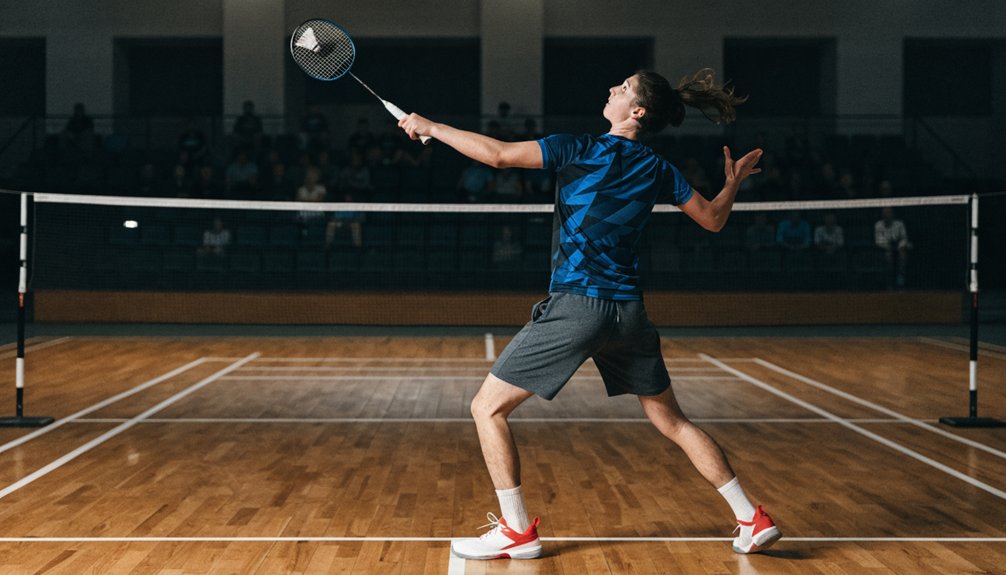
Most players don’t realize a strong flick serve depends more on disguise and finger timing than raw arm speed. If you want better height, depth, and control, you should make your setup match your low serve, keep a relaxed grip, and accelerate late through the shuttle. Small changes in contact point and racket action can make your serve far harder to attack—and the key adjustment usually comes just before impact.
Key Takeaways
- Use the same stance, grip, and racket preparation as your low serve to disguise the flick until the last moment.
- Hold the racket mainly in your fingers and add a quick finger snap with wrist acceleration at contact for power.
- Contact the shuttle early, before it drops, to improve height, angle, direction, and overall consistency.
- Aim the flick deep toward the back line and practice with targets to build accurate length and placement.
- Avoid a large backswing, keep your setup relaxed and consistent, and recover immediately after serving.
Set Up Your Badminton Flick Serve
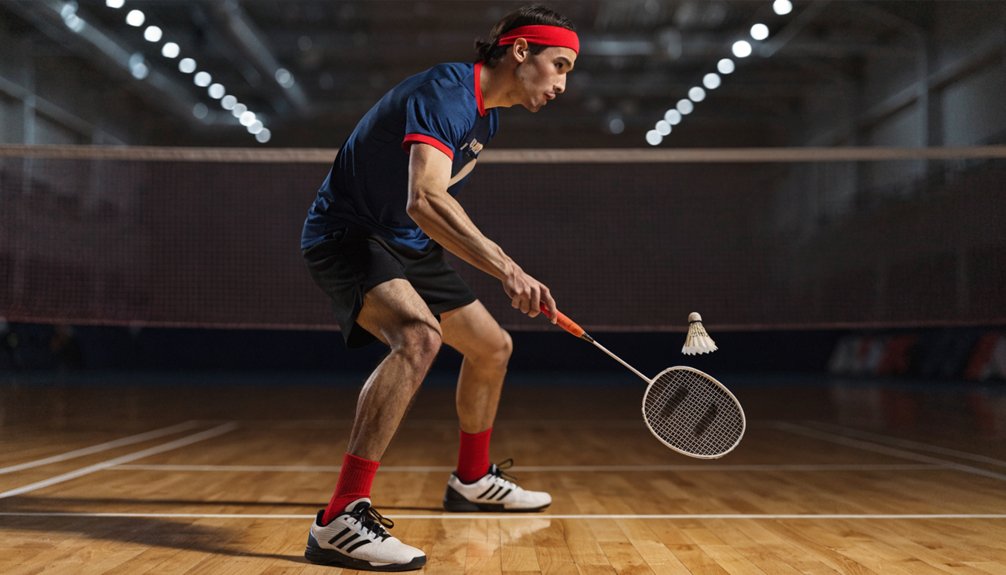
Start by building a balanced, deceptive setup that looks identical to your short serve. Keep your feet staggered, knees softly flexed, and your weight centered so you can accelerate without telegraphing intent. Hold the shuttle lightly in front of your body, with the cork angled slightly downward to support clean contact. Your racket face should stay neutral, and your grip relaxed, because tension slows the final burst needed in flick serve mechanics.
Align your shoulders and hips toward the target area, but keep your upper body still. You want a compact preparation that lets you change pace at the last instant. Position the shuttle consistently each repetition so your contact point remains stable. That consistency helps you control shuttlecock trajectory, produce a steeper lift, and make your serve harder for opponents to read. Practicing grip adjustments also helps you keep the same serving motion while making subtle changes in control and acceleration.
Use the Same Setup as Your Low Serve
Because your flick serve only works if it stays disguised, your setup should mirror your low serve in stance, grip pressure, racket angle, and shuttle position. If any of those details change too early, your opponent reads the difference and attacks confidently. Keep your feet, body alignment, and contact point identical until the final acceleration.
Focus on low serve similarities during practice. Start every repetition with the same pre-serve routine, same pause, and same visual intent. Your non-racket arm, shoulder height, and preparation tempo should remain steady, so the serve looks ordinary. Among effective flick serve techniques, consistency before contact matters most. When your preparation becomes repeatable, you’ll force hesitation from the receiver. That brief uncertainty gives your flick serve its real advantage and makes your deception much more reliable overall. In doubles especially, a lighter racket can help you maintain the quick preparation and fast final acceleration needed to disguise the flick effectively.
Hold the Right Grip for a Flick Serve
A proper flick serve grip should feel almost identical to your low serve grip, with just enough finger control to create late acceleration without tightening your whole hand. Keep the racket mainly in your fingers, not buried in your palm, so you can stay relaxed and precise at contact. Your thumb and index finger should guide the handle lightly, while the remaining fingers support stability.
Using a light handshake-style forehand grip can help keep the racket controlled in your fingers while reducing unnecessary wrist and arm strain. Avoid extreme grip variations that turn the racket face too open or too closed, because they reduce disguise and consistency. Instead, use a neutral forehand serve grip with a subtle adjustment for comfort. One of the most common mistakes is squeezing too early, which stiffens your wrist and telegraphs intent. Stay loose, check that the handle sits correctly, and rehearse the hold until it feels controlled, repeatable, and deceptive.
Snap Your Fingers for Serve Power
To generate power in your flick serve, you’ll need to snap your fingers at the exact moment the racket accelerates through the shuttle. Keep your grip pressure relaxed at setup, then tighten it briefly on contact so you can transfer force efficiently without losing control. When your wrist action and finger snap work in sync, you’ll produce a sharper, more deceptive serve with less effort. Striking near the Sweet Spot also helps you add power and accuracy without overusing your arm.


Finger Snap Timing
Snap your fingers at the instant the racket meets the shuttle, not before, since early tightening bleeds speed and late snapping wastes leverage. In sound flick serve mechanics, that micro-burst should coincide with forearm rotation and a compact wrist action, so energy transfers cleanly through the shuttle. If you snap too soon, you’ll telegraph the serve and reduce acceleration.
Train this moment deliberately with timing drills. Start by shadow serving slowly, matching your finger snap to an imaginary contact point, then add shuttles and keep the same rhythm. Next, alternate low serves and flicks without changing your preparation, snapping only at impact. You’re teaching your nervous system to delay the burst until contact. With repetition, your flick serve becomes sharper, faster, and harder to read consistently.
Grip Pressure Control
Timing the finger snap at contact only works if your grip pressure stays relaxed until that instant. If you squeeze the handle too early, you restrict racket acceleration and lose deception. Start with a light hold, around three or four out of ten, so the racket can stay mobile in your hand. Use simple grip relaxation techniques between serves: loosen your last three fingers, breathe out, and reset your thumb and index finger.
Just before contact, apply pressure quickly through the fingers to firm the handle without overgripping. This brief tightening transfers force efficiently while keeping your motion compact. Make ideal grip adjustments by checking handle placement in your fingers, not deep in your palm. With practice, you’ll control pressure precisely, generate sharper power, and keep your flick serve threatening under pressure.
Wrist And Finger Sync
Two movements must blend into one: a small wrist extension and a fast finger squeeze at the exact moment the shuttle leaves the strings. If your wrist fires early, you’ll telegraph the serve; if your fingers close late, you’ll lose acceleration. Keep the motion compact and timed precisely.
Start with relaxed grip pressure, then tighten only through contact. Your thumb, index, and middle finger should drive the racquet head, while the wrist adds a controlled snap, not a big swing. To improve wrist flexibility, practice short extension drills without changing your forearm angle. Build finger strength with repeated squeeze-and-release reps using your serve grip. As both improve, you’ll create sharper shuttle speed with less visible effort. That hidden power makes your flick serve harder to read and harder to attack.
Hit the Shuttle Earlier for Control
Although power matters on a flick serve, contacting the shuttle slightly earlier—just before it drops too low or drifts behind your striking shoulder—gives you better control over angle, height, and direction. That contact point lets your racket travel upward and forward cleanly, without compensating late.
Focus on small timing adjustments rather than a bigger swing. If the shuttle height falls too far, you’ll lift with your arm, lose leverage, and send the serve inconsistently. Meeting it earlier keeps your forearm rotation efficient and your racket face stable through impact. You should feel the shuttle leaving from in front of your body, not beside it. Practice by pausing at setup, then striking at a repeatable contact window. With repetition, you’ll produce a flatter, more accurate flick serve under pressure in matches consistently. Better timing also reduces mishits, much like maintaining an appropriate sweet spot helps improve consistency and control.
Disguise the Flick Until the Last Second
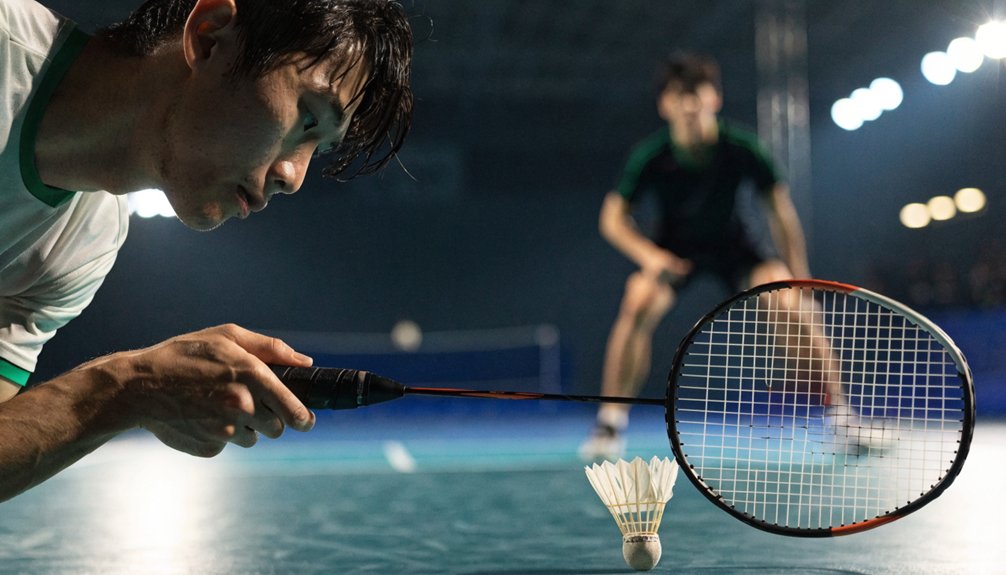
To disguise the flick effectively, you should keep your setup neutral so your stance, grip, and racket preparation mirror your short serve. You’ll increase deception by delaying wrist acceleration until the last possible moment, which limits your opponent’s ability to read the change. If you can maintain that identical early motion, you’ll make your flick serve far harder to anticipate.
Hold A Neutral Setup
A neutral setup is what makes your flick serve believable, because any early cue in your stance, grip, or racket position gives the receiver time to attack it. Start from the same posture you’d use for a low serve: relaxed shoulders, stable base, and racket head presented calmly in front.
Keep your hand on a neutral grip so you can change direction without telegraphing intent. Your non-racket arm, shuttle hold, and preparation height should match your regular short serve as closely as possible. If your elbow lifts, stance opens, or backswing grows, experienced receivers will read the change immediately. Focus on repeating identical pre-serve mechanics to build serve consistency. The better your setup matches your standard serve, the easier it becomes to disguise the flick and control pressure in tight rallies.
Delay Wrist Acceleration
Once your setup looks identical to the short serve, the next job is hiding when the speed appears. Keep your hand relaxed and still through the early motion, then release power only at contact. That late burst depends on wrist flexibility and precise acceleration timing, not a bigger backswing. If you tense too soon, the receiver reads the flick immediately. Stay compact, keep the racket head quiet, and let the final snap do the deception.
- Hold the forearm steady until the shuttle begins to drop from your fingers.
- Initiate the flick with a short, sharp squeeze of the fingers and wrist.
- Recover balance instantly so you’re ready for the weak return.
Practice this slowly first. When the sequence feels smooth, add speed without changing the visible preparation at all.
Aim Your Flick Serve at the Back Line
Precision matters when you aim a flick serve at the back line, because that target forces your opponent to move late and hit under pressure. To improve accuracy, set your contact point early, keep your racket path compact, and visualize the shuttle dropping just inside the rear boundary. Effective flick serve strategies depend on disguise, but back line targeting gives that disguise purpose. Because badminton uses rally point scoring, every well-placed flick serve can create immediate pressure on the receiver from the very first shot.
| Focus | Cue | Result |
|---|---|---|
| Contact | Slight lift | Steeper carry |
| Trajectory | Flat-then-rise | Deeper landing |
Train with markers near both rear corners so you can vary direction without changing preparation. You should rehearse identical setups, then send the shuttle long enough to threaten space, yet controlled enough to stay in. When you own that depth, your flick serve becomes a reliable attacking tool in doubles.
Stop Common Flick Serve Mistakes
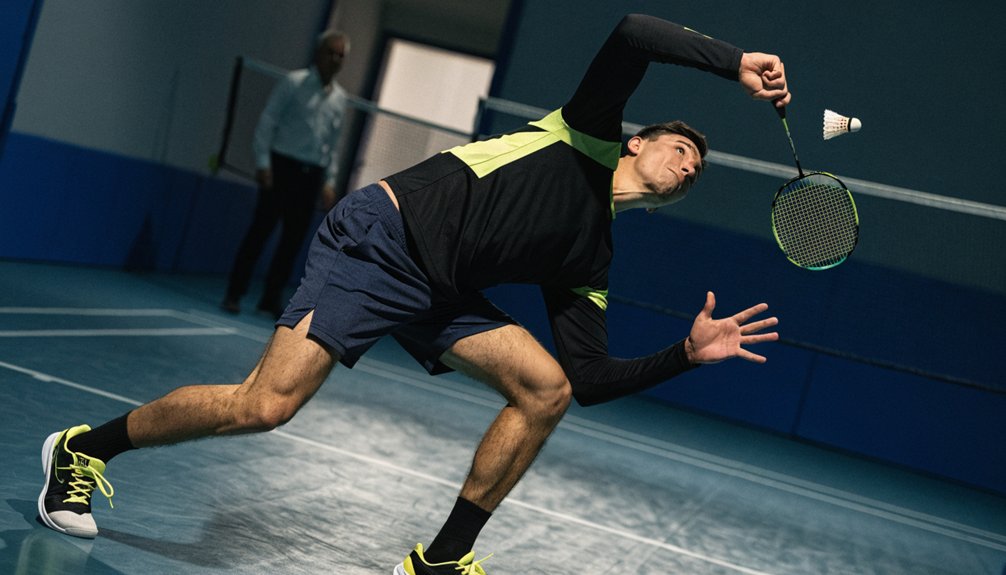
Because a flick serve depends on surprise, small technical errors can give it away or send it long. To tighten your flick serve strategy, focus on disguising preparation and controlling shuttle contact. If your backswing grows too large, opponents read it early. If you strike too hard without finger control, you’ll lose height and length precision. Keep the same stance and racket setup as your short serve, then accelerate late with a compact action. A lightweight racket with enhanced maneuverability can help you keep the serving motion compact while improving quick control at contact.
- Hold the shuttle consistently, so your release point doesn’t signal a change.
- Contact slightly in front, using fingers and thumb instead of a full arm swing.
- Recover immediately after serving, because poor balance turns good execution into pressure.
Train Your Flick Serve Under Pressure
When your flick serve works in practice but breaks down in matches, pressure is usually exposing gaps in timing, disguise, or recovery. To fix that, you need pressure drills that simulate consequence: score-based serving, one-chance repetitions, and immediate rally starts. Keep your pre-serve routine identical so opponents can’t read tension through your grip, posture, or pause. Elite badminton often includes mind games that try to disrupt focus, so rehearsing your serve under distraction helps you hold your routine in real match pressure.
| Pressure cue | Visual image |
|---|---|
| 19-all, one serve | Tight shoulders, narrow focus |
| Fast restart after flick | Opponent lunging late |
Build mental resilience by tracking execution, not outcome. If your disguise stayed clean and your contact point stayed high, count it as a technical win. You’ll learn to trust mechanics under stress, recover faster after errors, and deliver a flick serve that still bites when the score gets heavy in tight moments.
Frequently Asked Questions
How Often Should I Practice Flick Serves Each Week?
You should practice flick serves 3–4 times weekly, balancing volume and recovery. This practice frequency supports consistent skill progression. Keep sessions short, focused, and technical, so you’ll refine deception, accuracy, and timing without overtraining or plateauing.
Can Beginners Learn the Flick Serve Before Mastering a Low Serve?
Yes—you can, but why rush? You’ll build better control by learning flick serve fundamentals alongside a reliable low serve. Focus on timing techniques, grip relaxation, and deception, so your flick develops technically correct and match-ready.
What Shoes Help Improve Balance During a Flick Serve?
Choose lightweight court shoes with stable midsoles; these shoe types improve lateral control during a flick serve. Prioritize non-marking soles and strong grip features, so you’ll plant securely, transfer force efficiently, and recover balance faster.
When Should I Use a Flick Serve in Singles Versus Doubles?
Like a sudden spark, you’ll use a flick serve in singles for singles advantages when opponents crowd forward; in doubles, apply doubles tactics selectively in attacking game situations. Refine flick serve strategies, and you’ll stay unpredictable.
How Can I Prevent Shoulder Strain While Practicing Flick Serves?
Prevent shoulder strain by doing shoulder warm ups, limiting repetitions, and using proper technique. Keep your elbow relaxed, engage your forearm rotation, and stop at fatigue. You’ll build safer power and protect your joint over time.