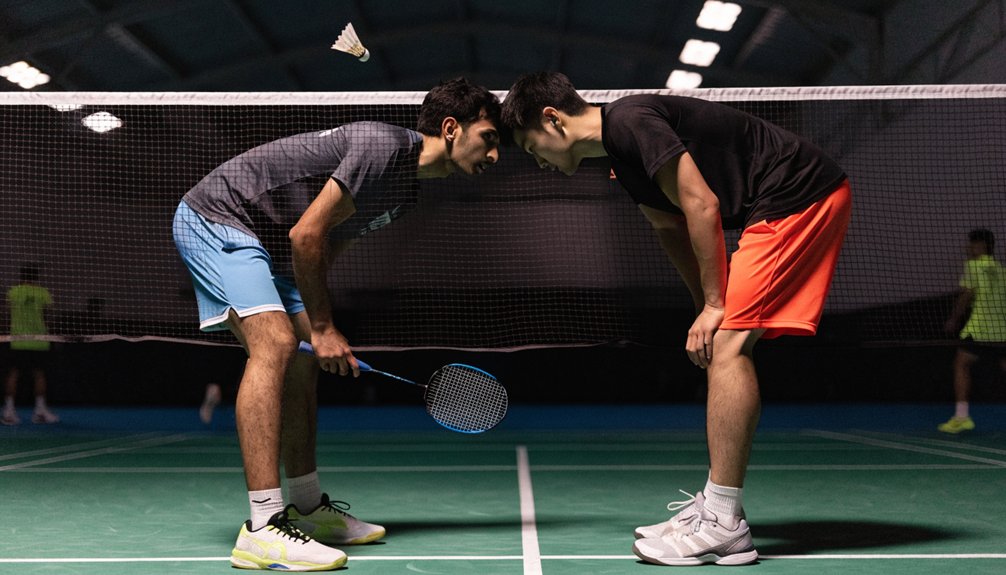
In badminton doubles, your shots matter, but your communication often decides the rally. You need clear rules with your partner, simple serve signals, and fast calls like “mine” or “yours” that don’t create hesitation. When you use the same cues every time, you cover the court better and make fewer avoidable errors. A few small adjustments can quickly make your teamwork more reliable—and the most important one usually gets missed.
Key Takeaways
- Agree before playing who takes middle shots, what “mine” and “leave” mean, and when to reset after rallies.
- Use short, loud, consistent calls like “mine,” “yours,” and “switch” to make decisions early during rallies.
- Create simple pre-serve and return hand signals, and keep them limited so both players react instantly.
- Make sure your words match your movement, and avoid late, unclear, or excessive calls that confuse your partner.
- Practice communication in drills and review misunderstandings after games so calls and signals become automatic.
Set Basic Doubles Communication Rules
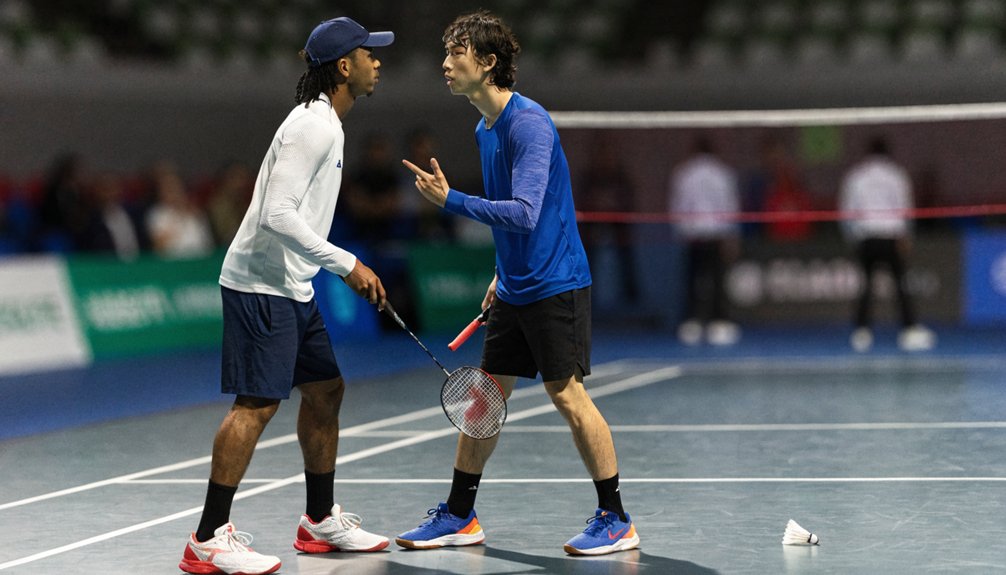
Before you step on court, agree on a few simple communication rules with your partner so you’re not making decisions under pressure. Decide who calls shuttles in the middle, what “mine” and “leave” mean, and when to reset after a rally.
Keep your language short, loud, and consistent so you both react instantly. Use the same cues for court positioning, especially after lifts, drives, and smashes, so neither of you hesitates or crowds the other. Agree on how you’ll confirm shot selection during fast exchanges: attack straight, block cross, or lift safely. You should also decide how to handle mistakes—one quick acknowledgment, then move on to the next point. Clear rules reduce confusion, protect your spacing, and help you play assertively together from the first serve. Consistent team cues also help you stay composed when opponents use mind games to break your focus or disrupt your rhythm.
Use Signals Before Serves and Returns
Once your basic rules are set, tighten your coordination with simple pre-serve and return signals that tell your partner what you’re planning. A quick finger cue behind your back can show whether you’ll serve short, flick, or target the middle, so your partner can position early and cover the best reply.
On returns, agree on clear return cues before the point starts. You might signal whether you’ll block, push, or drive, helping your partner anticipate the third shot instead of reacting late. Keep your serve signals and return cues limited, consistent, and easy to recognize under pressure. Communication is key for effective teamwork in doubles, and strategic positioning helps both players cover the court efficiently after the serve or return. Practice them until they’re automatic, then review what worked between games. When both of you know the plan before contact, you’ll move with more trust, speed, and purpose together on court.
Use Simple Calls During Rallies
During rallies, simple verbal calls help you and your partner make faster, cleaner decisions under pressure. Short words like “mine,” “yours,” “up,” or “switch” remove hesitation and keep your movement coordinated. When the shuttle travels quickly, rally calls give you just enough information to react without overthinking.
Keep your calls loud, early, and consistent so your partner can trust what they hear. Use clear cues to claim shots, alert pressure, or signal rotation after a lift or drive. Match each call to a specific meaning, then practice them until they become automatic. In a fast racquet sport shaped by the shuttlecock’s drag, quick calls are especially valuable because the shuttle can decelerate rapidly and force split-second decisions. You’ll cover the court more efficiently, reduce indecision, and stay balanced through rapid exchanges. Simple communication won’t slow you down; it sharpens your teamwork and helps both of you play with more confidence together.
Avoid Common Doubles Communication Mistakes
Even if you know your calls, doubles communication can still break down when your timing, tone, or meaning isn’t consistent. If you speak too late, your partner reacts half a step behind. If you mumble or shout without purpose, the message creates hesitation instead of confidence. Keep each call early, clear, and calm so your partner can trust it under pressure.


Another mistake is giving mixed information. Don’t say one thing while your movement suggests another. Your court positioning should match your words, especially during shifts from attack to defense. Also, avoid over-calling every shuttle. Too much talk clutters decision-making and slows shot selection. Focus on useful cues only, then recover quickly. When your signals stay simple and aligned with your movement, you’ll reduce confusion and play more decisively together.
Practice Calls and Signals With Your Partner

A few short practice routines can make your doubles communication automatic when rallies speed up. Start by rehearsing simple verbal cues like “mine,” “yours,” “switch,” and “leave” during feeding drills. Keep your calls loud, early, and consistent so neither of you hesitates under pressure.
Next, add nonverbal signals before serves and returns. Use a finger behind your back, a racket tap, or eye contact to confirm formations, target zones, or poaching plans. Then run pattern drills where one of you calls every shot for a minute, then switch roles. This builds trust and sharpens decision-making.
Finish by reviewing what felt clear and what caused confusion. If a call or signal isn’t instantly understood, simplify it. Repetition turns communication into instinct, and instinct wins fast exchanges. Together, you’ll react faster.
Frequently Asked Questions
How Do Doubles Partners Build Trust After Repeated Miscommunication in Matches?
You rebuild trust by using trust exercises, setting simple call rules, and reviewing mistakes calmly together. You’ll strengthen conflict resolution by owning errors, praising good decisions, and practicing pressure drills until communication feels automatic again.
Can Communication Strategies Differ Between Mixed Doubles and Same-Gender Doubles Teams?
Yes—your communication can differ. Like swapping gears mid-rally, you’ll adjust for mixed dynamics and avoid assumed gender roles. In one club, pairs using explicit call systems cut collisions 30%. Keep cues clear, tactical, supportive.
What Should New Partners Discuss Before Entering Their First Tournament Together?
You should discuss roles and responsibilities, playing styles, court positioning, match strategies, goal setting, and signal systems before competing. You’ll build trust, avoid confusion, and enter your first tournament with a clear, confident tactical plan.
How Can Shy or Quiet Players Become More Vocal During Doubles Play?
Picture your voice as a clear shuttle line: you’ll grow more vocal by practicing simple verbal cues between rallies, using encouragement techniques, and rehearsing calls aloud. Start small, stay consistent, and trust that confidence follows repetition.
When Should Doubles Teams Change Communication Styles Against Different Opponents?
You should change communication styles when opponent analysis shows different pace, formations, or pressure points. If rivals disrupt your rhythm, use clearer cues and quicker check-ins. Making strategic adjustments early helps you stay coordinated and confident.