
If you want better results in doubles, you need rotation and positioning that stay organized under pressure. Start by understanding when to hold a side-by-side base and when to switch into front-and-back attack. You’ll also need clear middle-court rules and quick recovery after every shot. Small changes in movement and communication can stop easy points from slipping away—and the next adjustment often makes the biggest difference.
Key Takeaways
- Start side by side in defense, each covering half the court with racket up, bent knees, and weight forward.
- Switch to front-and-back when attacking, with the front player intercepting and the rear player controlling clears, smashes, and space.
- Rotate immediately after lifts, drives, and smashes so open lanes are covered and both players stay balanced.
- Use clear middle-court rules and simple calls like “mine,” “yours,” or “switch” to avoid hesitation and overlaps.
- Fix rotation errors by recovering quickly after interceptions and checking your partner’s position before moving aggressively.
Start With Side-by-Side Positioning
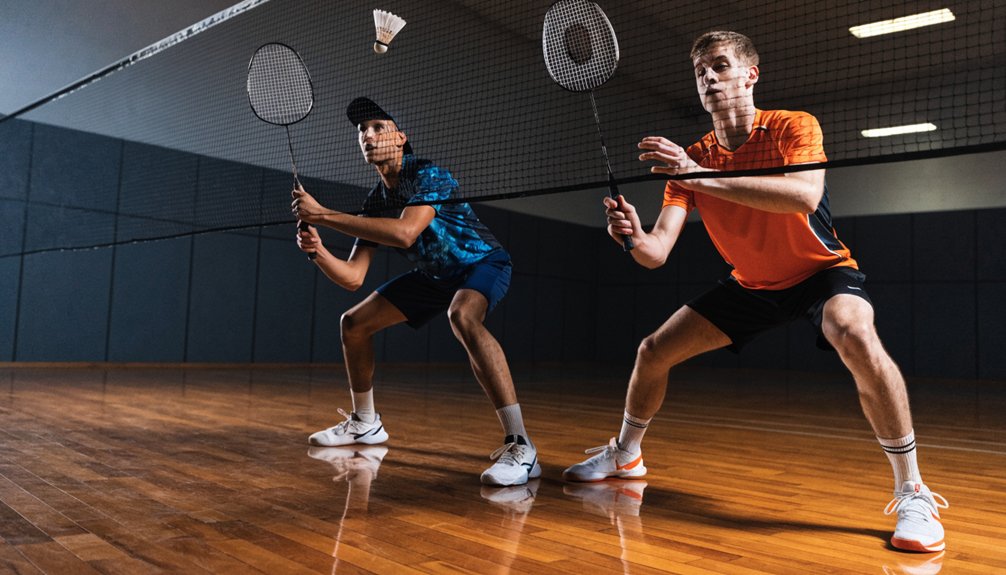
When you’re setting up for defense or receiving pressure in doubles, start in a side-by-side formation so both players can cover the full width of the court efficiently. This base keeps your team balanced, reduces open angles, and helps you react faster to drives, smashes, and quick pushes.
Use side positioning with each player responsible for one half, but stay flexible enough to help on fast exchanges through the middle. Keep your racket up, knees bent, and weight forward so you can defend without hesitation. Clear communication cues matter here: call “mine,” “yours,” or “switch” early, not after the shuttle has passed. If you and your partner move together laterally, you’ll close gaps, stay organized, and turn defensive situations into controlled, confident rallies under sustained pressure. In doubles, the initial serve starts from the right service court, so knowing right service court positioning also helps your pair begin points in a balanced formation.
Know When to Switch to Front-and-Back
As soon as your team gains the attack, switch from side-by-side into a front-and-back formation so you can pressure the court more effectively. You’ll cover sharper angles, threaten tighter net shots, and create clearer responsibilities. Those are key front back benefits: one player hunts interceptions, while the other controls space behind. Quick reflexes are especially valuable in this setup, and targeted footwork drills can help both players rotate faster and cover attacks more cleanly.
| Front player | Back player |
|---|---|
| Pounces on loose replies | Presses opponents deep |
| Screens the net with quick hands | Watches openings and steers placement |
Use simple communication cues like “mine,” “up,” or “stay” so you don’t hesitate. If your partner moves forward confidently, you should settle behind and prepare early. When you recognize an attacking opportunity, commit decisively. A clean shape gives you better balance, stronger pressure, and more chances to force weak returns from opponents under stress.
Rotate After Lifts, Drives, and Smashes
Good doubles shape doesn’t stop once you’ve taken front-and-back—you also need to rotate smoothly after lifts, drives, and smashes so the court never opens up. After a defensive lift, recover with purpose: your lift strategy should buy time, letting both of you reset balance and prepare for the next attack. In tense rallies, mind games and loud opponent reactions can break concentration, so disciplined recovery and communication matter even more.
When you drive, use sharp drive timing and keep moving through the shot, because flat exchanges can change roles instantly. If your partner is pulled wide, slide to support the uncovered lane without hesitating. After you smash, don’t admire it—follow your smash placement. A straight smash usually keeps you behind it, while an angled one may require a small exchange of spots. Build a steady rotation rhythm, and you’ll stay connected, efficient, and hard to break down under pressure.
Share Middle Coverage Without Overlapping
Although the middle is the easiest space for both players to chase, you can’t both step to it at once. To protect it well, you need a simple middle strategy built on trust, cues, and clear coverage zones. Decide early who takes flatter balls, who owns tighter net replies, and when the rear player can step through. Badminton also demands quick reflexes and precise coordination, which makes early middle-court decisions especially important in doubles.


- Set a divider. Use your racket shoulder or court centerline as a reference, so each of you recognizes your lane instantly.
- Read the shuttle height. Lower, faster shots usually belong to the player facing them sooner.
- Recover side by side. After any middle interception, spread back into balanced coverage zones instead of lingering together.
When you split responsibility cleanly, you’ll attack quicker, defend calmer, and stop giving away easy openings.
Fix Common Doubles Rotation Mistakes

When doubles rotation breaks down, it’s usually because one player chases the shuttle without the other adjusting behind them. To fix this, recover with purpose after every shot. If you move forward to intercept, your partner should slide back and center immediately. If you’re pulled wide, don’t admire the rally—rotate out and rebuild side-by-side or front-back shape.
Use simple communication strategies like “mine,” “switch,” or “up” early, not after contact. That prevents hesitation and keeps both of you reacting as one unit. Sharpen your court awareness by checking your partner’s position before committing to aggressive movement. In fast exchanges, a lighter racket with head light balance can improve maneuverability and help you react quicker at the net. You don’t need perfect footwork every rally; you need synchronized decisions. Stay compact, trust the rotation, and correct mistakes quickly. That’s how smarter doubles positioning becomes reliable under pressure and over time.
Frequently Asked Questions
How Do Doubles Formations Change in Mixed Badminton Partnerships?
In mixed badminton, you’ll shift mixed formations based on attack and defense: usually front-back when attacking, side-by-side when defending. Use strategic positioning to protect weaker areas, maximize each partner’s strengths, and keep your pressure consistent.
What Racket String Tension Helps With Doubles Defense and Control?
You’ll usually want medium string tension, around 22–25 lbs, for doubles defense and control. It gives you touch, it gives you forgiveness, it supports defensive strategies, helping you block faster, drive cleaner, and react confidently.
How Can Partners Communicate Effectively Before Competitive Doubles Matches?
You should agree on pre match strategies, roles, serve returns, and pressure responses before stepping on court. Use simple verbal cues, confirm signals, and review contingencies together so you’ll trust decisions and react faster.
Which Footwork Drills Improve Speed for Doubles Court Recovery?
You’ll improve doubles recovery speed with shadow footwork, split-step repetitions, multi-shuttle chase drills, and ladder agility exercises. Focus on explosive starts, balanced landings, and sharp lateral movement, and you’ll cover your base faster.
How Should Beginners Choose a Compatible Doubles Playing Partner?
Choose a partner like fitting two gears: you’ll want skill compatibility, matching commitment, and complementary playing styles. Test communication, court coverage, and temperament in practice games. Trust chemistry, but pick someone who helps you learn confidently.